
Best Automotive Water Pumps: A First Time Buyer's Guide for 2026
Disclosure: We may earn a commission when you buy through links on this page, at no extra cost to you. As an Amazon Associate I earn from qualifying purchases. Learn more

Shopping for the best automotive water pumps for the first time? Learn the terms, compare options, and avoid rookie mistakes with this easy guide.
An automotive water pump is the small part that keeps coolant moving through your engine, and when it fails, overheating can damage the engine in minutes. If you are shopping for the best automotive water pumps for the first time, the hard part is not price, it is fit. This guide explains how to match a pump to your exact engine, which materials and seals hold up, and when to replace related parts alongside it.
We will keep the focus on the pump itself, its fitment, impeller, bearing, and seal, rather than on the whole cooling system. You will learn the terms on a parts listing, the signs that a pump is failing, and the checks that stop you ordering a pump that looks right but turns the wrong way.




Who Should Buy Which Automotive Water Pump?
Drivers Planning a Repair After Early Leak or Noise Signs
If you have spotted coolant at the weep hole, heard a grinding or whining bearing, or seen the temperature gauge creep up, you are buying to solve a known fault. Choose a quality pump with a proven bearing and seal, a complete gasket set, and a warranty you can actually use. For you, saving a small amount on an unknown pump is poor value, because the labor to reach the pump usually costs far more than the part itself.
Owners Already Paying for Timing Belt or Chain Access
On many engines the pump sits behind the timing belt, so reaching it takes hours of labor you will pay for again if the old pump fails later. Replacing the pump during belt service is the smart move, along with the tensioner and idler pulleys your mechanic recommends. Choose a pump sold as part of a matched kit where possible, since every rotating part in that space then starts its life together with the same service interval ahead.
Owners of High Mileage, Towing, or Work Vehicles
Engines that tow, idle for long periods, or run in hot climates place extra load on the pump bearing and seal. Look for pumps built for heavy duty service, with robust bearings, metal impellers, and clear ratings for your engine family. Readers comparing the wider pump category in our guide to the best water pumps should note that automotive coolant pumps are engine parts first, judged on fit and durability rather than flow numbers alone.
Key Features to Compare
Exact Fitment by Engine, Not Just Vehicle Model
Fitment is the single most important factor, because one vehicle model can use several engines in the same year, and each engine may need a different pump. Match the pump to your engine size, engine code, and build date, and confirm details such as pulley type, mounting bolt pattern, and outlet positions. A pump that is almost right will not seal or align, so treat any listing that gives vague vehicle coverage without engine detail as a warning sign and verify with the maker catalog.
Drive Method and Rotation Direction
Most automotive pumps are driven by a belt, either the timing belt or the accessory belt, and some newer engines use an electric pump with no belt at all. Rotation direction matters just as much, because a pump designed to spin one way will move little coolant if its impeller expects the opposite direction. Serpentine belt routing can reverse rotation on some engines. Check the listing for rotation, drive type, and whether the pulley is included, pressed on, or reused from your old pump.
Impeller Material and Design
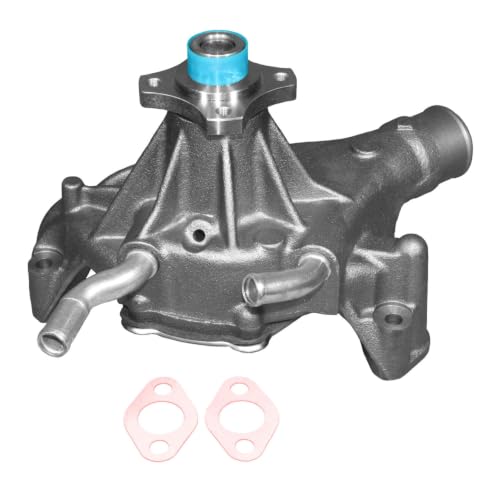
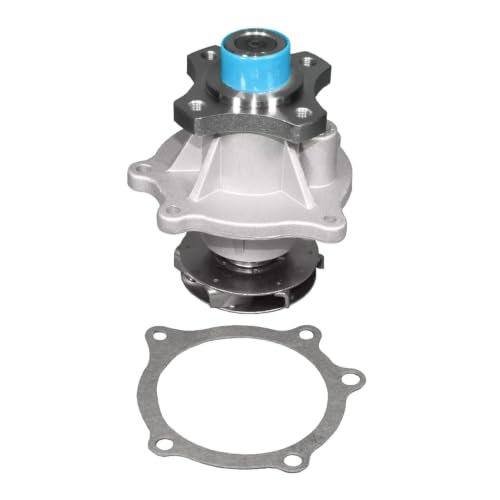
The impeller is the vaned wheel that pushes coolant, and it is made from stamped steel, cast metal, or engineered plastic depending on the design. Metal impellers resist heat and erosion well, while quality plastic impellers are light, smooth, and will not rust. What matters most is that the vane shape matches the original design, since vane count and curve set the flow at engine speeds. Avoid pumps with thin, rough castings or loose impellers, because flow loss shows up as overheating at idle or under load.
Bearing and Seal Quality
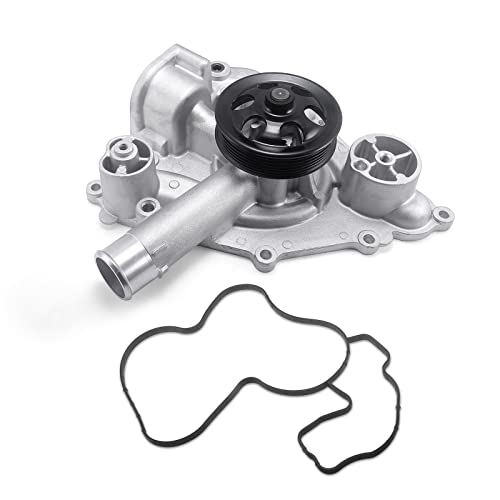
The bearing carries the pulley load and the seal keeps coolant inside the pump, so these two parts decide how long the pump lives. Better pumps use a combined bearing and shaft unit with a ceramic or carbon faced mechanical seal that resists coolant additives and heat cycles. Cheap seals are the usual cause of early weep hole leaks. Look for clear maker information, a stated warranty period, and reviews that mention service life rather than only fast shipping or low price.
Gaskets, Hardware, and Pulley Included
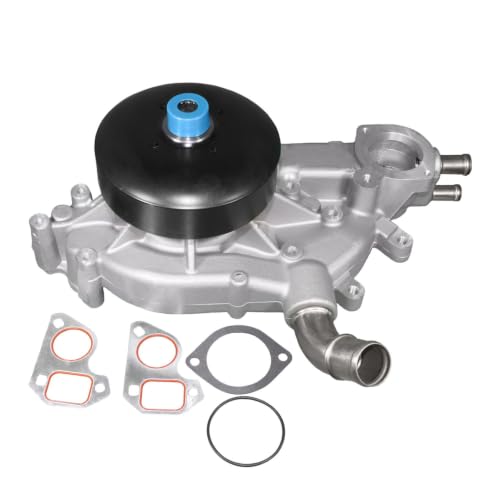
A complete kit saves time and prevents leaks, so check whether the pump includes the main gasket or seal, any O rings, and new mounting bolts where the maker specifies them. Some pumps include the pulley and some require you to transfer the old one, which may need a puller tool. Paper gaskets, molded rubber seals, and metal gaskets with sealant beads each suit different housings, and using the wrong type invites a slow leak that only appears once the engine is hot and under pressure.
Warranty Terms and Maker Support
Warranty length for automotive water pumps ranges from about 12 months to limited lifetime cover on premium lines, but the terms matter more than the headline. Check whether cover includes only the part, whether commercial use is excluded, and whether the maker has a real support channel and catalog. Established makers publish torque values, installation notes, and fitment data you can verify before buying. That documentation is a practical quality signal, because it shows the maker expects professional scrutiny of the part.
How to Confirm Fit and Plan the Replacement
Start with your vehicle identification number and engine code, then cross check the pump part number in at least two catalogs before ordering. Photograph your old pump and belt routing before removal, noting outlet positions and bolt lengths, because bolts in this area often differ by position. This simple record prevents the most common fitting delays, mixed up bolts, reversed hoses, and a pulley fitted in the wrong order.
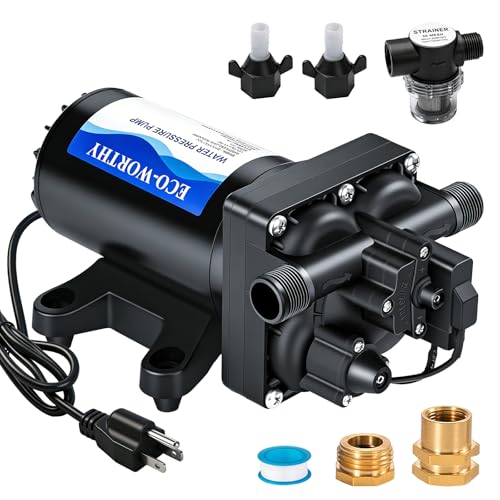
Do not confuse this engine coolant pump with pumps built for other jobs. Household and site pumps covered in our guides to the best water well pumps, the best submersible water pumps, and the best water transfer pumps move clean water for homes, wells, and drainage. They share a name only, and none of them can cool an engine, just as an automotive pump cannot supply a house or drain a flooded pit.
Plan the work safely. Never open a radiator or coolant cap on a hot engine, because pressurized coolant can spray and cause serious burns. Let the engine cool fully, drain coolant into a clean container for proper disposal, and keep coolant away from children and pets, since it is toxic even in small amounts. If access involves the timing belt, consider professional fitting, because an error in belt timing can cause major engine damage on many modern engines.
Common Mistakes to Avoid
- Ordering by vehicle model alone without the engine code, because the pump that arrives may have the wrong outlets, pulley, or rotation.
- Reusing an old gasket or the old coolant, because tired seals and dirty coolant are leading causes of leaks and early seal wear after fitting.
- Skipping the tensioner and idler pulleys during belt driven pump replacement, because a worn pulley can fail soon after and force the same labor twice.
- Ignoring a small weep hole drip as harmless, because that drip is the seal warning you that full failure and overheating are on the way.
- Overtightening the belt to stop a squeal, because excess tension overloads the new pump bearing and shortens its life from the first day.
How to Make Your Automotive Water Pump Last Longer
Use the coolant type and mix your vehicle maker specifies, and change it at the stated interval, because old coolant loses its corrosion protection and attacks the seal, impeller, and housing from inside. Never run the engine with low coolant, even briefly, since the pump seal depends on coolant for lubrication and cooling. Top up only with the correct fluid, and find the cause of any loss instead of treating regular top ups as normal behavior.
Inspect the belt, hoses, and the area around the pump at every oil service, looking for white or colored crust at the weep hole, damp patches, and bearing play at the pulley. Address small leaks in hoses and clamps promptly, because low coolant and trapped air strain the pump on every drive. After any cooling system work, bleed air from the system as the maker directs, since air pockets create hot spots and cavitation that erode impeller surfaces over time.
FAQ
How long does an automotive water pump usually last?
An automotive water pump usually lasts about 60,000 to 90,000 miles, though some serve well beyond that range. Life depends on coolant condition, belt tension, and bearing quality more than age alone. Because failure mileage varies so widely, many mechanics replace the pump with the timing belt on engines where both share the same service access, rather than gambling on the older pump outlasting a new belt.
Can I keep driving with a leaking automotive water pump?
No, you should not keep driving with a leaking automotive water pump, because leaks grow, coolant falls, and an overheated engine can warp parts and fail completely. A short, careful trip to a repair shop with the temperature gauge watched closely is the most you should attempt. If the gauge rises above normal or steam appears, stop, switch off, and let the engine cool before doing anything else.
Should I replace the thermostat when I replace an automotive water pump?
Yes, replacing the thermostat during pump replacement is usually wise, because it is inexpensive, sits nearby on many engines, and ages in the same hot coolant. A thermostat that sticks closed can cause overheating that looks like pump failure and sends you back into the same labor. Ask for the old parts back and a note of what was fitted, so your service record shows which cooling parts share the same age.
How much should an automotive water pump replacement cost?
Total cost varies widely by engine access, with the part often around $50 to $200 and labor forming the larger share on belt driven designs. Electric pumps and pumps buried behind timing covers cost more in both part and time. Get quotes that separate parts from labor, and ask whether the quote includes coolant, gaskets, and the tensioner, because those extras explain most of the gap between a cheap quote and a complete one.
What does a failing automotive water pump sound like?
A failing automotive water pump often makes a grinding, growling, or high whining sound that rises with engine speed, caused by a worn bearing. You may also notice the pulley wobbling when the engine is off and you move it by hand. Sound alone does not prove the pump is at fault, since belts and pulleys make similar noises, so pair what you hear with leak checks before ordering parts.
Final Thoughts
Fit first, then bearing and seal quality, then the completeness of the kit, is the order that protects both your engine and your labor bill. Confirm your engine code, compare the options in the product table, and replace related wear parts while access is open. Chosen with that care, the best automotive water pumps quietly do their job for years, keeping temperatures steady on every trip. Prices and availability can change, so check the product page before ordering.


