
Best 30 Gallon Air Compressor in 2026: Stationary Power for Serious Garage Work
Disclosure: We may earn a commission when you buy through links on this page, at no extra cost to you. As an Amazon Associate I earn from qualifying purchases. Learn more

Shop smarter for the best 30 gallon air compressor: pump types, airflow for impact tools and spray guns, voltage choices and belt drive versus direct drive.
A 30 gallon compressor is where air tools stop being a novelty and start replacing cords and arm strength. It is the smallest size that runs an impact wrench through a full set of wheels, feeds a spray gun through a cabinet door, and still has air left in the tank. Choosing the best 30 gallon air compressor is really about the pump on top of the tank, because that pump decides airflow, noise, and how many years the machine will serve.
Unlike the carry around sizes, a 30 gallon unit mostly stays where you park it, so placement, power supply, and pump design deserve more thought than handles and weight. This guide walks through those decisions in order. For the full size ladder from portable to industrial, see our overview of the best air compressor categories. The comparison table below summarizes the configurations you will meet at this size.


Who Should Buy Which 30 Gallon Air Compressor?
Home Mechanics Who Run Impact Tools Weekly
If your weekends involve wheel swaps, suspension work, and a ratchet that never cools down, you need sustained airflow more than portability. Choose a belt drive, oil lubed model with a cast iron pump, which runs slower, cooler, and quieter than a direct drive unit. Plan a permanent parking spot near the work bay, because at 150 pounds or more, this machine moves on its wheels to a new corner, not to a new building. Our guide to the best air compressor for home garage layouts can help you plan where it lives.
Woodworkers Adding Spray Finishing and Multiple Nailers
A 30 gallon tank smooths out the air supply for HVLP spray guns and lets a framing nailer and a finish nailer share one supply without the pump running constantly. Look for clean output: an oil lubed pump needs a filter and water separator before a spray gun, while an oil free pump avoids that concern but runs louder. Either way, budget for a regulator at the tool end of the hose, since finish quality depends on steady pressure at the gun, not at the tank.
Property and Small Farm Owners With Mixed Chores
On a few acres, one compressor inflates tractor tires in the morning, blows out irrigation lines in the fall, and drives a grease gun or die grinder in between. A wheeled horizontal model suits you if it must roll between barn and garage, while a vertical model suits a fixed corner. Dual voltage motors earn their keep here, because outbuildings often have only 120 volt service today and may gain a 240 volt line later.
Key Features to Compare
Airflow Output for Continuous Tools
At this size, expect roughly 5 to 7 SCFM at 90 PSI from a healthy single stage pump, and more from two stage designs. That output runs impact wrenches, air ratchets, and die grinders in real working bursts, and it feeds an HVLP gun at the lower pressures finishing requires. Match the rating to your hungriest tool with margin: a tool rated at 5 SCFM will keep a 5 SCFM compressor running nonstop, which overheats pumps and shortens their life. Headroom is what separates a relaxed machine from a struggling one.
Pump Construction: Cast Iron, Belt Drive, and Stages
A cast iron cylinder with a belt driven flywheel pump is the long life configuration at this size. The belt lets the pump turn slowly, which cuts noise and heat, and the flywheel doubles as a cooling fan. Direct drive oil free pumps are lighter and need no oil changes, but they spin fast, sound harsh, and usually give fewer service years under heavy use. Two stage pumps compress air twice and reach about 175 PSI, storing more energy per gallon for shops that run tools all day.
Motor Size and Voltage Options
Motors at this size run from about 1.6 to 2 horsepower in honest ratings. More important than the number is the voltage: a 120 volt model plugs in anywhere but draws heavy current at startup, while a 240 volt model starts easier and runs more efficiently on a dedicated circuit. Dual voltage motors that you can rewire either way protect your purchase if the compressor moves between buildings. Check the nameplate amp draw against your circuit, and plan on a dedicated line for whichever voltage you choose.
Duty Cycle and Cooling
Duty cycle describes how much of each hour the pump can run without overheating, and consumer models often sit near 50 to 75 percent. A compressor that fills its tank in 5 minutes and rests while you work through that air is fine. One that runs almost continuously to hold pressure during grinding or sanding is undersized for the task, whatever its tank holds. Cast iron pumps with generous cooling fins and a fan shroud tolerate long runs far better than compact sealed pumps.
Tank Orientation and Footprint
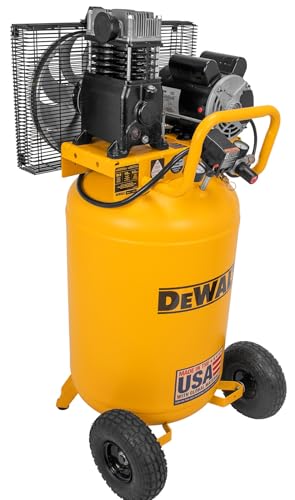
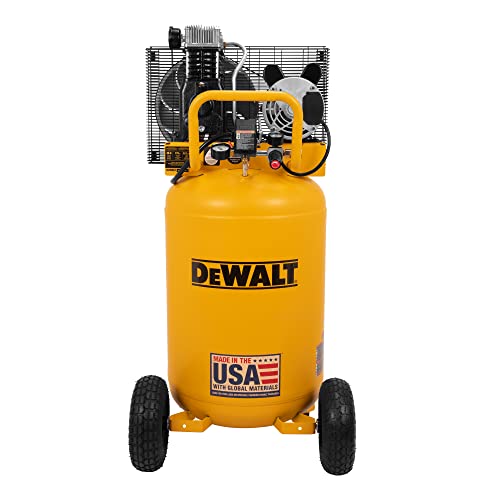
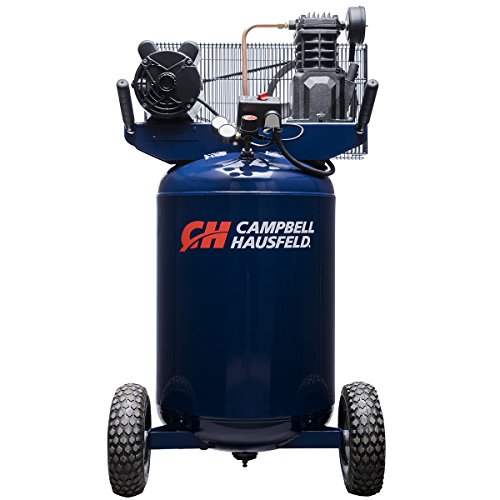
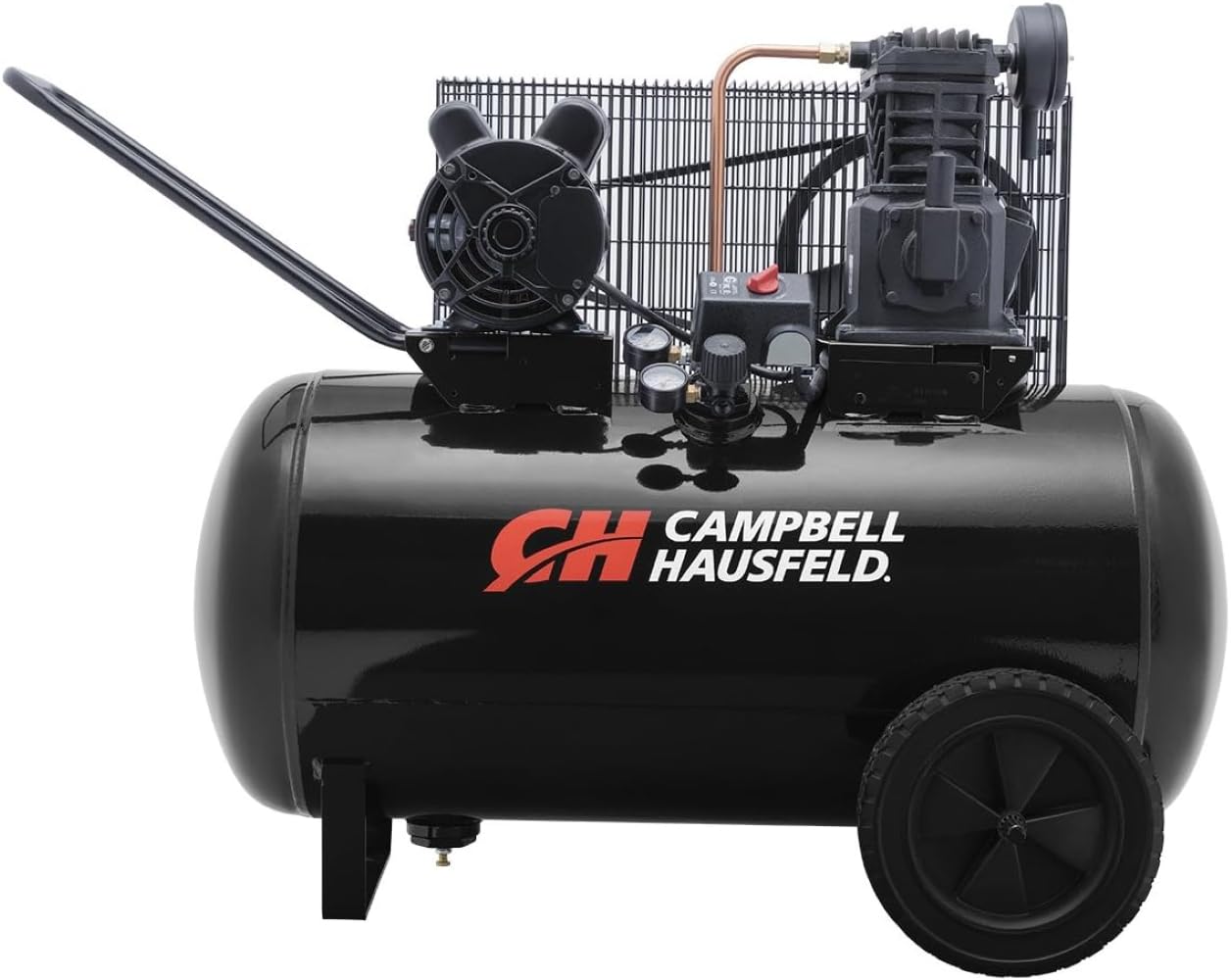
Vertical tanks stand in about the floor space of a water heater and suit permanent corners, which is why most new 30 gallon models are vertical. Horizontal tanks ride lower and more stable on their wheel kits, which matters if the machine rolls over gravel or thresholds. Both hold the same air; the choice is about your floor plan and how often the unit moves. Measure the doorway and the parking spot, and leave room behind the unit to reach the drain valve without crawling.
Wheels, Handles, and Service Access
You will move this machine for cleaning and service even if it never leaves the building, so pneumatic or large solid wheels and a balanced handle matter. Check how you reach the oil fill, the drain, and the belt guard. Oil changes that require tipping a 170 pound machine simply do not get done, and neglected oil is the main killer of oil lubed pumps. A sight glass you can read at a glance and a drain extension that clears the tank foot are small details with long consequences.
When 30 Gallons Is the Right Call, and When It Is Not
Thirty gallons earns its floor space when at least one of your regular tools draws air continuously: impact wrenches, ratchets, grinders, sanders, or spray guns. It is oversized for a life of brad nails and tire topping, where a best pancake air compressor pick takes a fraction of the room and budget, and pure tire duty can even go to a best cordless air compressor model that lives in the trunk. It is undersized for body shop sanding all day or running a sandblaster, which point you toward 60 gallons and a two stage pump. Being honest about which side of the line your work sits on saves both money and disappointment.
What Your Budget Buys at This Size
Direct drive oil free models start around $300 to $450 and suit intermittent garage work well. Belt drive oil lubed machines with cast iron pumps occupy about $450 to $750, and that band is the value center for buyers who run tools weekly. Two stage and premium quiet designs run about $750 to $1,100. At this size, money spent on the pump buys years, while money spent on extra gauges and paint buys neither, so weight your budget toward pump construction first.
Common Mistakes to Avoid
- Plugging a 120 volt model into a shared circuit with the garage lights and a freezer, which guarantees nuisance breaker trips under startup load.
- Skipping the water separator before spray finishing, so tank moisture spits into a clear coat and ruins the surface.
- Never changing pump oil on an oil lubed model, which turns the longest lasting pump design into the shortest lived one.
- Parking the compressor against a wall with the drain valve unreachable, so draining stops happening and rust starts forming.
- Buying for the one sandblasting project you imagine, then living with the noise and footprint for a decade of light work.
Care and Maintenance for a 30 Gallon Compressor
Drain the tank at least weekly under regular use, and daily when the machine runs for hours, because a 30 gallon tank collects far more condensate than owners expect. On oil lubed pumps, check the oil level monthly and change the oil after the break in period, then about once a year or per the manual, using compressor oil rather than engine oil. Inspect the belt yearly for cracks and proper tension, and clean or replace the intake filter when it greys. Once a year, test the relief valve, check the tank for external rust at the feet and welds, and tighten the motor mount bolts, which vibration slowly works loose.
FAQ
What tools can a 30 gallon air compressor run?
It runs impact wrenches, air ratchets, die grinders, and HVLP spray guns in normal working rhythm, plus every nail gun and inflator the smaller sizes handle. The borderline tools are air sanders and grinders used continuously for many minutes, which can outpace a single stage pump. A useful check: if the tool nameplate asks for more SCFM than the compressor delivers at 90 PSI, expect pauses while the tank recovers.
Does a 30 gallon air compressor need a 240 volt outlet?
No, many models run on a standard 120 volt circuit, and that is fine for home use. A 240 volt version starts under load more gently and leaves your 120 volt circuits free for other tools, which matters in a busy garage. If you are wiring a new shop or outbuilding anyway, adding a 240 volt outlet where the compressor will park is cheap at that stage and expensive later.
Can a 30 gallon air compressor run a paint sprayer?
Yes for HVLP guns used on furniture, cabinets, and single panels, which is the spraying most home shops actually do. Set the regulator for the gun pressure at the end of the hose, not the tank gauge, and fit a water separator, because pressure drop along 50 feet of hose is real. Whole car painting in one session pushes this size hard; plan breaks between coats, which the paint schedule usually allows anyway.
Vertical or horizontal tank, which suits a garage better?
Vertical suits most garages because it parks in a corner with the smallest footprint and keeps the pump up where air circulates. Horizontal suits machines that roll often, since the low center of gravity resists tipping over rough ground and thresholds. The air supply is identical either way, so let your floor plan and your moving habits decide rather than any performance claim.
How often should you drain a 30 gallon compressor tank?
Weekly is a fair minimum for a machine used a few times a week, and after any long session of spraying or grinding, which pulls humid air through the pump for hours. Humid climates double the water collected, so drain more often in summer. An automatic drain valve is a worthwhile add on if your compressor parks somewhere the valve is hard to reach.
Final Thoughts
At this size the tank is the commodity and the pump is the decision. Buy the pump construction your workload justifies, give the machine a circuit and a corner it can call home, and keep up with oil and draining. That combination is what makes the best 30 gallon air compressor for one garage different from the right one for another. Compare the pump types and airflow figures in the product table above against the tools you actually own, and the choice usually makes itself.


