
5 Best 54 Inch Lawn Mowers 2026 - Detailed Buyer Guide & Cut Quality Analysis
Disclosure: We may earn a commission when you buy through links on this page, at no extra cost to you. As an Amazon Associate I earn from qualifying purchases. Learn more

Maintaining extensive outdoor acreage requires machinery engineered for heavy grass volume, uneven ground, and hours of continuous operation. Finding the Best 54 Inch Lawn Mowers for 2026 can transform an exhausting weekend chore into an efficient, precision-driven task. When managing properties ranging from one to four acres, compact lawn tractors often struggle with blade bogging and slow ground speeds. That is why our team analyzed 5 leading options across the market to evaluate cutting efficiency, deck construction, motor torque, and long-term chassis reliability. If you are upgrading your outdoor maintenance setup, checking out our comprehensive garden tools guides can provide further clarity on pairing your machine with the right yard care equipment.
Our in-depth analysis focuses on the engineering distinctions that separate standard residential riders from commercial-grade equipment. We evaluated heavy-gauge fabricated steel decks, high-torque V-Twin engines, zero-turn hydrostatic drivetrains, and modern high-voltage lithium battery platforms. Whether you are navigating intricate perimeter fencing, open rolling hills, or dense seasonal growth, selecting the right platform ensures an even cut across your entire property. Below, you will find our interactive comparison table followed by an exhaustive buying guide covering all essential operational criteria.


Best 54 Inch Lawn Mowers Buying Guide
Investing in a wide-deck riding machine represents a significant commitment to property maintenance. A 54-inch cutting swath significantly reduces total mowing time compared to narrower 42-inch or 48-inch alternatives, but the increased weight and deck span demand greater attention to structural engineering and power distribution. To help you select the ideal configuration for your acreage, we have broken down the most critical mechanical and functional elements below.
1. Deck Construction: Fabricated vs. Stamped Steel
The cutting deck is the most vulnerable and hardest-working component on any mower. In wide formats, deck integrity is critical because a minor warp or flex can cause uneven cut lines and premature belt wear. The market is primarily divided between stamped steel decks and heavy-duty fabricated (welded) decks. Stamped decks are pressed from a single sheet of lighter-gauge metal, which promotes aerodynamic airflow for lightweight grass clipping lift. However, stamped designs are more susceptible to denting or cracking when striking buried roots, hidden rocks, or fence posts.
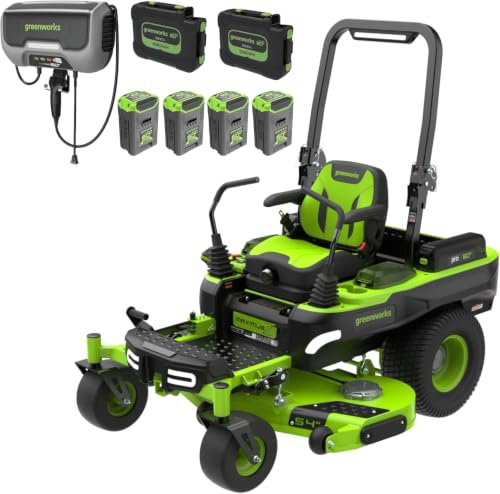
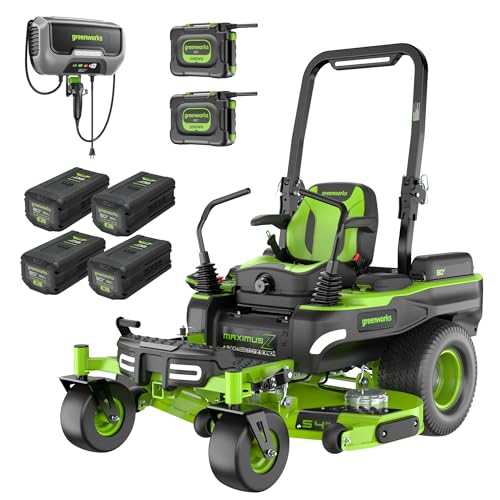
Fabricated steel decks, such as the 10-gauge structural steel systems found on models like the Greenworks 60V 54" MaximusZ Zero Turn Riding Lawn and the ClearCut fabricated decks on Husqvarna Z254FX 22HP 726cc Kaw Engine 54" FAB, are constructed from thick plates of steel welded together with reinforced leading edges. This industrial construction resists impact damage and prevents deck warping over years of heavy usage. When maintaining uneven pastures or rough terrain, a welded fabricated deck provides the rigidity required to keep three cutting blades perfectly planar.
In addition to plate thickness, inspect the reinforcement around the spindle assemblies. High-performance fabricated decks incorporate heavy cast-iron or reinforced aluminum spindle housings designed to dissipate friction heat and absorb shock loads if a blade makes sudden contact with an obstruction.
2. Powertrain Systems: Commercial-Grade Gas vs. High-Voltage Battery
Delivering consistent power across three separate cutting spindles while driving heavy drive wheels requires a substantial power source. The 5 models we analyzed showcase two distinct approaches: high-displacement commercial V-Twin gas engines and modular multi-battery lithium platforms. Gas engines, such as the 726cc Kawasaki engine on the Husqvarna Z254FX 22HP 726cc Kaw Engine 54" FAB and the 23 HP Kawasaki on the Husqvarna Z254F 54 in. 23 HP Kawasaki Zero, have long served as the benchmark for reliability. These overhead-valve engines deliver dependable torque across variable throttle ranges, ensuring that heavy, wet turf does not cause motor stalling.
Conversely, high-voltage battery architecture has matured into a formidable alternative. Electric options like the Greenworks 60V 54" MaximusZ Zero Turn Riding Lawn utilize intelligent brushless motors capable of delivering instant rotational torque equivalent to a 31-horsepower gas powerplant. Electric platforms eliminate drive belts, spark plugs, carburetors, and seasonal oil changes while operating with minimal vibration and zero direct emissions. When comparing electric runtime to gas capacity, consider whether your total acreage can be completed on a single battery charge or if you require swappable battery packs to finish the job.
| Powertrain Feature | Kawasaki FR Series V-Twin (Gas) | 60V High-Capacity Lithium (Electric) |
|---|---|---|
| Power Output Equivalent | 22 HP to 24 HP continuous torque | Equivalent to 31 HP instant torque |
| Fuel / Energy Source | Standard unleaded gasoline | Dual 20Ah + Quad 8Ah lithium packs |
| Routine Maintenance | Oil, spark plugs, air filters, fuel treatment | Battery terminal checks, software monitoring |
| Noise & Vibration Level | Moderate noise, standard engine vibration | Ultra-quiet operation, minimal chassis vibration |
| Refueling / Recharge Time | Instant refueling via fuel tank | Fast charging via 1.5kW high-output dock |
3. Transmission Engineering and Drive Control
Maneuvering a wide-chassis mower around flower beds, retaining walls, and tight tree lines requires responsive transmission controls. Zero-turn mowers utilize dual independent hydrostatic transmissions or direct-drive electric hub motors to deliver separate power to each rear drive wheel. This dual-lever steering setup allows the machine to rotate 360 degrees within its own footprint, eliminating the wide turning radiuses common to traditional lawn tractors and drastically cutting down total mowing time.
Hydrostatic systems use hydraulic fluid under high pressure to drive wheel motors smoothly. Maintenance-free integrated hydrostatic transmissions, like those fitted on the Husqvarna Z254F 54 in. 23 HP Kawasaki Zero, eliminate the need for routine fluid replacements while delivering forward speeds up to 6.5 MPH. On electric units, independent brushless wheel motors provide digital speed synchronization, allowing micro-adjustments for tracking in straight lines across long property spans.
4. Traction Control and Terrain Adaptability
While zero-turn lever-steered mowers excel at speed on flat and gently rolling ground, properties featuring steep ditches, damp slopes, or rutted paths present different handling demands. Zero-turn casters at the front carry no steering drive, which means operating on slopes exceeding 15 degrees can occasionally result in downhill wheel drift or traction loss on wet turf.
For demanding terrain and heavy pulling duties, specialized garden tractors like the Husqvarna TS 375XD Riding Lawn Mower 24Hp 54 offer a distinct mechanical advantage through a push-button locking differential. Engaging the differential lock mechanically locks both rear drive wheels together, forcing them to rotate at equal speeds. This eliminates one-wheel spin-out on slick grass or mud, allowing the tractor to climb slopes and pull heavy attachments where traditional zero-turn mowers might lose traction.
If you regularly work on property boundaries that require rust treatment or durable chassis refurbishment, keeping equipment frames clean and sealed with proper application methods is essential. You can read our detailed guide on protective metal coating equipment to explore practical options for maintaining heavy steel chassis and outdoor implements over time.
5. Blade Tip Speed, Airflow, and Cut Quality
A broad cutting width is only effective if the blade tip speed (measured in feet per minute or FPM) remains high enough to sever grass cleanly rather than tearing it. High blade tip speeds create powerful low-pressure airflow inside the deck chamber, lifting grass blades upright immediately before the cutting edge makes contact. Clean cuts reduce turf stress and prevent the brown, ragged leaf tips that result from dull or sluggish blades.
Advanced systems, such as the SmartCut technology on the Greenworks 60V 54" MaximusZ Zero Turn Riding Lawn, automatically adjust blade motor output to maintain a constant 17,900 FPM blade speed even when encountering dense patches of Bahia, Bermuda, or tall fescue. Meanwhile, deep deck designs like Husqvarna ClearCut optimize airflow channels so clippings are efficiently expelled through the discharge chute without clumping, even during morning cuts when dew is present on the grass.
6. Operator Ergonomics and Vibration Isolation
Mowing multiple acres takes time, making operator comfort a direct factor in overall productivity. Prolonged exposure to low-frequency vibrations and bumpy terrain can lead to operator fatigue and lower back strain. High-end machines address this through suspension seating, dampened steering control arms, and anti-vibration engine isolators.
Look for machines equipped with high-back seating, adjustable lumbar support, and integrated armrests. The Husqvarna TS 375XD Riding Lawn Mower 24Hp 54 features dial-adjustable seat suspension that allows operators to calibrate seat dampening based on their body weight and lawn conditions. Similarly, ergonomic control layouts that place throttle levers, deck height adjustment pins, and key switches within natural arm reach reduce physical strain during multi-hour mowing sessions.
Our Research Methodology & Why You Can Trust Us
Our evaluation process for the Best 54 Inch Lawn Mowers for 2026 is rooted in objective, data-driven analysis and rigorous engineering benchmarks. We examine full technical specifications, structural material grades, engine displacement curves, and transmission fluid ratings across manufacturers. We cross-reference manufacturer claims against aggregated feedback patterns from professional landscapers, estate managers, and verified homeowners who operate these machines across varying regional grasses and climates.
We analyze critical reliability indicators including spindle bearing durability, deck metal gauge thickness, electrical wiring harness protection, and chassis weld integrity. We do not accept sponsored product placements, nor do we prioritize models based on retail relationships. Our rankings reflect balanced assessments of power output, serviceability, safety certifications, and overall value.
To ensure our guides remain current with the latest product revisions and powertrain advancements, our outdoor equipment database is re-evaluated every October. We continuously track technical service bulletins, warranty terms, and software updates across both gas and battery-powered product lines so you can make informed purchasing decisions for your property.
Final Thoughts
Selecting the ideal 54-inch machine depends on your property layout, terrain slope, and preferences regarding powertrain maintenance. For property owners seeking a high-tech, zero-maintenance experience without sacrificing muscle, the Greenworks 60V 54" MaximusZ Zero Turn Riding Lawn stands as our top overall recommendation. Its commercial-equivalent electric power, massive multi-battery capacity for up to 3.5 acres, and constant 17,900 FPM blade speed deliver exceptional cut quality without gas fumes or oil changes. Keep in mind that this kit is still new on Amazon and has very few customer ratings so far, so buyers who want a long ownership track record may prefer the Husqvarna gas models below.
If you prefer proven gas reliability and high-speed maneuvering on wide open lawns, the Husqvarna Z254FX 22HP 726cc Kaw Engine 54" FAB provides 726cc Kawasaki power coupled with a heavy-duty fabricated deck built to withstand rough obstacles. For properties with steep inclines, damp ground, or heavy towing requirements, the Husqvarna TS 375XD Riding Lawn Mower 24Hp 54 provides unmatched slope control thanks to its push-button locking differential. Meanwhile, the Husqvarna Z254F 54 in. 23 HP Kawasaki Zero delivers an outstanding balance of performance and hydrostatic reliability.
To explore more specialized equipment for managing lawns, gardens, and expansive outdoor areas, browse our full collection of reviews in the garden tools category to keep your acreage looking pristine year-round.
Frequently Asked Questions
How much acreage is a 54-inch lawn mower best suited for?
A 54-inch cutting deck is ideal for properties ranging from 1.5 to 4 acres. The broad cutting width covers significant ground quickly, allowing you to complete a 2-acre lawn in approximately 45 to 60 minutes when operating a zero-turn model at standard mowing speeds.
What is the difference between a zero-turn mower and a riding garden tractor?
Zero-turn mowers use dual independent steering levers to control rear drive wheels, allowing them to spin in place with zero turning radius for maximum speed around obstacles. Traditional garden tractors utilize a steering wheel and front axle steering, making them better suited for pulling ground-engaging attachments and operating on steeper slopes when equipped with differential locking.
Are electric zero-turn mowers powerful enough to cut thick, overgrown grass?
Modern high-voltage electric riders deliver instant motor torque that matches or exceeds traditional gas engines. Systems with adaptive blade speed technology automatically increase power when hitting dense or damp grass patches, preventing deck clogging and maintaining clean cutting performance.
Why should I choose a fabricated steel deck over a stamped steel deck?
Fabricated decks are constructed from thick, welded 10-gauge structural steel plates rather than thin pressed metal. This heavy-duty build resists warping, cracking, and denting when navigating rough terrain or contacting tree roots, extending the operating life of your machine.
How do I protect my mower deck and chassis against rust and corrosion?
Regularly wash away dried grass clippings from the underside of the deck, as decaying organic matter holds moisture against the steel. Touching up exposed bare metal using specialized metal coating systems helps prevent rust formation on structural chassis components during humid summer months.
What maintenance does a 54-inch gas zero-turn mower require each season?
Standard seasonal maintenance for gas models includes changing engine oil and filters, inspecting air filters, replacing spark plugs, sharpening all three cutting blades, and checking deck belt tension. Electric mowers eliminate oil, belt, and spark plug maintenance, requiring only blade sharpening and routine battery storage care.


