
Best 6 Inch Chainsaws for 2026: A Practical Buying Guide
Disclosure: We may earn a commission when you buy through links on this page, at no extra cost to you. As an Amazon Associate I earn from qualifying purchases. Learn more

Learn how to choose the best 6 inch chainsaw for pruning and yard work, with guidance on batteries, chain oilers, safety and what this small bar cuts well.
A 6 inch chainsaw, often called a mini chainsaw, is built for the cuts a full size saw handles badly: pruning branches overhead, trimming back overgrown shrubs, and breaking down small fallen limbs without dragging out a heavy tool. Choosing the best 6 inch chainsaw is less about raw power and more about weight, chain speed, oiler design, and whether the battery platform fits tools you already own.
This guide walks through who actually benefits from a saw this small, the features that separate a handy tool from a frustrating one, and the jobs you should hand to a bigger bar instead. The comparison table below sums up the main types side by side so you can see where each one fits.

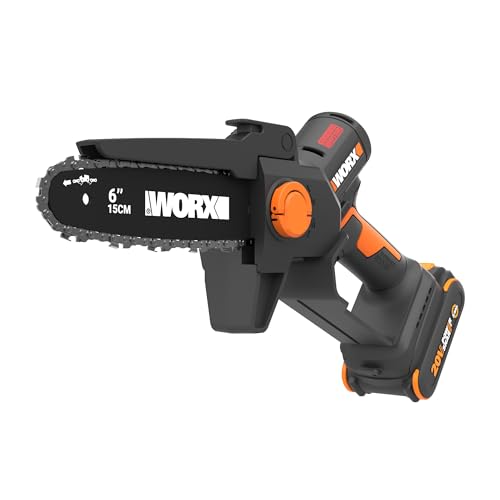
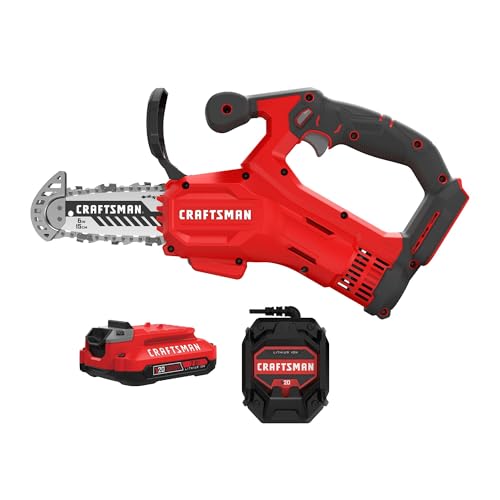


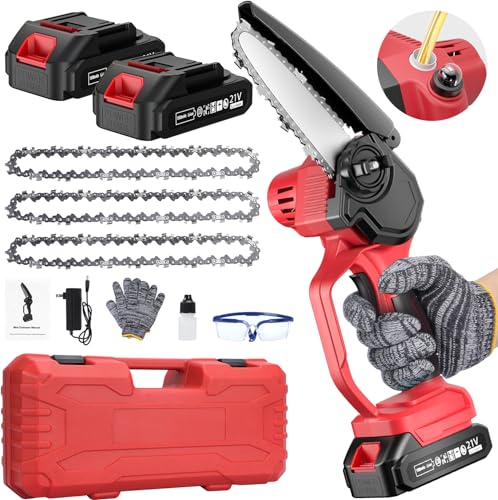


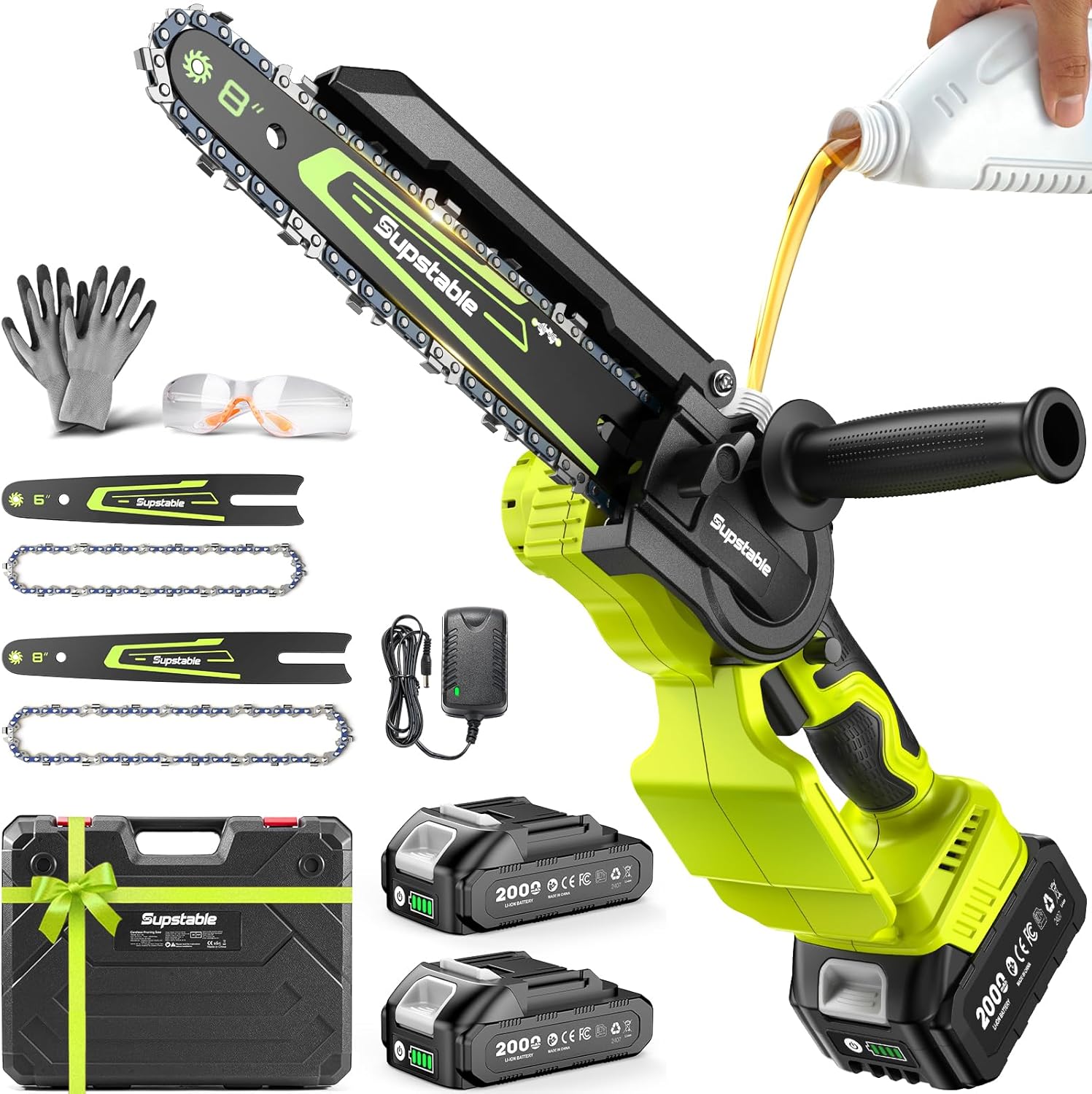
Who Should Buy a 6 Inch Chainsaw?
Almost every 6 inch saw is a battery powered pruning tool, so the right buyer is someone whose cutting list is mostly branches, not logs. These three groups get the most from the size.
Homeowners With Fruit Trees and Ornamental Trees
You prune a few times a year, mostly branches between 2 and 4 inches thick, and you want clean cuts without the pull starts, fuel mixing, and noise of a gas saw. A 6 inch model lives on a shelf, works the moment you squeeze the trigger, and stores in a fraction of the space. If your trees are mature and limbs run thicker, step up in bar size instead.
Campers and Trail Users
You need to clear small deadfall from a trail, process wrist thick firewood at a campsite, and keep the tool in a vehicle or tote. At around 2 to 4 pounds with the battery fitted, a mini saw rides along easily and asks for no fuel can. It pairs well with a folding hand saw for the occasional thicker piece.
Gardeners With Limited Grip Strength
You still do your own yard work but find a standard chainsaw tiring and hard to control. A compact saw with a loop style top handle, a lock off switch, and low weight lets you work in short sessions with less fatigue. Shorter sessions matter, because tired hands make mistakes, and even a small chain deserves full attention.
Key Features to Compare
Battery Platform and What Comes in the Box
Nearly every saw in this size runs on a rechargeable battery, either a brand platform pack or a smaller dedicated pack. If you already own cordless tools, staying on the same platform saves real money, since bare tools often cost half as much as kits. Check whether the price includes a battery and charger, because some listings hide that cost. A second battery matters more than a bigger one here, since pruning sessions are short but frequent.
Chain Speed and Cutting Feel
Manufacturers quote chain speed in meters per second or feet per minute, and higher speed means smoother, faster cuts in green wood with less pressure from you. A slow chain grabs and chatters in hardwood, which tires your hand and leaves ragged cuts that heal poorly on live trees. You do not need professional speed at this size, but avoid the slowest bargain models if you cut dry oak or locust often.
Automatic Oiler vs Manual Oiler
An automatic oiler feeds bar oil to the chain as you cut, and it is the single feature that most extends chain and bar life on a small saw. Cheaper models use a manual primer bulb you must press every few cuts, and owners forget, so the chain runs dry and stretches. Check the oil reservoir size and whether you can see the level through a window. Whichever type you pick, the saw still needs the reservoir filled before every session.
Chain Tensioning and Bar Design
Look for tool free tensioning with a side dial or knob, because small chains stretch early and often, and a saw that needs a wrench for every adjustment gets adjusted too rarely. The bar should have a replaceable sprocket nose or at least a standard mount so you can buy a fresh bar later. Confirm that replacement chains in the right pitch and gauge are easy to find, since an odd size can strand the tool.
Weight, Handle Shape and Safety Gear
Working weight with the battery fitted is the number that matters, and most good options land between about 2 and 4 pounds. A wraparound top handle gives control for vertical and horizontal cuts, while a simple pistol grip can twist in your hand on awkward angles. Most 6 inch saws skip a chain brake, so a lock off switch that prevents accidental starts and a wide hand guard are worth prioritizing.
What a 6 Inch Bar Can and Cannot Cut
The honest working capacity of a 6 inch bar is a branch about 4 to 5 inches thick in one pass, and that covers most pruning, shrub removal, and storm cleanup in a typical yard. For a log up to about 8 inches, you can cut from two sides, rotating the piece between passes, which works fine for a few firewood rounds. Beyond that, the motor strains, the chain overheats, and cut quality drops fast.
Know the limits clearly. This size is not for felling trees, bucking a winter of firewood, or cutting stumps at ground level, where one touch of soil dulls the chain instantly. Ground level work also puts the bar close to your feet. If your property regularly produces limbs over 6 inches, a 12 to 14 inch saw is the honest tool, and our guide to the best chainsaw sizes covers that step up in detail.
How Much Should You Expect to Spend?
Generic mini saws with small dedicated batteries sell for under $50, and they prune soft branches fine but usually pair a manual oiler with slow chain speed. The middle band, about $50 to $100, adds automatic oilers, better chains, and batteries that swap with other garden tools. Above about $100, you are paying for a major platform battery, brushless motors, and build quality that survives years of weekend use. For most yards, the middle band is the value sweet spot, especially if you already own a compatible battery, as explained in our overview of the best battery chainsaw options.
Common Mistakes to Avoid
- Cutting logs at the bar limit all day, which overheats the small motor and glazes the chain.
- Forgetting bar oil because the reservoir is tiny, so the chain stretches and the bar wears in a single session.
- Pruning from a ladder, where a shifting branch can pull you off balance with a running saw in hand.
- Letting the chain touch soil or gravel, which dulls the cutters faster than any wood will.
- Forcing a dull chain instead of swapping or sharpening it, which strains the motor and makes ragged, unsafe cuts.
- Storing the saw with a slack chain and an empty oiler, so it is never ready when a storm drops a limb.
How to Make Your 6 Inch Chainsaw Last Longer
Small chains live a hard life, so care is mostly about the chain and bar. Sharpen with a small round file matched to the chain, usually around 4 mm, and keep strokes even so the saw cuts straight. Clean packed sawdust and sap from the bar groove and oil port after each session, and flip the bar every few sharpenings so both rails wear evenly. Keep the chain snug but able to move by hand with gloves on.
Store the saw with the battery removed, the reservoir topped up so seals stay wet, and the scabbard on the bar. If your yard work is mostly seasonal pruning, run the saw for a minute every month or two so the oiler stays primed. Homeowners comparing sizes for general yard duty may also find our guide to the best chainsaw for homeowners useful for deciding when the mini saw is enough.
FAQ
How thick a branch can a 6 inch chainsaw cut?
A 6 inch chainsaw cuts branches up to about 5 inches thick in a single pass, and up to roughly 8 inches if you cut from two sides and rotate the piece. Staying under the single pass limit keeps cuts clean and the motor cool. For regular work above that size, a longer bar is safer and faster than pushing a mini saw past its design.
Does a 6 inch chainsaw need bar and chain oil?
Yes, every chainsaw chain needs bar oil, including the smallest ones. The oil reduces friction, carries heat away, and keeps the chain from stretching and rusting. Models with automatic oilers handle this for you, while manual oiler models need a press of the bulb every few cuts. Running dry even once can ruin a small chain, so check the reservoir before every session.
How long does a 6 inch chainsaw battery last per charge?
Most mini saws make roughly 60 to 100 cuts through 3 inch branches on one charge, depending on wood hardness and battery size. Dry hardwood and dull chains cut that number sharply. Because pruning sessions are usually short, one pack is often enough, but a second pack removes the temptation to force a fading battery, which strains both the tool and your control of it.
Is a 6 inch chainsaw safer than a full size chainsaw?
It is lighter and slower, but it is not a toy, and the chain can still cause a serious cut in a fraction of a second. Treat any deep cut or a cut that will not stop bleeding as an emergency and get medical care right away. Wear gloves and eye protection, keep both hands on the saw while it runs, and never cut above shoulder height.
Can a 6 inch chainsaw handle firewood?
It can process small rounds and kindling from branches up to about 5 inches, which suits campers and occasional fireplace users. It is the wrong tool for bucking a cord of full size logs, where the small bar, short runtime, and light motor all fight you. If firewood is a weekly job in winter, buy a mid size saw and keep the mini for pruning.
Final Thoughts
Match the saw to the branches you actually cut, and the choice gets simple. Prioritize an automatic oiler, a battery platform you can reuse, and honest working weight over headline power numbers. Keep the chain sharp, keep the oil flowing, and respect the size limits, and the best 6 inch chainsaw for your yard will earn its shelf space for years. Use the product table above to compare the main types before you decide, and if your cutting list grows, the wider best mini chainsaw category is the natural next step up.


