
Best Air Compressors for Nail Guns in 2026: A Buying Guide
Disclosure: We may earn a commission when you buy through links on this page, at no extra cost to you. As an Amazon Associate I earn from qualifying purchases. Learn more

Trim carpenters and framers can size the best air compressor for nail guns by CFM at 90 PSI, tank size, noise and pressure settings. Here is how to match them.
Nail guns are the easiest air tools to feed, and that is exactly why compressor shopping confuses people. Nearly any small compressor can fire a brad nailer, yet the wrong pick still ruins a workday through constant cycling, loud recovery runs and pressure that sags mid wall. The best air compressor for nail guns matches air delivery to your nailer type, holds steady pressure and stays quiet enough to work near. This guide explains the CFM math, tank sizes and pressure settings that make nailing feel effortless.
Your nailer decides the demand. A brad nailer sips air, while a framing nailer or roofing nailer drinks it in bursts, and running two guns at once changes the math again. The comparison table below lists the main compressor classes side by side, and the sections after it show how to size one for your crew of one or more.


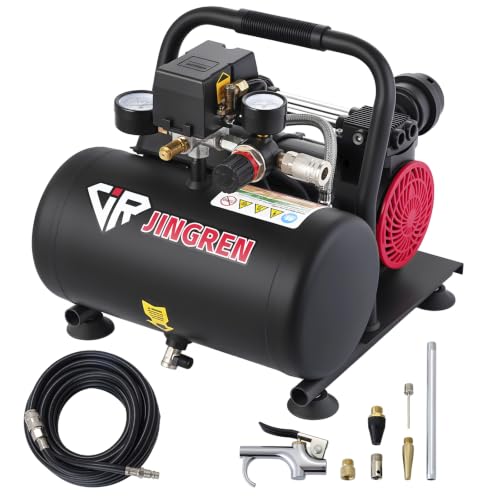
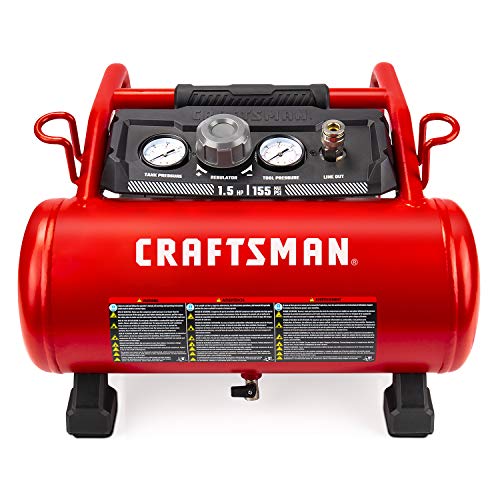


Who Should Buy Which Air Compressor?
Start with the nailer you fire most, not the biggest one you own. The best air compressor for nail guns used on trim and furniture is a different machine from one feeding a framing crew, so choose by the situations below.
Trim Carpenters and Furniture Builders
Brad, pin and finish nailers need tiny amounts of air per shot, so a compact 1 to 2 gallon compressor covers a full day of trim with short, infrequent recovery runs. Quiet matters more than capacity here, because the work happens in finished rooms. Our guide to the best pancake air compressor models covers the classic trim shape in detail, since the flat tank and low profile suit this work well.
DIYers Remodeling Room by Room
A 6 gallon class compressor is the remodel sweet spot: it runs finish and framing nailers, inflates tires and blows dust between tasks. It still carries with one hand and stores in a closet. If the compressor will live in the garage and serve the whole house, our guide to the best air compressor for home garage compares the larger stationary options that trade portability for capacity.
Framers and Roofers Running Two Nailers
Two framing nailers firing in rhythm need real air: look for delivery around 5 CFM at 90 PSI or more and a tank of 4 gallons upward, so the pump is not running constantly. Duty cycle becomes the deciding spec at this level. Crews working away from outlets can also weigh the battery powered route in our guide to the best cordless air compressor models, though those suit one light nailer rather than a framing pair.
Key Features to Compare
The full category is covered in our guide to the best air compressor types. The checks below are the ones that decide nailing performance specifically.
CFM at 90 PSI vs Nailer Demand
Compressors are rated in CFM delivered at 90 PSI, the working pressure most nailers use. A brad or finish nailer consumes roughly 0.3 to 0.5 CFM at a normal working pace, a framing nailer about 2 CFM in bursts, and a roofing nailer more again. Add the demand of every gun firing at once, then buy delivery comfortably above that figure. Ignore the inflated max CFM numbers some boxes print, because only the 90 PSI figure feeds your tools.
Tank Size and Recovery Time
The tank is a buffer that smooths the bursts. A bigger tank fires more nails between pump runs and keeps pressure steadier, while a small tank cycles often but stays light. Recovery time matters as much as size: a fast pump refills a 6 gallon tank in about a minute or two, so brief cycling is barely noticeable. For trim work, tank size is mostly a comfort choice. For framing, undersized tanks cause the pressure sag that leaves nails standing proud.
Maximum Pressure and Regulator Control
Most nailers run best between 70 and 120 PSI depending on the fastener and material, so a compressor topping out at 125 to 150 PSI gives you working headroom. The regulator is your depth control: small adjustments set nails perfectly flush without touching the gun. Look for a regulator knob you can turn with gloves on and a gauge you can read at a glance. Two couplers on mid size models let a second gun or a blow gun share the tank without swapping hoses.
Oil Free vs Oil Lubricated Pump
Oil free pumps dominate the nail gun sizes because they start in cold weather, work at any angle on a jobsite and need almost no maintenance. Oil lubricated pumps run quieter and last longer in stationary service, but they demand oil checks and level ground. For a compressor that travels to the work and fires nailers, oil free is the practical default. Just know that oil free pumps have a shorter service life under constant heavy use.
Noise Level in Decibels
Standard jobsite compressors run around 75 to 82 decibels, loud enough to shout over. Quiet models with low speed pumps drop to about 60 to 70 decibels, closer to conversation, which transforms indoor trim work and early morning starts in dense neighborhoods. The quieter pumps usually fill the tank a little slower, a trade most nail gun users happily accept. If the compressor will live indoors or in an attached garage, treat noise as a primary spec, not a bonus.
Matching the Compressor to Your Nailer
Work through your nailer list before buying. Count the guns that fire at the same time, note each gun manual for its air consumption and set your target delivery about a third above the total, so the pump rests between bursts. Then set the regulator per gun, starting at the low end of the manual range and firing into scrap wood, raising pressure a few PSI at a time until nails sit flush without denting the surface.
Hoses matter more than most buyers expect. A long 1/4 inch hose drops pressure at the gun during rapid fire, so keep nail gun hoses at 3/8 inch once you pass 50 feet, and drain the tank after each day so moisture does not reach the gun. A nailer that suddenly leaves nails proud usually has a pressure, hose or moisture explanation, rarely a broken gun.
What an Air Compressor for Nail Guns Should Cost
Compact 1 to 2 gallon trim compressors run about $90 to $150, often bundled with a brad nailer at the lower end. The versatile 6 gallon class costs about $130 to $220, with quiet models at the top. Larger twin stack and contractor units for two framing guns reach about $250 to $400. Money spent above the basic tier buys quiet, faster recovery and longer pump life rather than more nailing ability, since even modest compressors fire brads well.
Common Mistakes to Avoid
- Sizing by tank gallons alone, which ignores CFM delivery and leaves framing nails standing proud.
- Setting the regulator once and never again, so soft trim gets dented and hardwood joints stay underdriven.
- Running a long thin hose, which starves the gun of pressure exactly when you fire quickly.
- Skipping the daily tank drain, letting water reach the nailer and rust its driver blade.
- Buying a loud compressor for indoor trim work, then dreading every recovery cycle in a finished home.
How to Make Your Air Compressor Last Longer
Drain the tank after every workday by opening the valve until air and water stop hissing out, because tank rust starts with standing moisture. Keep the intake filter clean, since a clogged filter makes the pump work harder and run hotter. Store the compressor with the drain valve open in a dry space, and check the hose and couplers for leaks each season, because small leaks force extra cycles that wear the pump.
Let a hard working compressor cool between long framing sessions rather than running it continuously past its duty rating. Wipe down the pump housing so cooling fins stay clear of dust. A unit cared for this way delivers steady pressure for many years of nailing.
FAQ
What size air compressor do I need for a framing nailer?
For one framing nailer used at a DIY pace, a compressor delivering about 2.5 to 3 CFM at 90 PSI with a 4 to 6 gallon tank keeps up comfortably. Two framers working together need roughly double the delivery. Brad and finish nailers need far less, under 1 CFM in practice, which is why small trim compressors exist. Always compare the 90 PSI delivery figure, not the peak numbers printed in larger type.
Can a pancake compressor run two nail guns at once?
It can run two trim nailers easily, because their combined demand stays low and the tank buffer covers the bursts. Two framing nailers are a different story: the pump will run almost constantly and pressure will sag during fast sequences, leaving nails underdriven. A short trial tells the truth quickly. If the compressor recovers while you are still repositioning work, it is keeping up; if you wait on the pump, it is undersized.
What PSI should I set for a finish nailer?
Start around 80 to 90 PSI and test on scrap from the same material as your project. Raise the pressure in small steps until the nail head sits just below the surface without cracking the wood or denting it with the gun nose. Dense hardwoods need the upper end of the range, while soft pine and MDF need less. Setting depth at the regulator keeps results consistent across the whole job, unlike adjusting your technique nail by nail.
Why does a compressor cycle so often when running a nail gun?
Frequent cycling usually means the tank is small for the firing pace, the pressure switch range is narrow, or air is escaping somewhere. Check couplers and the hose with soapy water to find leaks, and confirm the tank drain valve is fully closed. Rapid fire framing work legitimately cycles a compact unit often, which is normal. Cycling every few nails during slow trim work is the signature of a leak or a failing check valve.
Can a nail gun compressor also inflate tires and run other air tools?
Tires, blow guns and inflation toys ask little air and work on any of these compressors. Tools that spin continuously are the problem: sanders, grinders and large impact wrenches can demand 4 to 8 CFM or more, beyond small compressor delivery. Short bursts are fine, but sustained use overheats the pump and the tool starves. If those tools join your kit later, size the next compressor for them rather than punishing the nail gun unit.
Final Thoughts
Nailing feels easy when the air supply disappears into the background: steady pressure, quick recovery and noise you can live with. Size the delivery to the guns you fire together, set the regulator on scrap before the real work and drain the tank daily. Use the product table above to compare the classes against those habits, and the best air compressor for nail guns for your projects will keep every nail flush from the first board to the last.


