
Best Clamps for Welding Buying Guide for 2026
Disclosure: We may earn a commission when you buy through links on this page, at no extra cost to you. As an Amazon Associate I earn from qualifying purchases. Learn more

The best clamps for welding survive heat and spatter while holding steel where you tack it. Compare clamp styles, throat depth and spatter resistant finishes.
Welding clamps live a harder life than any other clamp in the shop. They hold steel at exact angles while an arc throws sparks and spatter a few inches away, and they do it with gloved hands that need big, sure controls. Choosing the best clamps for welding means favoring all metal builds, spatter resistant finishes, and jaw shapes that reach into frames and tubing. The comparison table below lays out the common styles and sizes so you can build a set that matches the work you weld.
Woodworking clamps fail here for simple reasons: plastic pads melt, painted jaws burn, and light frames flex as metal expands with heat. This guide covers the styles welders actually reach for, how much holding force different joints need, and the care habits that keep threads and pivots working in a gritty welding bay.




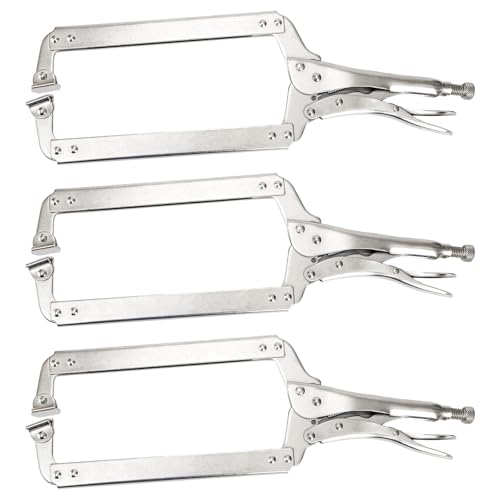
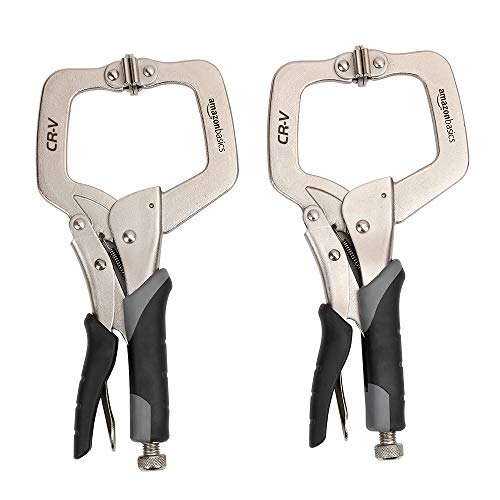
Who Should Buy Which Clamps for Welding?
Fabricators Building Frames and Gates
You assemble square tube frames that must stay square from first tack to final weld. Deep throat C clamps and strong hand clamps are your core tools, because they reach past the first rail to hold the second. You also work fast, so quick release levers and swivel pads that seat on uneven steel matter on every joint. A set in several sizes beats a pile of one size, since frame work swings from thin sheet to heavy tube in a single project.
Home Welders Doing Repairs and Small Projects
You fix brackets, trailers, and garden equipment, and you weld a few times a month rather than daily. Locking pliers style clamps suit you well because one tool grips round, flat, and angle stock while your other hand holds the gun. Add a couple of C clamps and a magnet square or two and most home jobs are covered. The clamp guide in our overview of the best clamps shows how welding clamps differ from the rest of a general clamp rack.
Production Welders Working at a Welding Table
You fixture parts on a platen table with a grid of holes, and speed of setup decides your output. Table clamps that drop into standard holes and cam tight in seconds suit you best, backed by insert tools and stops. Your clamps must shrug off spatter all day and clean up fast, so finishes and thread protection rank above squeezing force. Consistency matters too, because the tenth setup must match the first.
Key Features to Compare
All Metal Construction and Heat Tolerance
Every part near the joint must be metal, full stop. Plastic pads, vinyl dipped handles near the jaw, and painted faces soften, melt, or burn at welding temperatures and can contaminate the joint. Forged or cast steel frames with steel screws handle radiant heat and stray spatter without damage. Handles can sit farther from the heat and may carry grips, but the working end must stay bare metal. If a clamp lists a temperature limit, treat it seriously and keep that clamp for fit up work away from the arc.
Spatter Resistant Finishes
Spatter sticks to bare steel and builds up on screws and jaw faces until clamps stop closing true. Copper plated spindles and pads resist that buildup, because spatter does not bond well to copper and brushes off easily. Some jaw faces use a similar plated finish for the same reason. This single feature saves more cleanup time than any other, since a fouled screw thread can freeze a clamp in one session. Whatever finish you choose, plan on a wire brush routine after welding near the clamp.
Clamp Style and Jaw Shape
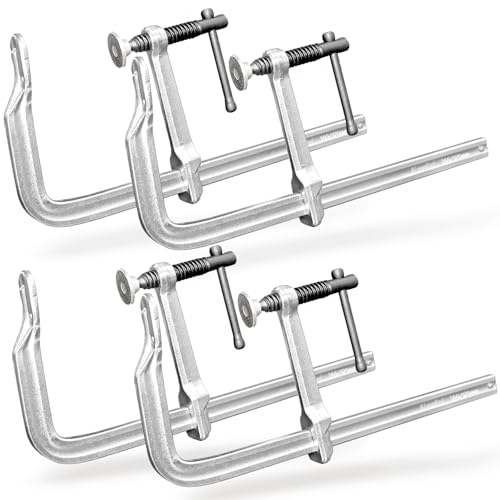
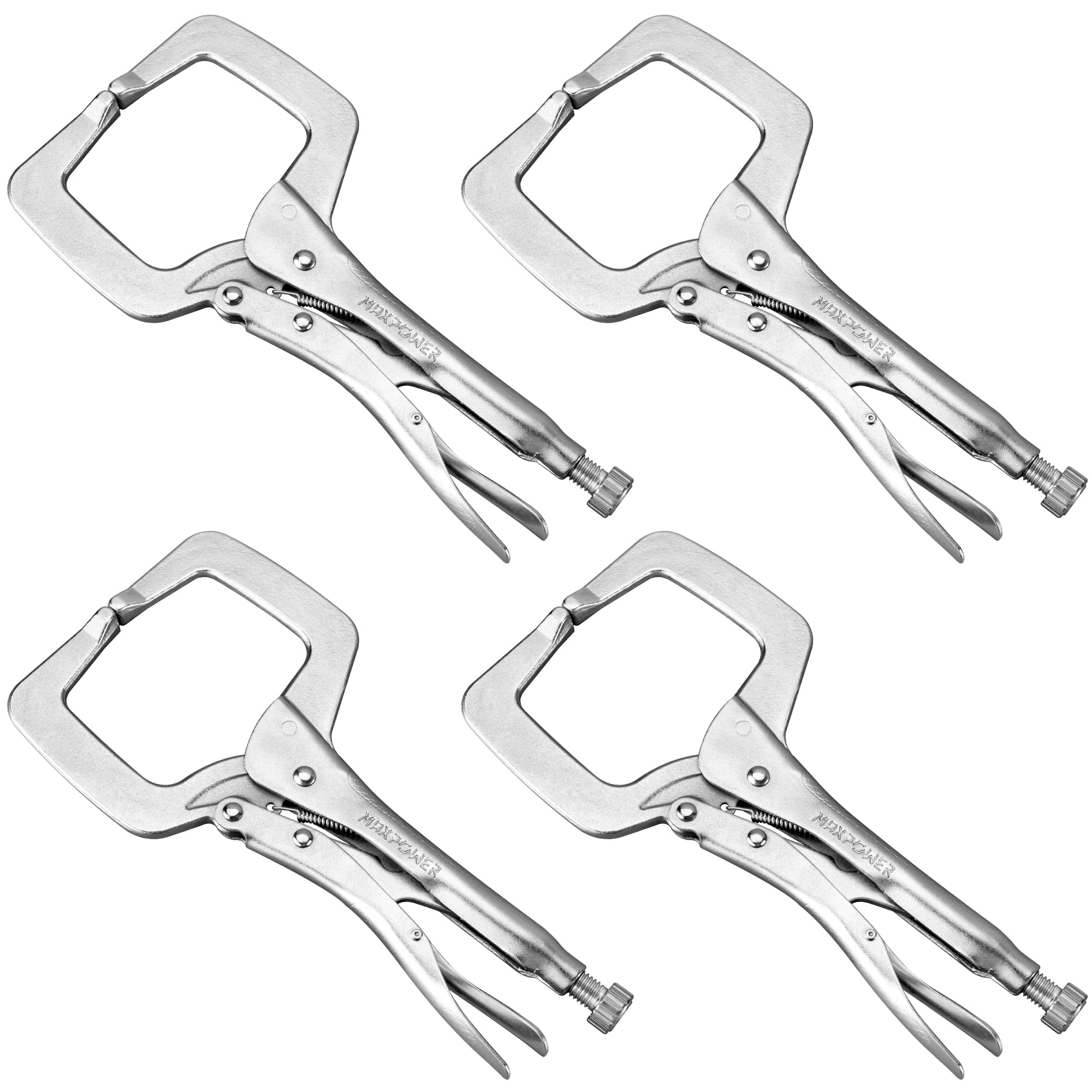
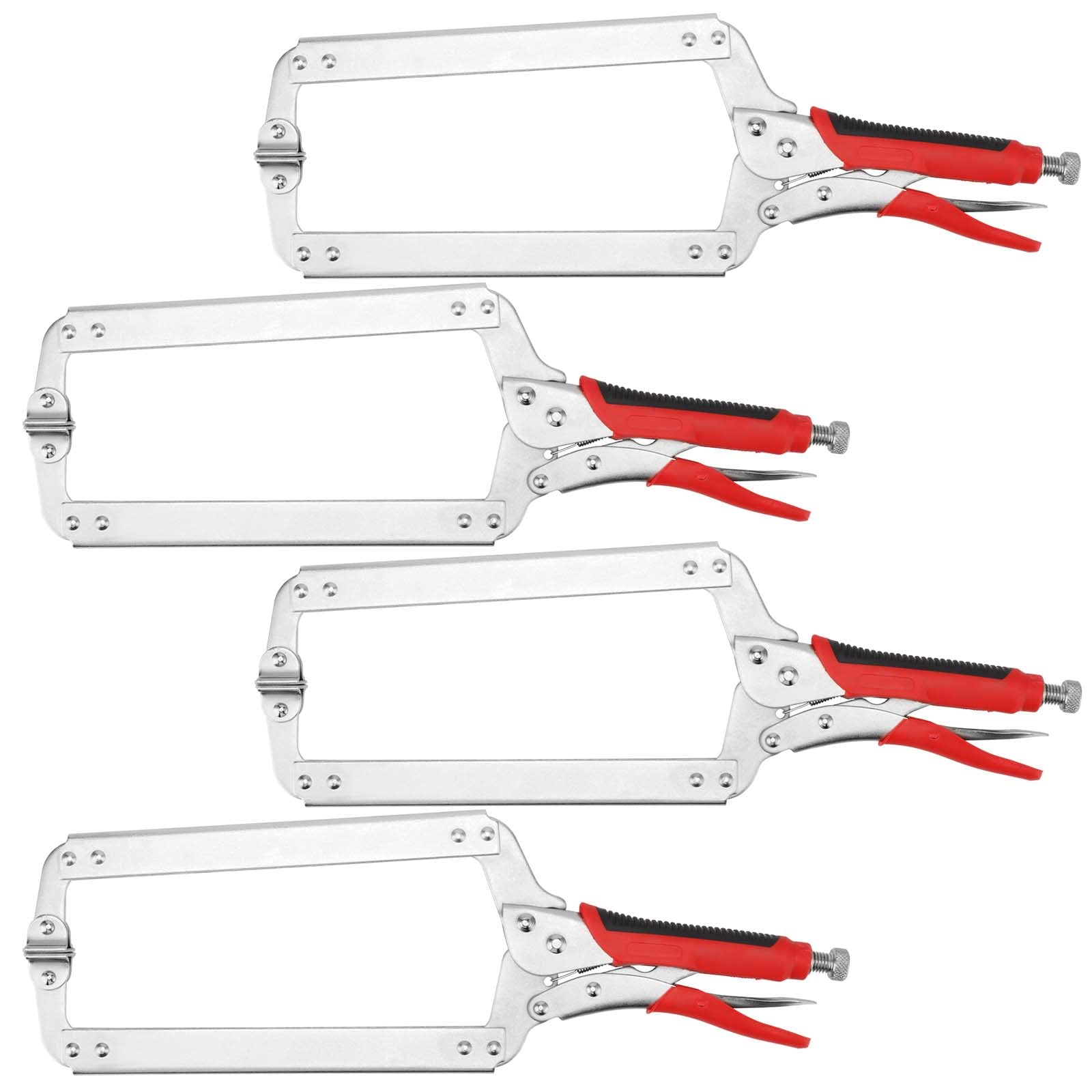
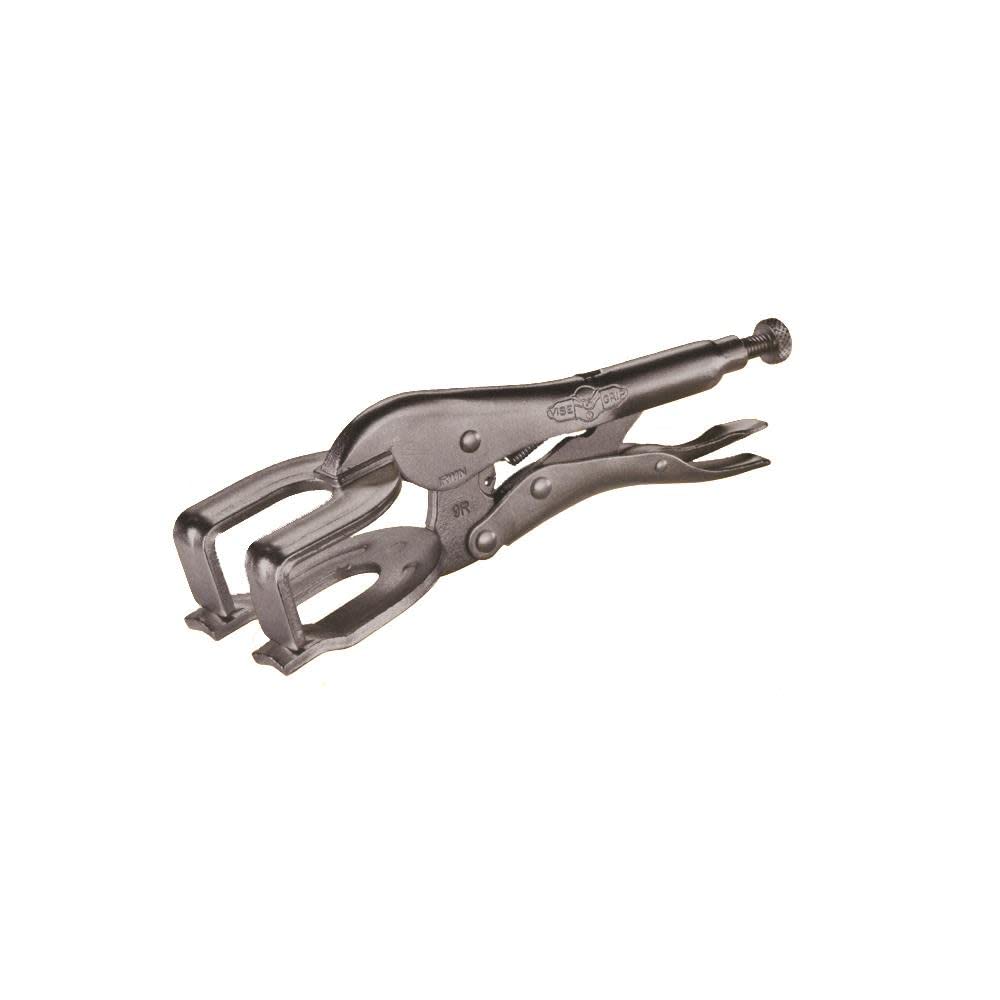
Each style earns its place. C clamps give the strongest, steadiest hold for heavy plate and tube. Locking clamps grip with one hand and adapt to odd shapes, which makes them the fit up favorite. F style clamps slide fast along a bar for long reaches on frames. Specialty shapes like sheet metal clamps with wide flat jaws hold panels without distortion, and chain or strap styles wrap pipe and irregular work. Most welders build a mixed set, and our guide to the best corner clamps covers the angle holding tools that complete a fit up kit.
Throat Depth and Opening Capacity
Throat depth decides how far from an edge the clamp can grip, and welding work constantly needs depth to reach the middle of frames and sheets. A shallow clamp that only bites the edge lets parts shift as heat moves through the joint. Match opening capacity to your stock range as well: too small and it will not fit over angle iron flanges, too large and it feels clumsy on thin sheet. Owning paired sizes, one compact and one deep, covers most joints without fighting the tool.
Holding Force and Pad Design
Clamping force on welding clamps ranges from a few hundred pounds on small locking tools to well over 1,000 pounds on heavy C clamps. You need enough force to stop parts creeping as the weld pool heats and expands the metal, but crushing force can bow thin sheet and tube. Swivel pads help by seating flat on angled surfaces instead of pushing sideways as you tighten. For sheet work, wide pads spread the load so the panel stays flat and mark free.
Table Compatibility
If you weld on a platen or fixture table, confirm the clamp stems match your table hole size, commonly 5/8 inch or 16 mm, before buying a set. Table clamps pair with stops, squares, and riser blocks as one system, and mixing brands can introduce sloppy fits. Hand clamp users can skip this, but anyone planning a table purchase should buy clamps and table as one decision. Woodworkers crossing over will recognize the logic from our guide to the best clamps for woodworking, though the tools themselves differ completely.
Grounding and Safety Notes for Welding Clamps
A holding clamp is not a work lead, and your ground clamp should bite clean, bare metal on its own. Routing welding current through a holding clamp can arc across its screw threads and ruin the clamp while heating the joint unevenly. Keep clamps clear of the direct arc path, wear gloves when handling clamps after welding because steel parts stay hot longer than they look, and set hot clamps on a metal surface to cool. Magnetic squares are handy for fit up, but remove them before long welds if heat warnings apply, since strong heat can weaken magnets over time.
Common Mistakes to Avoid
- Using woodworking clamps with plastic pads near the arc, which melt, smoke, and can contaminate the weld joint.
- Clamping only one side of a joint, so heat expansion walks the free side out of alignment as you weld.
- Running the ground through a holding clamp, which arcs across the threads and destroys its smooth action.
- Over tightening thin sheet and tube, which bows the metal and leaves gaps once the clamp comes off.
- Leaving spatter to build up on screws and pads, so the next setup seats crooked and grips weakly.
- Gripping a hot clamp bare handed right after welding, since dark steel hides heat that still burns.
How to Make Your Welding Clamps Last Longer
Brush spatter off screws, pads, and jaw faces while it is fresh, because fresh spatter releases far more easily than week old buildup. Keep screw threads clean and add the lightest touch of oil, then wipe most of it off so grit does not stick. Work pivots and locking mechanisms back and forth after dusty grinding sessions nearby, and store clamps dry, since welding bays collect the grinding dust that rusts steel fast. Check swivel pads for wobble and replace worn pads before they start pushing joints sideways under pressure.
FAQ
What should you look for in clamps for welding?
Start with all metal construction, a spatter resistant finish on the screw and pads, and a jaw style that matches your stock. Then match throat depth to the frames and sheets you build, and choose holding force that secures parts without bowing them. Quick, one handed operation matters because your other hand is usually busy. Buyers who also clamp long flat work sometimes compare against our guide to the best parallel clamps, though those are woodworking tools and must stay away from the arc.
Can you use regular woodworking clamps for welding?
Only for dry fit up well away from heat, and never while welding. Plastic pads and painted jaws melt and burn near an arc, light frames flex as metal expands, and bar clamps put your hands close to hot steel. A clamp ruined by one weld costs more than a basic welding clamp would have. Keep the two sets separate and labeled if your shop does both crafts.
How long do welding clamps last?
Quality forged clamps can last a career, because the frames rarely wear out. Screws, pads, and locking mechanisms take the abuse instead, and spatter neglect shortens their lives quickly. A clamp that gets brushed clean and stored dry after each session stays smooth for years. When a screw starts to bind despite cleaning, the threads are usually damaged, and replacement is safer than forcing it near hot work.
Are expensive welding clamps worth it?
For daily users, yes, because forged frames, plated spindles, and precise pads save setup time on every joint and survive spatter that kills cheap clamps. Occasional users can start with mid priced locking clamps and C clamps and upgrade the sizes they use most. The false economy is the bargain bin set with painted jaws and soft screws, which often fails in the first hot project.
How do you clean welding clamps?
Wire brush the jaw faces, pads, and exposed screw threads to knock spatter loose, then wipe everything with a dry rag. Work the screw through its travel while brushing so debris falls out of the threads instead of grinding in. Avoid heavy grease, which collects grinding dust into a paste. A final wipe with a lightly oiled cloth protects bare steel in humid shops without making the handles slippery.
Final Thoughts
Build your set around all metal construction, spatter resistant screws, and the jaw styles your projects repeat, and the best clamps for welding for your bay will be clear. Use the product table above to compare throat depth, capacity, and finish side by side, and remember to keep holding clamps and ground clamps in separate roles. Prices and availability can change, so check the product page before ordering.


