
Best Corded Leaf Blowers: Power, Cord Sizing, and Buying Guide for 2026
Disclosure: We may earn a commission when you buy through links on this page, at no extra cost to you. As an Amazon Associate I earn from qualifying purchases. Learn more

Compare the best corded leaf blower options by CFM, amps, cord length, and weight, with extension cord sizing tips for small and medium yards.
A corded leaf blower asks one thing of you, an outlet within reach, and in return it never runs out of charge, never needs fuel, and costs less than almost any battery model with similar power. For the right yard, that is the best deal in the category. Finding the best corded leaf blower for your property is mostly a measurement exercise: match the blower air numbers to your leaf load, then match the extension cord to the distance and the amp draw.
The comparison table below lines up the main classes, and the cord planning section later in this guide turns your yard measurements into a concrete setup. If your farthest corner sits beyond a safe cord run, this guide will tell you that honestly too, because a corded blower bought for the wrong yard helps nobody.





Who Should Buy Which Corded Leaf Blower?
Small Yard and Townhouse Owners Near an Outlet
If your grass is a modest patch and your cleanup is a patio, a walkway, and a short driveway, a mid power corded blower with a 25 to 50 foot cord covers everything and stores on a single hook. You get unlimited runtime for the autumn leaf drop at the lowest purchase price in the category, and the light weight suits quick weekly sweeps. Our broader guide to the best electric leaf blower class places corded models beside their battery cousins if you want the full electric picture before deciding.
Homeowners With Medium Yards and Heavy Fall Leaf Loads
A quarter to a half acre with mature trees is the corded sweet spot, provided an outdoor outlet or two lets you stage the work in zones. Choose the stronger end of the class, with air volume above roughly 450 CFM, and plan on a quality 100 foot cord in the right gauge. You will move in overlapping passes from the far corner back toward the house, and the cord management habits in this guide keep that from becoming a wrestling match. Unlimited runtime really matters when the whole lawn drops in the same two weeks.
Budget Buyers and Second Blower Owners
A corded blower is also the smart second machine. It costs little, asks for almost no maintenance, and covers the garage, the shop, and the driveway without touching the batteries your other tools depend on. Renters like it for the same reasons, since it stores in a closet and needs no fuel or charging station. If your main tool is gas or battery for the big yard, this class still earns a hook by the door for the daily sweep. Start with our hub guide to the best leaf blower categories if you are comparing across all power types.
Key Features to Compare
Air Volume (CFM) and Air Speed (MPH)
CFM moves the pile and MPH scours the surface, and leaf work needs the first more than the second. Corded blowers in this class run roughly 350 to 650 CFM, which moves dry leaves across a lawn easily and handles damp leaves with a slower, closer pass. High MPH numbers on the box often come from a narrow nozzle that shrinks the working width, so judge by CFM at the nozzle you will actually use. For wet leaves matted into grass, technique matters as much as power: lift the edges with a rake, then blow the loosened layer in sections.
Motor Amps and Variable Speed Control
Amps describe how much power the motor draws, and corded blowers run about 7 to 13 amps, with the top of that range delivering the strongest air. Variable speed matters because full power is wrong for flower beds, mulch, and gravel, where you want a gentle pass that moves leaves and leaves the bed alone. A cruise control or a lockable trigger setting saves your hand on long runs. Two speed models are workable, but a dial gives you the middle settings that delicate areas need, and it also tames noise when you work near open windows.
Extension Cord Gauge and Voltage Drop
The cord is part of the machine, and the wrong one quietly strangles it. Cord gauge must match both length and amp draw: a 16 gauge cord serves a smaller blower to about 50 feet, a 14 gauge cord handles most blowers to 100 feet, and long runs at full amps deserve 12 gauge. An undersized cord drops voltage, which makes the motor run hot, weak, and short lived. Buy the cord with the blower, not from whatever is coiled in the garage, and inspect it yearly for nicks. This single decision protects both performance and motor life.
Weight, Cord Retention, and Handling
Corded blowers are the lightest full power option, commonly about 5 to 9 pounds, because there is no engine and no large battery aboard. That lightness is the reason some owners with shoulder or wrist limits choose corded on purpose. Look for a cord retention hook or clip near the handle, which keeps a tug on the cord from pulling the plug out of the tool mid pass, the signature annoyance of this class. A comfortable handle and a blower tube that reaches the ground without stooping complete the ergonomic picture.
Vacuum and Mulching Modes
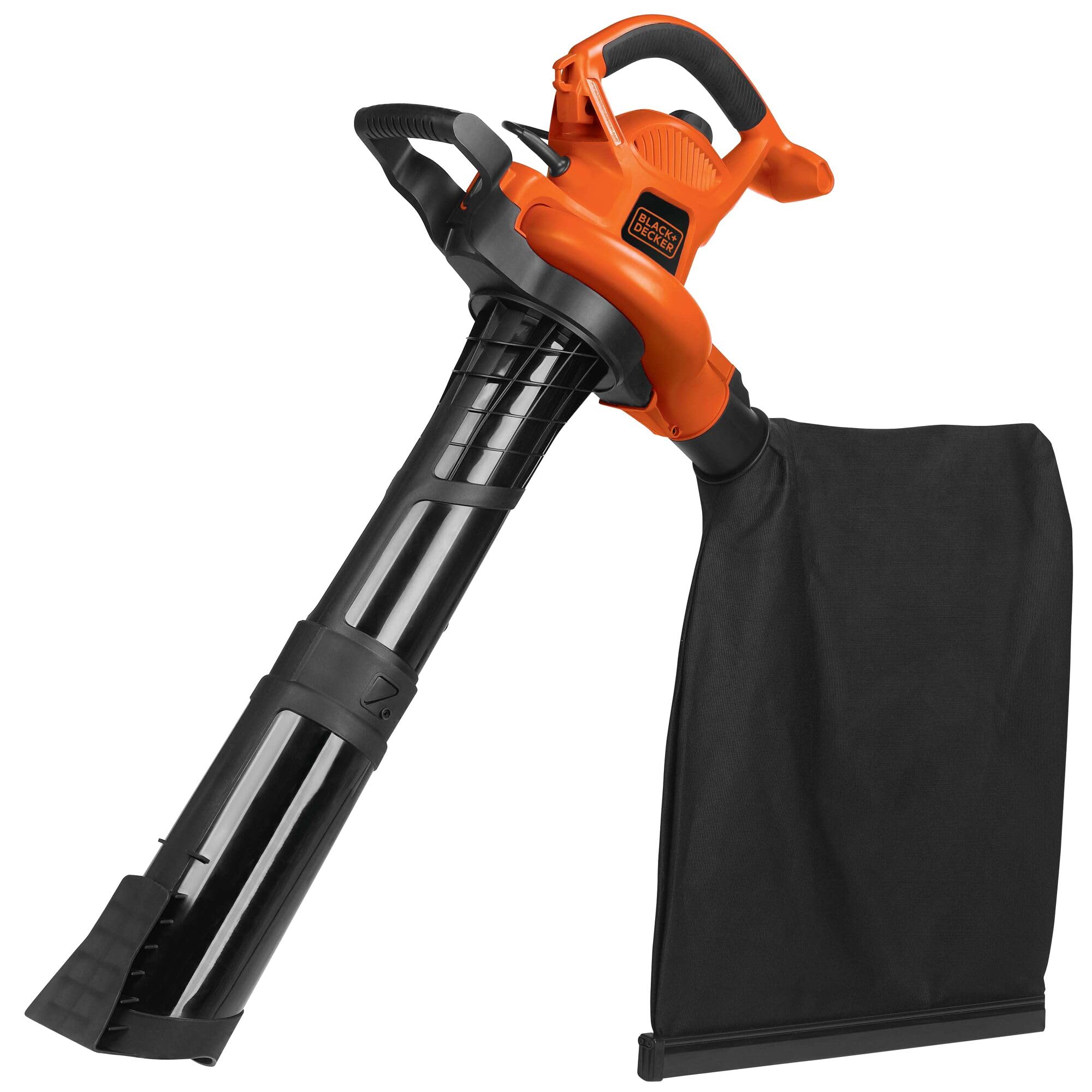
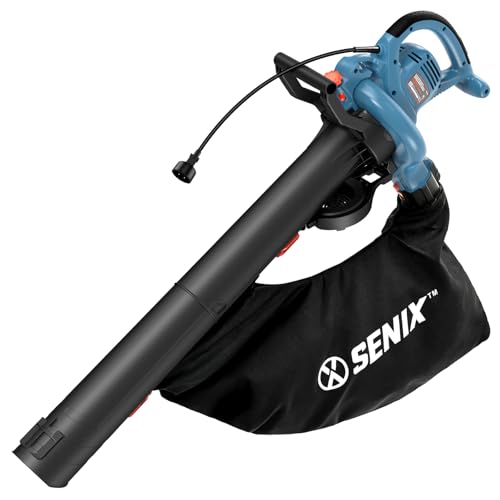
Many corded models convert to a vacuum that shreds leaves into a shoulder bag, which suits patio corners, window wells, and beds where blowing just relocates the mess. Mulching ratios around 10 to 1 or better shrink a pile into a bag you can carry to the compost. Impeller material matters here: metal impellers survive the twigs and acorns that chip plastic ones. Our guide to the best vacuum leaf blower class covers the vac first designs if this mode will be your main use rather than a side feature.
Planning Your Cord Route Around the Yard
Walk the yard before the leaves fall and note every outdoor outlet. Then divide the property into zones that each reach comfortably from one outlet with your cord length, leaving slack for working around trees and beds rather than stretching the cord taut. Work each zone by blowing leaves away from the house toward a collection point, and keep the cord behind you, draped over a shoulder or trailed on the side you have already cleared, so you are never dragging it through the pile you are building.
Know the honest limit as well. Beyond about 100 to 150 feet from the nearest outlet, voltage drop and cord cost erase the corded advantage, and that far corner is where a battery model from our guide to the best battery leaf blower options makes more sense. Many owners solve it with both: corded power for the main yard, battery for the far strip and the roof valleys.
Common Mistakes to Avoid
- Running a 12 or 13 amp blower on a long, thin household cord, which starves the motor of voltage and overheats both cord and tool.
- Judging by MPH alone and buying a narrow nozzle screamer that moves a thin stream fast but clears a lawn slowly.
- Blowing at full power through mulch and flower beds, scattering the bed material along with the leaves.
- Dragging the cord through wet leaves and puddles with a damaged jacket, which turns a chore into a shock hazard.
- Vacuuming up stones, acorns, and wet mats of leaves in vac mode, which chips the impeller and clogs the bag inlet.
How to Make Your Corded Leaf Blower Last Longer
Keep the air intake screens clear, because a starved motor runs hot, and brush leaves and dust out of the housing vents after autumn work. Store the blower indoors, hung by its handle, with the cord coiled in large loops and never wrapped tight around the tool, since tight bends break cord conductors at the plug ends. Inspect the cord jacket each season and retire it at the first deep cut.
If your model vacuums, empty the bag before it is packed full and shake out the fine dust that coats the fabric and chokes airflow. Clean or replace the impeller area debris after any hard impact with a stone, and if the motor note changes pitch suddenly, stop and check for a cracked housing or a loose tube rather than running it into a failure.
FAQ
Are corded leaf blowers worth it?
Yes, when your work sits within a safe cord run of an outlet, which covers most small and medium yards. You get full power with no runtime limit, the lowest prices in the category, light weight, and near zero maintenance beyond cord care. The worth fades with distance: if your leaf work regularly happens 150 feet or more from power, the cord becomes the chore. Judge by your farthest regular cleanup spot, not by your average one.
What is the best corded leaf blower?
The best corded leaf blower for most yards pairs air volume around 450 to 600 CFM with a variable speed dial, a 12 amp class motor, and weight under about 8 pounds. Add vacuum mode if your property has beds, wells, and corners where blowing fails. Then complete the purchase with the right cord, 14 gauge for runs to 100 feet, because the blower only performs as well as the cord feeding it. That combination covers nearly every suburban leaf season.
What size extension cord does a corded leaf blower need?
Match the gauge to the amp draw and the length. As a working rule, a 16 gauge cord suits smaller blowers up to about 50 feet, a 14 gauge cord suits most blowers up to 100 feet, and a 12 gauge cord is the safe choice for long runs at 12 to 13 amps. A cord that feels warm in use is telling you it is undersized. Outdoor rated jackets are required, and one continuous cord beats two joined cords for both voltage and safety.
Can a corded leaf blower handle wet leaves?
Yes, with adjusted technique and the stronger half of the class. Wet leaves stick to grass and to each other, so work in smaller sections, get the nozzle close and low to peel the layer, and expect roughly double the time of dry work. A useful trick is to wait for a dry afternoon after a frost, when leaves crisp and release. If wet leaf volume overwhelms the blower every year, loosen the layer with a mower pass first, then blow the chopped leaves.
How long does a corded leaf blower last?
Corded blowers are among the longest lived yard tools, often running a decade or more, because the electric motor has few wear parts and there is no battery to age out. The cord, the switch, and the impeller are the usual end points, and all three suffer from storage and impact abuse more than hours. Keep the intake clear, the cord sound, and the impeller free of stone damage, and the blower will likely outlast the trees it cleans up after.
Final Thoughts
If your yard fits inside a smart cord run, the corded class gives you the most leaf moving power per dollar and per pound in the whole category, and the best corded leaf blower for your home is simply the one whose CFM, cord gauge, and weight match your zones. Measure first, buy the cord as part of the tool, and leaf season becomes a series of short, easy sessions. Compare the classes in the product table above to start.


