Best Extension Cords for Generators: Everything to Know Before Your First Purchase
Disclosure: We may earn a commission when you buy through links on this page, at no extra cost to you. As an Amazon Associate I earn from qualifying purchases. Learn more

How to choose safe generator cords: plug types, gauge, length and setup.
A generator is only as useful as the cords that connect it to your appliances or home, and the wrong cord can overheat, drop voltage or simply not fit the outlet on your generator. Generator cords range from heavy duty 10 gauge extension cords for running a refrigerator to locking 30 amp and 50 amp cords that feed a transfer switch or power inlet. This beginner friendly guide explains how to choose the best extension cords for generators, from plug types to wire gauge and safe setup.
We start with the basics, then explain the specs in plain English, list rookie mistakes and walk through first use. Connecting a generator to home circuits requires a properly installed transfer switch or interlock and power inlet, done by a licensed electrician; never backfeed through a household outlet.




Extension Cords 101: The Basics
There are two main kinds of generator cords. Standard heavy duty extension cords plug into the generator's regular 120V household style outlets (NEMA 5-20R) and run individual appliances like a refrigerator, freezer or space heater. Generator power cords, sometimes called transfer cords, use locking plugs such as NEMA L14-30 (30 amp, 120/240V) or 14-50 (50 amp) and connect the generator to a power inlet box that feeds a transfer switch or interlock.
Two numbers define a cord's capacity. Wire gauge (AWG) measures thickness; lower numbers are thicker and carry more current. Amperage rating tells you the maximum current the cord can carry safely. Longer cords lose more voltage, so heavier gauges are needed for longer runs.
Generators should run at least 20 feet from the house, with exhaust pointed away from doors and windows, so most setups need cords of 25 to 50 feet.
Key Specs for Extension Cords for Generators, Explained
Focus on plug type, wire gauge, length, jacket rating and connectors.
Features That Matter for Generators
Generator cords should be rated for outdoor use (look for W in the jacket rating, like STW or SJTW), use thick copper conductors and have molded or locking plugs that stay connected. Lighted ends show when power is flowing, and weather resistant covers protect connections from rain. Choose cords long enough to keep the generator a safe distance from the house.
Plug Types and Amperage (L14-30, 14-50, 5-20)
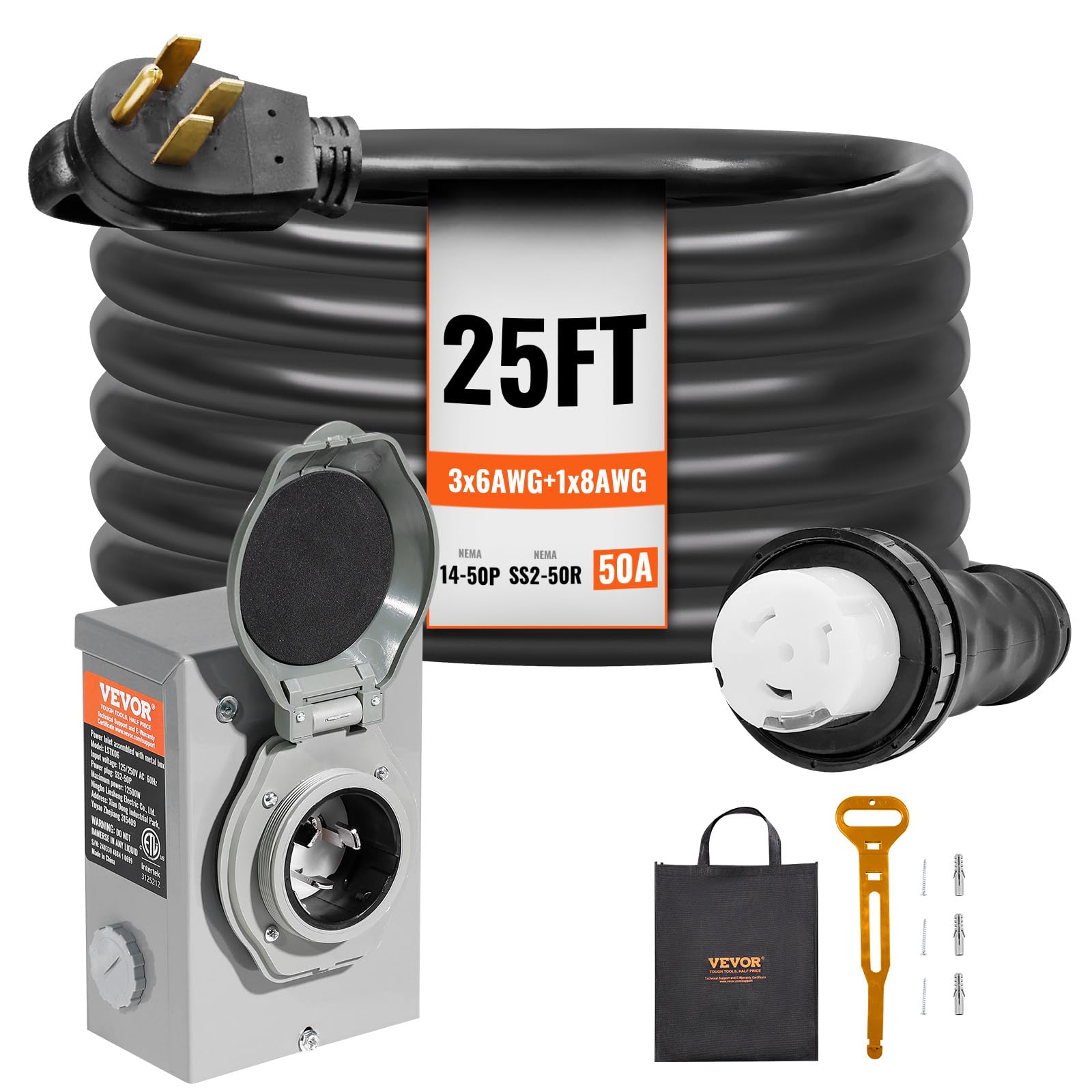
Match the cord to your generator's outlets. Most mid size generators have a 4 prong L14-30R 30 amp twist lock outlet, which pairs with a cord like the PlugSaf 40 foot 30 amp cord rated for 125/250V and up to 7,500 watts. Larger generators often have a 14-50R 50 amp outlet, which pairs with kits like VEVOR's 50 amp cord and inlet box. For individual appliances, use 12 or 10 gauge cords on the regular outlets.
Wire Gauge and Length
For 30 amp generator cords, 10 gauge (10 AWG) wire is standard. For 50 amp cords, 6 gauge conductors are common. For appliance extension cords, use 12 gauge for up to about 50 feet and 10 gauge for heavier loads or longer runs, like the Iron Forge 10 gauge 50 foot cord. Avoid thin 16 gauge household cords for generators.
Jacket Ratings and Weather Resistance
Jacket codes describe flexibility and durability. S means service grade, J means junior (lighter) service, T means thermoplastic, W means outdoor rated and OO means oil resistant. STW and SJTW cords suit outdoor generator use. Flexible jackets stay pliable in cold weather, which matters during winter outages.
Clean Power and Electronics
Cords do not change power quality, but thick, short cords reduce voltage drop, which protects motors and electronics. Inverter generators supply cleaner power for computers and TVs; pairing them with quality cords keeps voltage stable.
Power Inlet Boxes and Transfer Kits
A power inlet box mounted on the outside wall lets you plug the generator cord in safely, while the transfer switch or interlock inside switches circuits from the grid to the generator. Kits like the Connecticut Electric EmerGen 30 amp kit bundle a manual transfer switch with a 50 foot cord. Installation should be done by a licensed electrician and may require a permit.
Generator Cord Types Compared
| Cord Type | Plug | Typical Use | Typical Gauge |
|---|---|---|---|
| Heavy duty extension cord | 5-15 or 5-20 | Single appliances | 12 or 10 AWG |
| 30 amp generator cord | L14-30P to L14-30R or CS6364 | Power inlet or transfer switch up to about 7,500 W | 10 AWG |
| 50 amp generator cord | 14-50P to SS2-50R | Larger generators to a 50 amp inlet | 6 AWG |
| Splitter or adapter | Various | Converting outlets or splitting loads | Matched to rating |
Cord Care and Storage
The best extension cords for generators last for years if they are stored properly between outages. Wipe cords clean and let them dry before coiling them loosely in an over under pattern, which prevents kinks and twisting. Hang them on a wide hook or store them in a bin away from sunlight, rodents and sharp tools. Before storm season, inspect the full length for cuts, cracks, crushed spots and loose or discolored plugs, and replace any damaged cord rather than taping it. Keep your cords with the generator so they are ready when the power goes out.
Rookie Mistakes to Avoid
- Using thin indoor cords: 16 gauge cords overheat under generator loads.
- Backfeeding through a dryer outlet: dangerous and illegal; it can electrocute utility workers.
- Running the generator too close to the house: use cords long enough to keep it 20 feet or more away.
- Daisy chaining cords: it adds resistance and fire risk.
- Leaving connections in puddles: keep plug connections dry and off the ground.
Getting Started: Setup and First Use
- Identify your generator's outlets and buy cords with matching plugs and ratings.
- Place the generator outdoors on a level surface, at least 20 feet from doors, windows and vents.
- Uncoil cords fully before use so they do not heat up, and route them away from foot traffic.
- For home circuits, plug the cord into the power inlet and switch the transfer switch or interlock as your electrician instructed.
- Start the generator, then add loads one at a time.
- Inspect cords for cuts, crushed spots or melted plugs before every use.
Frequently Asked Questions
What features matter most in extension cords for generators?
The right plug type, adequate wire gauge, outdoor jacket rating and sufficient length matter most. Match the cord's amperage to your generator outlet and choose 10 gauge or heavier for high loads.
Do I need a transfer switch?
Yes, to power home circuits safely. A transfer switch or interlock with a power inlet prevents backfeeding. To run individual appliances, heavy duty extension cords plugged into the generator are enough.
What gauge cord do I need for a generator?
Use 10 gauge for 30 amp generator cords and 6 gauge for 50 amp cords. For appliance cords, 12 gauge suits moderate loads up to about 50 feet and 10 gauge suits heavier loads or longer runs.
How long can a generator cord be?
Most setups use 25 to 50 feet. Longer cords cause more voltage drop, so use heavier gauge wire for longer runs and avoid joining several cords together.
Can a generator run a refrigerator through an extension cord?
Yes, with a heavy duty 12 or 10 gauge outdoor cord. A refrigerator draws about 700 running watts with a brief startup surge; plug it directly into the generator with no thin cords in between.
Inverter or conventional generator: does it matter for cords?
The cord requirements are the same; match plug type and gauge. Inverter generators supply cleaner power for electronics, and quality cords help keep voltage stable with either type.
Our Verdict
Match the plug to your generator, choose 10 gauge for 30 amp cords and 6 gauge for 50 amp cords, and keep the generator at least 20 feet away with a properly installed inlet and transfer switch. The PlugSaf 30 amp cord suits most mid size generators, the VEVOR 50 amp kit suits larger units and a 10 gauge outdoor cord suits individual appliances. Keep those basics in mind and choosing among the best extension cords for generators becomes simple. Compare current options in the product table above, and see our guide to the best inverter generators for home backup.