
Best Battery Powered Generators for Every Need: How to Pick the Right One
Disclosure: We may earn a commission when you buy through links on this page, at no extra cost to you. As an Amazon Associate I earn from qualifying purchases. Learn more

Match a portable power station to how you use it: camping, outages or off grid living.
Battery powered generators, usually called portable power stations, store electricity in a large lithium battery and deliver it through household AC outlets, USB ports and car sockets with no fuel, fumes or engine noise. That makes them safe to run indoors during an outage and welcome at quiet campgrounds. But a weekend camper, a family preparing for storms and someone living in a van all need different capacities and features. The best battery powered generators are the ones sized to how you will actually use them.
This guide matches power stations to real users, explains capacity, output and solar charging, lists common mistakes and answers the questions people ask before switching from gas.




Who Should Buy Which Battery Powered Generators?
Beginners and campers do well with about 1,000Wh, storm prone households should choose 2,000Wh or more with fast charging, small space users should prioritize weight and size and frequent users should prioritize LiFePO4 batteries and expandability.
For Weekend Beginners
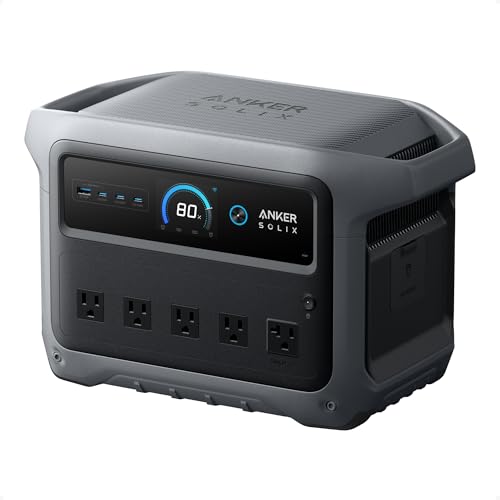
A 1,000Wh class power station, such as the Jackery Explorer 1000 v2 (1,070Wh, 1,500W output) or Anker SOLIX C1000 Gen 2 (1,024Wh, 2,000W output), powers phones, laptops, lights, a small fridge or a coffee maker on a camping weekend. Simple displays and app control make them easy to learn, and they weigh around 24 to 25 lb.
For Bad Weather and Tough Conditions
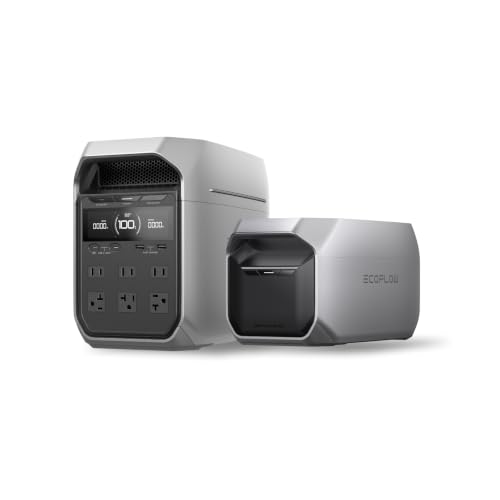
Households facing storms and outages should look at 2,000Wh or larger units like the Jackery Explorer 2000 v2 (2,042Wh, 2,200W) or EcoFlow DELTA 3 Ultra Plus (3,072Wh). UPS style switching, which Jackery lists at 20 milliseconds, keeps routers and computers running when the grid drops. Solar panels let you recharge during multi day outages.
For Small Spaces and Easy Storage
Apartment dwellers and van owners need compact units that store in a closet or under a seat. Anker says its C1000 Gen 2 is 14% smaller and 11% lighter than similar models, and the BLUETTI AC180 packs 1,152Wh into a portable case. Unlike gas generators, power stations can be stored and used indoors.
For Frequent or Serious Users
Van lifers, RV owners and off grid cabin users cycle their batteries daily, so they need LiFePO4 chemistry rated for thousands of cycles, high solar input and expansion batteries. Anker lists at least 80% capacity after 4,000 cycles for the C1000 Gen 2, and Jackery lists over 70% after 4,000 cycles for the Explorer 1000 v2.
Key Features to Compare in the Best Battery Powered Generators
Compare capacity, output, charging speed, battery chemistry and ports. Each decides what you can run and for how long.
Portability and Safety Features
Weight rises with capacity: 1,000Wh units weigh about 23 to 25 lb, 2,000Wh units about 40 lb and 3,000Wh units more. LiFePO4 batteries are more thermally stable than older lithium chemistries. Look for UL certifications listed by the manufacturer, battery management systems and pure sine wave outlets for sensitive electronics.
Runtime and Fuel Efficiency
Estimate runtime by dividing watt hours by device watts, then multiplying by about 0.85 to account for inverter losses. A 1,000Wh station runs a 60W laptop for roughly 14 hours or a 150W fridge for around 5 to 6 hours of compressor time, often stretching longer since fridges cycle on and off.
Battery Capacity and Solar Input
Capacity in watt hours (Wh) sets how much energy you store; output in watts sets what you can run at once. Solar input determines off grid recharge speed: the BLUETTI AC180 accepts 500W of solar for a 2.8 to 3.3 hour recharge, and Anker's C1000 Gen 2 accepts 600W for about 1.8 hours, according to the makers.
Fuel Type (Gasoline, Propane, Dual Fuel, Natural Gas, Solar)
Battery generators use stored electricity, recharged from wall outlets, car sockets or solar panels. Gas and propane generators provide far more total energy for long outages but must run outdoors. Many households pair a power station for indoor use with a fuel generator for extended outages.
Generator Type (Portable, Inverter, Standby, Solar Power Station)
Power stations are silent, fume free and indoor safe but limited by battery size. Inverter generators provide clean power for days with fuel. Standby generators install permanently. Choose a power station for short outages, electronics and quiet camping.
Charging Speed
Fast AC charging refills units in about an hour: Anker lists 49 minutes at 1,600W, BLUETTI lists one hour at 1,440W and Jackery lists one hour in emergency mode for the 1000 v2. Fast charging matters before storms and between camping days.
Battery Powered Generators by Capacity
| Capacity | Typical Weight | What It Runs | Typical Price |
|---|---|---|---|
| About 1,000Wh | 23 to 25 lb | Phones, laptops, lights and a small fridge for hours | Around $500 to $700 |
| About 2,000Wh | About 40 lb | Full size fridge for most of a day, router, lights, small appliances | Around $900 to $1,300 |
| About 3,000Wh+ | 60 lb and up | Extended home backup, some 240V setups, expandable systems | Around $2,000 and up |
Battery Powered vs Gas Generators
Battery powered generators win on noise, indoor safety and maintenance, while gas generators win on total energy and cost per kilowatt hour.
- Noise: power stations are nearly silent, with fans that Jackery lists under 30 dB in quiet charging mode; gas inverters run around 50 to 65 dBA.
- Indoor use: power stations produce no exhaust and can run inside; gas generators must run outdoors, far from windows.
- Energy: a 2,000Wh power station stores about what a small gas inverter produces in a few hours, while a gas generator can run for days with fuel.
- Maintenance: power stations need only occasional charging; gas generators need oil changes, fresh fuel and regular running.
- Cost: power stations cost more per watt of output but save on fuel and upkeep.
For short outages, apartments and quiet camping, a power station is the better fit. For multi day outages and heavy loads, pair it with a fuel generator or choose a larger expandable system with solar panels.
Common Mistakes to Avoid When Buying Battery Powered Generators
- Confusing watts and watt hours: output decides what runs; capacity decides how long.
- Expecting whole home backup: power stations cover essentials for hours, not central air for days.
- Ignoring surge needs: fridges and power tools need surge capacity above running watts.
- Skipping solar compatibility: check voltage and wattage limits before buying panels.
- Buying older lithium chemistries: LiFePO4 lasts far more cycles.
Care and Maintenance Tips
- Store at around 50 to 80% charge and top up every few months.
- Keep the unit in moderate temperatures, away from heaters and freezing garages.
- Keep vents clear and dust free.
- Update firmware through the app for charging and safety improvements.
- Use the manufacturer's cables and compatible solar panels.
Frequently Asked Questions
How long can a battery powered generator run continuously?
It depends on capacity and load. A 1,000Wh unit runs a 100W load for about 8 to 9 hours, and a 2,000Wh unit about twice that. With solar panels, it can keep running during daylight as panels recharge it.
Do I need a transfer switch?
Most portable power stations do not need a transfer switch; you plug devices directly into them. Some larger systems offer home integration kits, which require installation by a licensed electrician.
Inverter or conventional: which is better?
Power stations use built in pure sine wave inverters, so their power is clean like an inverter generator. Compared with fuel generators, they are quieter and indoor safe but store far less energy.
What size generator do I need to power a house?
A power station rarely powers a whole house. For essentials like a fridge, lights and Wi-Fi, choose 2,000Wh or more. For whole home backup, a fuel or standby generator, or a large home battery system, is needed.
Can a generator run a refrigerator?
Yes, most 1,000Wh and larger power stations can run a refrigerator. Check that output and surge ratings exceed the fridge's startup draw; runtime depends on capacity and how often the compressor cycles.
Final Thoughts
Size capacity to how long you need power, output to what you need to run and choose LiFePO4 with fast charging and solar input. Beginners and campers do well with 1,000Wh units, storm preppers with 2,000Wh or more and van lifers with expandable systems. Keep those points in mind and the best battery powered generators will give you silent, fume free backup power. Compare current models in the product table above.


