
Best Inverter Generators for Home Backup by Budget: Smart Picks for 2026
Disclosure: We may earn a commission when you buy through links on this page, at no extra cost to you. As an Amazon Associate I earn from qualifying purchases. Learn more

Inverter generators for home backup sorted by budget, with three picks.
When the grid goes down, an inverter generator can keep the fridge cold, the sump pump running and phones and laptops charged, with clean power that is safe for electronics and noise levels your neighbors can live with. Prices range from about $700 for a 3,500 watt dual fuel unit to $5,000 for a premium 7,000 watt model, and knowing what each tier delivers keeps you from overspending. This guide sorts the best inverter generators for home backup by budget.
Connecting any generator to home circuits requires a properly installed transfer switch or interlock kit, done by a licensed electrician; never backfeed power through an outlet.



Top 3 Inverter Generators for Home Backup by Budget
The WEN DF450i is our best budget pick, the Westinghouse iGen8200TFc is the best midrange pick and the Honda EU7000iS is the best premium pick.
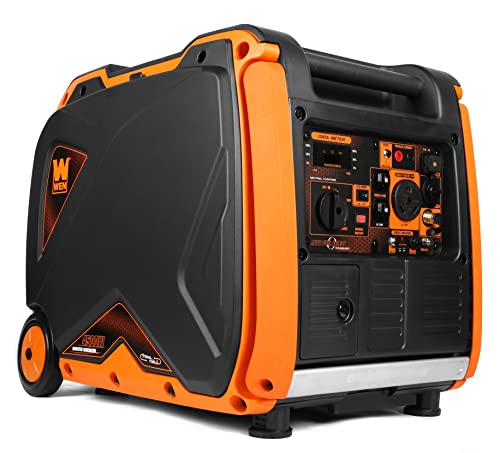
Best Budget Pick: WEN DF450i Dual Fuel Inverter Generator
The WEN DF450i suits homeowners who want essentials covered during outages. At around $700, it produces 3,500 running watts on gasoline or 3,150 on propane, with Auto Fuel Selection that switches from propane to gasoline for longer runtimes, according to WEN.
Its two standout strengths are low noise, at 58 dBA at quarter load from 22 feet, and dual fuel flexibility for storing propane, which keeps better than gasoline. It includes 120V outlets, an RV ready TT-30R and a three year warranty. The limitation is that it has no 240V outlet, so it powers selected appliances through cords or a small transfer switch rather than well pumps or central air.
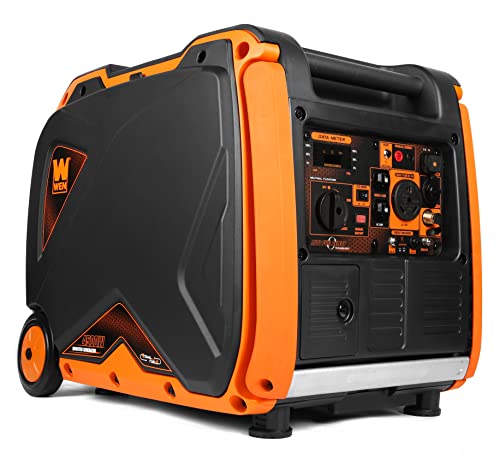
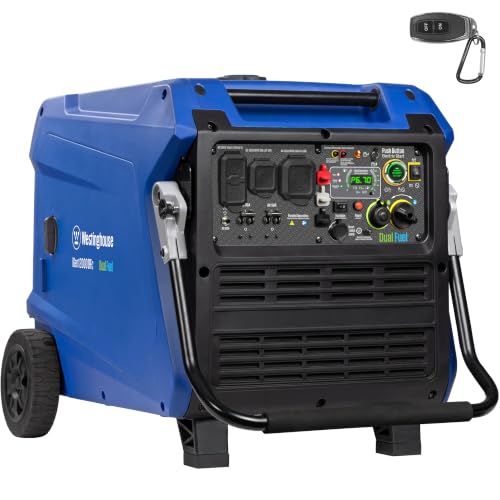
Best Midrange Pick: Westinghouse iGen8200TFc Tri-Fuel Inverter
The Westinghouse iGen8200TFc suits homes that want real backup capacity. At around $1,399, it runs on gasoline (6,600 running watts), propane or natural gas, and includes a 120/240V 14-50R 50 amp outlet that is transfer switch or interlock ready.
Its strengths are clean power under 3% THD with copper windings and up to 17 hours of runtime on its 3.9 gallon tank at 25% load, plus a CO sensor and low oil shutdown. Remote electric start and parallel capability add convenience. The limitation is its weight and size compared with small inverters.

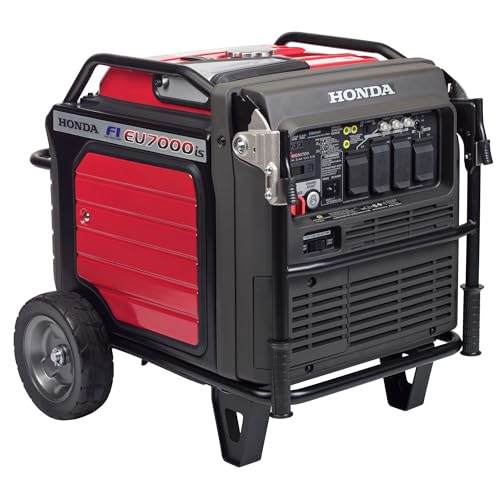
Best Premium Pick: Honda EU7000iS Inverter Generator
The Honda EU7000iS suits homeowners who want the quietest, most refined large inverter. At around $4,999, it delivers 7,000 watts at 120 and 240 volts, runs 6.4 to 16 hours on its 5.1 gallon tank and operates at 52 to 58 dB(A), according to Honda.
Its strengths are Honda's CO-MINDER carbon monoxide shutoff, Bluetooth app monitoring and electric start, backed by a three year residential warranty. The limitation is the price, which is several times higher than comparable output from other brands, and it runs on gasoline only.

What Your Money Gets You at Each Price Tier
Budget inverters cover essentials through extension cords, midrange units add 240V outlets and transfer switch readiness, and premium models add refinement and long term reliability.
Budget Tier: What to Expect
Around $700 to $1,000 buys 3,000 to 4,000 running watt inverters, often dual fuel, with 120V outlets and an RV outlet. They power a refrigerator, freezer, lights, Wi-Fi and phone charging, but not central air or 240V well pumps. Champion's 4500-Watt dual fuel model, around $992, adds electric start and up to 14 hours on gasoline.
Midrange Tier: The Sweet Spot for Most Buyers
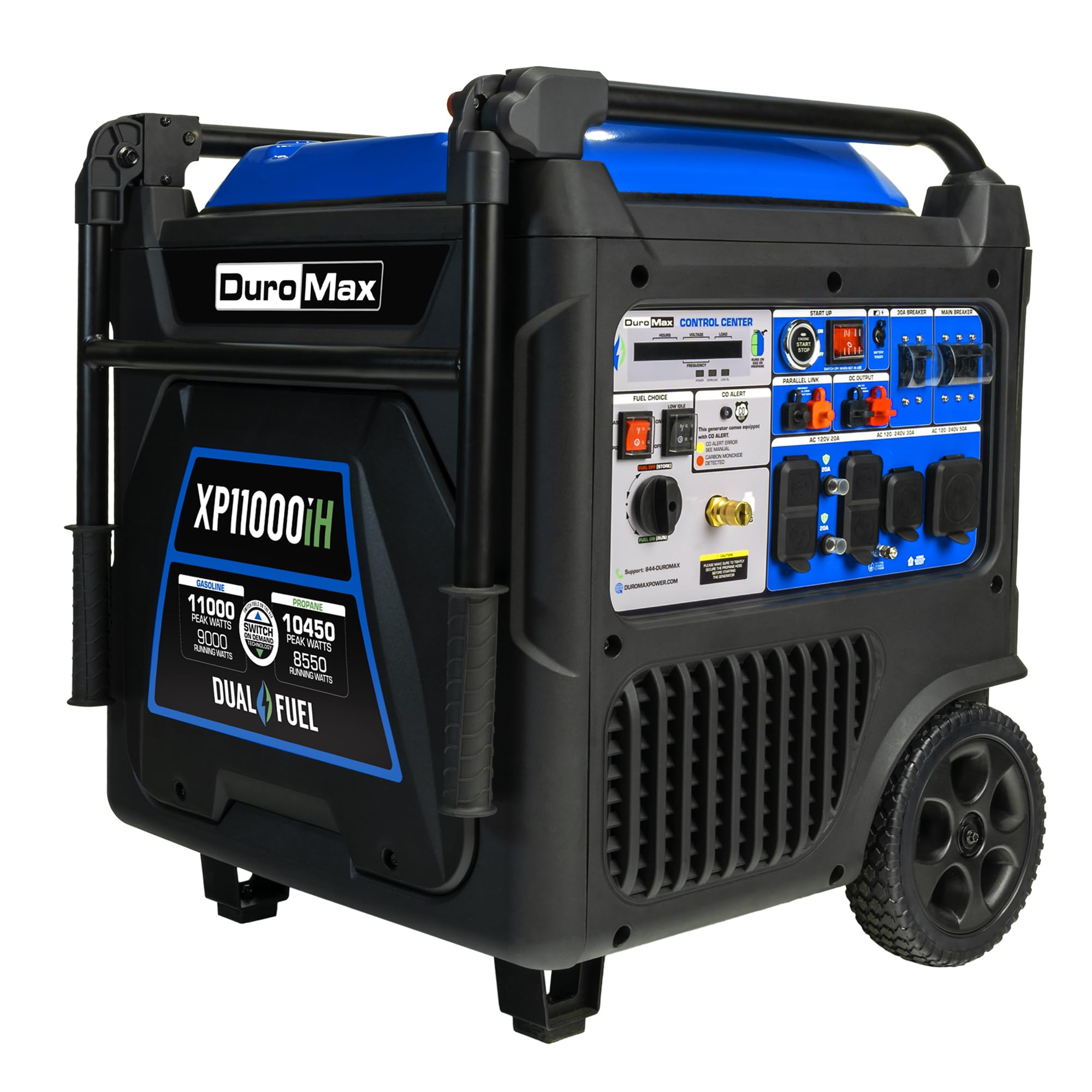
Around $1,300 to $2,500 buys 6,000 to 11,000 watt inverters with 240V outlets, transfer switch readiness and often tri fuel or dual fuel. They can run a sump pump, refrigerator, furnace fan and a window or small central air unit together. This tier gives most homes real backup coverage.
Premium Tier: When Spending More Pays Off
Around $4,000 to $5,000 buys premium brands like Honda with very quiet operation, refined electronics, strong dealer service and long lifespans. Spending more pays off in neighborhoods with noise concerns, frequent long outages or for buyers who keep equipment many years.
Features Worth Paying For (and Ones to Skip)
Pay for 240V capability if you have 240V loads, CO shutoff and dual or tri fuel; skip oversized wattage you will never use.
Runtime and Fuel Efficiency
Inverter generators throttle down at light loads, so they run longer per gallon than conventional generators. Look for runtime at 25% or 50% load, such as up to 17 hours on the Westinghouse iGen8200TFc. Larger tanks reduce overnight refueling.
Transfer Switch and Home Connection
A 120/240V 30 or 50 amp outlet (L14-30R or 14-50R) lets an electrician connect the generator to a transfer switch or interlock, powering hardwired circuits like furnaces and well pumps. Budget units with only 120V outlets need extension cords or a small 120V transfer switch.
Battery Capacity and Solar Input (for Power Stations)
Portable power stations, rated in watt hours, run silently and indoors safely but store limited energy, typically 1,000 to 3,000Wh. They suit short outages and electronics, and solar panels can recharge them. For multi day outages, a fuel generator provides more energy.
Features That Matter for Home Backup
Home backup needs enough running watts for your essentials (often 3,000 to 7,000), a CO auto shutoff, electric or remote start for bad weather, fuel gauges and a 240V outlet if you have 240V loads. Dual or tri fuel options let you use stored propane or natural gas during long outages.
Generator Type (Portable, Inverter, Standby, Solar Power Station)
Inverters give clean, quiet power and good efficiency. Conventional portables give more watts per dollar but are louder. Standby generators install permanently and start automatically. Power stations are silent but limited by battery size. Inverters are the best balance for most portable home backup.
Sizing an Inverter Generator for Your Home
To choose among the best inverter generators for home backup, list the appliances you must run and add their running watts, then add the single largest starting surge. Typical running watts:
| Appliance | Approx. Running Watts | Approx. Starting Watts |
|---|---|---|
| Refrigerator | 700 | 1,200 to 2,200 |
| Sump pump (1/2 HP) | 800 to 1,000 | 1,300 to 2,100 |
| Furnace fan (1/2 HP) | 800 | 1,300 to 2,300 |
| Window AC (10,000 BTU) | 1,200 | 1,800 to 2,200 |
| Lights, Wi-Fi, TV, chargers | 300 to 600 | None |
A refrigerator, sump pump, furnace fan and lights together need roughly 3,000 running watts plus about 2,000 watts of surge headroom, which a 3,500 to 4,500 watt inverter covers. Adding central air or a 240V well pump usually calls for 6,000 watts or more and a 240V outlet. Check each appliance's label for exact figures.
Long Term Costs to Factor In
Budget for a transfer switch or interlock kit plus electrician installation, heavy duty generator cords, a cover, oil, spark plugs and fuel stabilizer. Propane needs tanks and a regulator hose. Run the generator monthly under load to keep it ready. Premium brands cost more upfront but often hold resale value and have wide service networks.
Inverter Generators: Your Questions Answered
What features matter most in inverter generators for home backup?
Running watts, a 240V outlet, CO shutoff and fuel flexibility matter most. Size the generator to your essential loads, choose transfer switch ready outlets and prefer dual or tri fuel for long outages.
Inverter or conventional: which is better?
Inverters are better for clean power, efficiency and low noise. Conventional generators deliver more watts per dollar and suit budget whole home coverage where noise matters less.
How long can an inverter generator run continuously?
Typically 8 to 17 hours per tank at moderate loads. Propane and natural gas extend runtime. Shut down periodically to check oil during long outages, following the manual.
What size generator do I need to power a house?
Most homes need 3,000 to 7,500 running watts for essentials. Add up the running watts of what you must power plus the largest starting surge, or have an electrician do a load calculation.
Do I need a transfer switch?
Yes, to power home circuits safely. A transfer switch or interlock prevents backfeeding the grid, which endangers utility workers. Extension cords to individual appliances are the alternative.
Can a generator run a refrigerator?
Yes, any generator over about 2,000 running watts can run a typical refrigerator. Fridges need about 700 running watts and a brief surge at startup.
Wrapping Up
Budget buyers can cover essentials with the WEN DF450i, most homes get the best balance from the Westinghouse iGen8200TFc and premium buyers get Honda's refinement with the EU7000iS. Keep those tiers in mind and the best inverter generators for home backup will keep your household running through outages. Compare current models in the product table above, and see our guide to the best rated standby generators for permanent options.


