
Best Generators for Apartments: A First Time Buyer's Guide
Disclosure: We may earn a commission when you buy through links on this page, at no extra cost to you. As an Amazon Associate I earn from qualifying purchases. Learn more

Why apartment dwellers need power stations, plus capacity, output and setup basics.
Apartment dwellers face a problem homeowners do not: there is nowhere safe to run a gas generator. Balconies, hallways and parking garages are too close to living spaces, and carbon monoxide can drift indoors within minutes. The best generators for apartments are battery based portable power stations, often called solar generators, which run silently indoors with no fumes and recharge from a wall outlet, a car or solar panels.
This first time buyer's guide explains how power stations work, which specs matter, the mistakes to avoid and how to get one ready before the next outage. Always check your lease and building rules before storing large batteries or mounting solar panels.



Generators for Apartments 101: The Basics
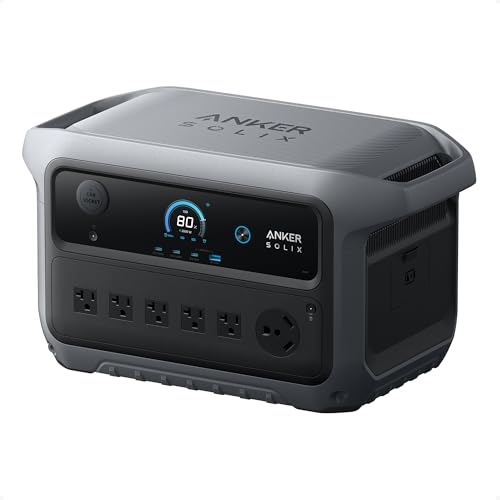
A portable power station is a large lithium battery with an inverter and built in outlets: standard AC plugs, USB-A, USB-C and often a 12V car socket. You charge it from a wall outlet ahead of time, then run lights, a fridge, a router, a laptop, a CPAP or a phone during an outage. Many models, like the EcoFlow DELTA 3 and Anker SOLIX C2000 Gen 2, can also recharge from solar panels.
Two numbers matter most: capacity in watt hours (Wh), which is how much energy it stores, and output in watts (W), which is how much it can power at once.
Key Specs Explained in Plain English
Capacity (Watt Hours)
Capacity decides runtime. A 300Wh unit, like the Jackery Explorer 300, keeps phones, a router and lights going for a night. Around 1,000Wh, like the EcoFlow DELTA 3, can run a refrigerator for many hours. Around 2,000Wh, like the Anker SOLIX C2000 Gen 2 and Jackery Explorer 2000 v2, covers a fridge plus essentials for a day or more.
Output (Watts)
Output decides what you can plug in. EcoFlow lists 1,800W on the DELTA 3, Jackery 2,200W on the Explorer 2000 v2 and Anker 2,400W on the C2000 Gen 2. Microwaves and space heaters need high output and drain batteries fast; fridges, fans and electronics are easier.
Battery Chemistry
LiFePO4 batteries, listed on most current models, last many more charge cycles than older lithium ion types. EcoFlow lists 4,000 cycles to 80 percent capacity on the DELTA 3.
Charging Speed
Fast AC charging means you can top up quickly when power returns or before a storm. EcoFlow lists a full charge in 56 minutes, and Anker lists 58 minutes. Solar charging speed depends on panel size and sunlight.
Size, Weight, and Storage
Larger capacity means more weight; 2,000Wh units can weigh 40 pounds or more. Measure your closet or under bed space, and pick a unit you can lift. Store it in a cool, dry place away from heat sources.
Expansion and Solar
Some models accept extra battery packs. EcoFlow lists expansion up to 5kWh for the DELTA 3 series and Anker up to 4kWh. A foldable solar panel on a sunny balcony, where allowed, can recharge during long outages.
Best Generators for Apartments by Need
- Phones, lights and Wi-Fi: Jackery Explorer 300, 292Wh LiFePO4, around $259.
- Fridge and essentials: EcoFlow DELTA 3, 1,024Wh, 1,800W, full charge in 56 minutes, around $629.
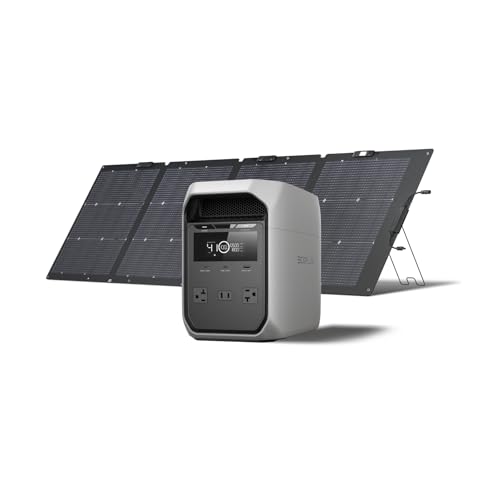
- Solar ready bundle: EcoFlow DELTA 3 Classic with a 220W solar panel, 1,024Wh, around $699.
- Longer outages: Anker SOLIX C2000 Gen 2, 2,048Wh, 2,400W, around $900.
- Alternative 2,000Wh: Jackery Explorer 2000 v2, 2,042Wh, 2,200W, around $899.
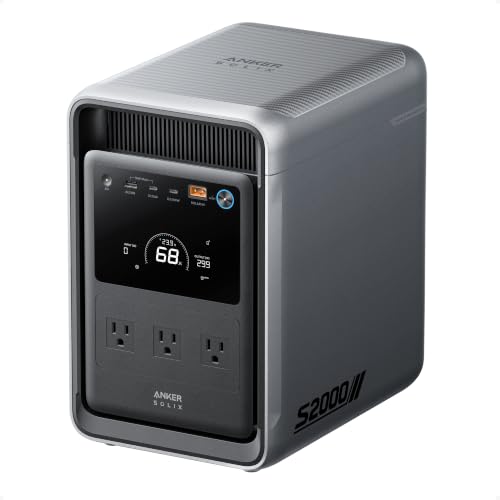
- Value 2,000Wh: Anker SOLIX S2000, 2,010Wh, 1,500W, around $650.
Prices change often, so treat these figures as approximate.
How Much Power Does an Apartment Outage Need?
Most apartment outages call for keeping food cold, staying connected and having light. Add up the devices you plan to run and how many hours you need them. These typical figures help with planning; check the labels on your own devices for exact numbers.
| Device | Typical Running Watts | Notes |
|---|---|---|
| Wi-Fi router and modem | 10 to 20 | Small draw, big benefit |
| Phone charging | 5 to 20 | Per phone |
| Laptop | 45 to 100 | Depends on model |
| LED lamp | 8 to 15 | Per bulb |
| Box fan | 40 to 75 | Helpful in summer outages |
| Full size refrigerator | 100 to 200 average, higher at startup | Cycles on and off |
| Microwave | 1,000 to 1,500 | Short bursts only |
A simple essentials plan, with a router, two phones, a laptop and a few lights, uses only a few hundred watt hours per day, which a 300 to 500Wh unit can handle. Adding a refrigerator pushes needs to around 1,000Wh or more per day, which is where the EcoFlow DELTA 3 and the 2,000Wh class units make sense.
To stretch runtime, keep the fridge closed, charge devices during the day when you can and use eco modes on the power station to turn off unused outlets. If an outage lasts several days, a balcony solar panel or charging from your car, where available, keeps the battery going.
Rookie Mistakes to Avoid
- Running a gas generator on a balcony: carbon monoxide can enter your unit and neighbors' units.
- Underestimating needs: add up the watts and hours of what you will run.
- Letting it sit empty: keep the station charged and top it up every few months.
- Plugging in a space heater: heaters drain batteries very fast.
- Ignoring building rules: some buildings restrict large batteries or balcony solar panels.
Getting Started: Setup and First Use
- Charge fully from a wall outlet when it arrives.
- List your essentials and their wattage, such as fridge, router, lights and phone.
- Do a dry run by plugging in the fridge for an hour and watching the remaining time on the display.
- Store it with cables in an easy to reach spot.
- Set a reminder to top up the charge every few months.
For larger home setups, see our guides to solar powered generators and quiet portable generators.
Frequently Asked Questions
Can I use a generator in an apartment?
Not a gas, propane or diesel generator. They produce carbon monoxide and must run outdoors far from windows and doors. Battery power stations are designed for indoor use.
How long will a power station run a refrigerator?
It depends on the fridge and capacity. A full size fridge averaging about 100 to 150 watts over time may run roughly 6 to 10 hours on 1,000Wh and longer on 2,000Wh. Anker says its C2000 Gen 2 with expansion can run a dual door fridge for up to 64 hours.
Can a power station run a CPAP?
Usually yes, for one or more nights depending on capacity and humidifier use. Check your device's power needs and ask your care provider about backup options.
Do power stations need maintenance?
Very little: keep them charged, store them in moderate temperatures and update firmware if the app offers it.
Are solar panels worth it for apartments?
If you have a sunny balcony and your building allows it, a foldable panel can recharge a power station during multi day outages. Otherwise, wall and car charging are enough.
Final Thoughts
For apartments, choose a battery power station, not a fuel generator. Size capacity to your essentials and output to your largest device. For the best generators for apartments, start with the EcoFlow DELTA 3 for everyday backup, choose the Jackery Explorer 300 for small needs, or the Anker SOLIX C2000 Gen 2 for longer outages. Compare current prices in the product table above.


