
Best Soaker Hoses for Foundation: Our 2026 Checklist and Top 3 Picks
Disclosure: We may earn a commission when you buy through links on this page, at no extra cost to you. As an Amazon Associate I earn from qualifying purchases. Learn more

How to choose and set up soaker hoses around a foundation, with three picks.
In areas with clay soil, long dry spells can shrink the soil around a house and leave gaps along the foundation. Many foundation repair specialists suggest keeping soil moisture steady during drought, and a soaker hose laid around the perimeter is one of the simplest ways to do it. The best soaker hoses for foundation watering seep evenly along their full length, lie flat around corners, resist sun damage and connect into loops long enough to circle a house.
Before comparing hoses, here is the checklist we use to judge each one. A hose that fails two or more of these points is not worth buying. If you already see wide cracks, sticking doors or other signs of movement, talk to a foundation professional before adding water.


How We Evaluate Soaker Hoses
Features That Matter for Foundation Watering
Even seepage from one end to the other matters most, so the soil gets consistent moisture rather than a soaked spot near the spigot and dry soil at the far corner. Linkable ends let you connect several 50 foot sections to go around the house. Stakes or pins keep the hose in place against the soil line.
Hose Design and Construction
Flat soaker hoses with a fabric outer layer over an inner tube, like Hlinker's double layer design and Secbulk's dual layer fabric covered PVC, release water slowly through the fabric. Bluepro lists a 1 mm reinforced inner tube to resist bursting. Round rubber soaker hoses also work but are bulkier and can stiffen in the sun.
Materials and Sun Resistance
Foundation hoses sit outside for months, often in full sun. Secbulk says its fabric covered design resists sun damage better than rubber weeping hoses. Lay the hose under a thin layer of mulch to protect it further and reduce evaporation.
Fittings and Connections
Brass or metal fittings last longer than plastic. Bluepro includes a solid brass splitter that turns one spigot into multiple zones with independent levers, and lists aluminum seal rings at the fittings. Leak free end caps matter on the last section of a loop.
Water Pressure Range
Soaker hoses work best at moderate pressure. Secbulk lists 40 to 90 psi for best results and notes that hot water is not suitable. Too much pressure can make fabric hoses spray instead of seep; a pressure regulator at the spigot keeps flow gentle.
Length and Coverage
Measure the perimeter of the house before buying. A typical home needs 150 to 250 feet of hose. Bluepro sells four 50 foot hoses as a 200 foot kit. Very long single loops may lose pressure at the far end, so splitting into two zones often works better.
3 Picks That Pass Our Checklist
Prices change often, so treat these figures as approximate.
Best Overall: Secbulk 50 Ft Flat Soaker Hose with Stakes
Secbulk's hose uses a clog resistant fabric cover for slow, consistent seeping along its full length. It is linkable end to end, can be laid on the ground or buried under up to 3 inches of mulch or soil, comes with stakes and lies flat for kink resistant layouts and easy storage. Secbulk backs it with a one year warranty. The limit: buy several to circle a full house. It costs around $30.

Best Value: Hlinker 50 Ft Flat Soaker Hose
Hlinker's 1/2 inch flat hose is linkable, leakproof and uses a heavy duty double layer design for consistent drip watering. It has a large review base and costs around $28 per 50 foot section, which keeps a full perimeter setup affordable. The limit: stakes and splitters are sold separately on this listing.

Best for Heavy Use: Bluepro 200 Ft Flat Soaker Hose Kit
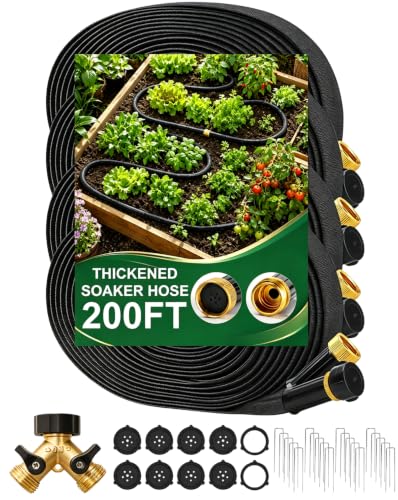
Bluepro's kit includes four connectable 50 foot flat soaker hoses and a solid brass splitter with flow control levers, enough to cover the perimeter of many homes in two zones. Bluepro lists a 1 mm reinforced inner tube, aluminum seal rings, rustproof garden stakes and suitability for above ground or shallow buried use. The limit: a smaller review history than single hoses. It costs around $76.

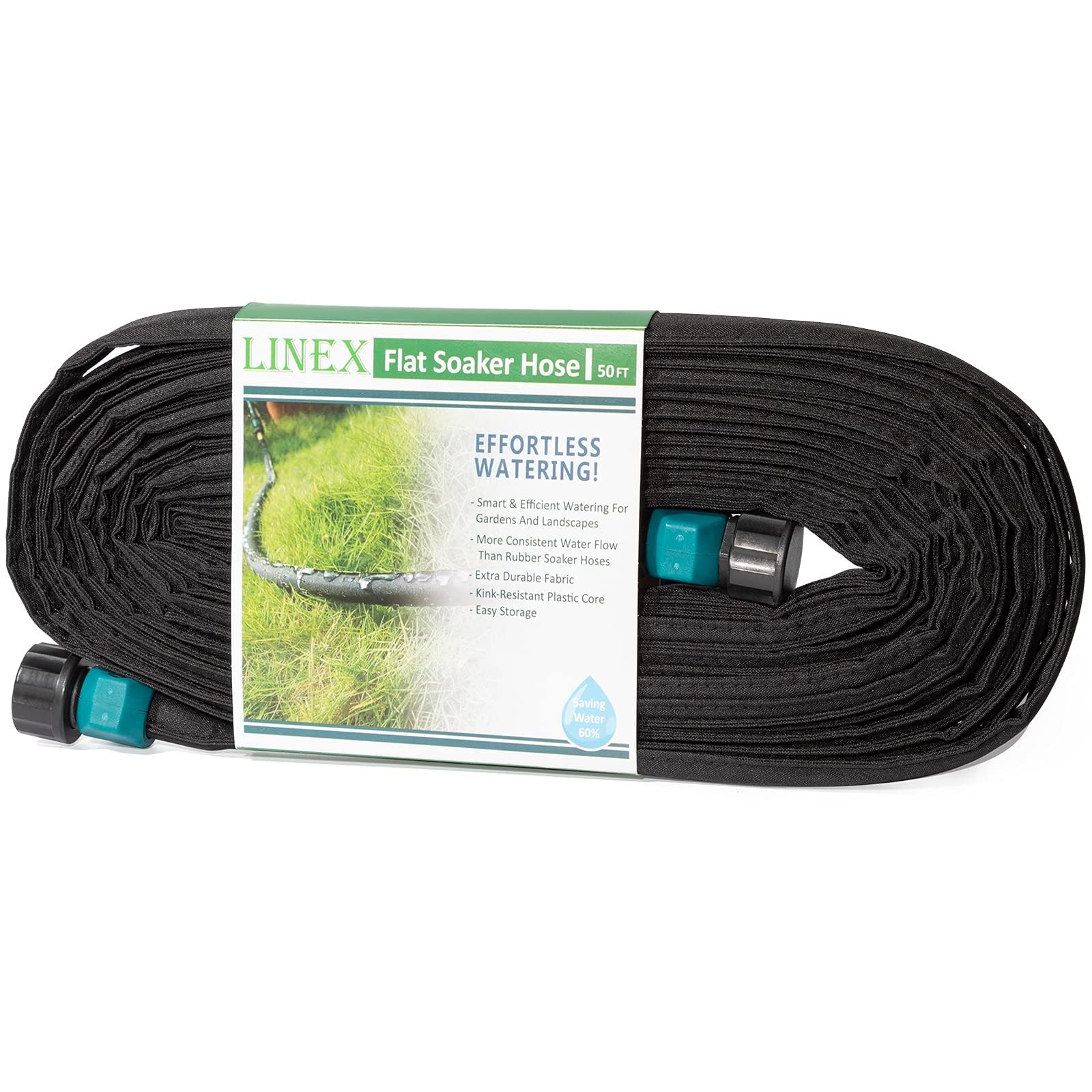
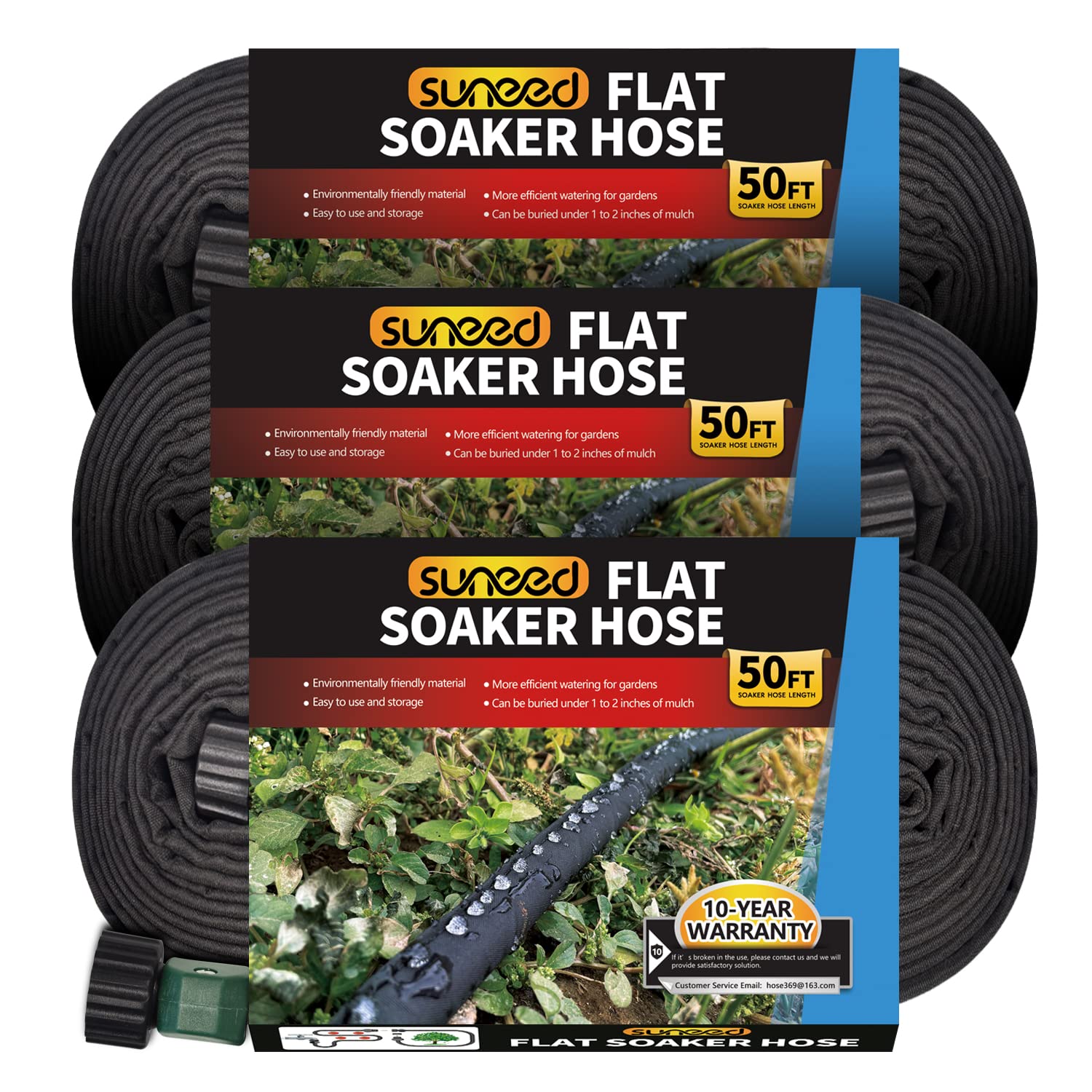
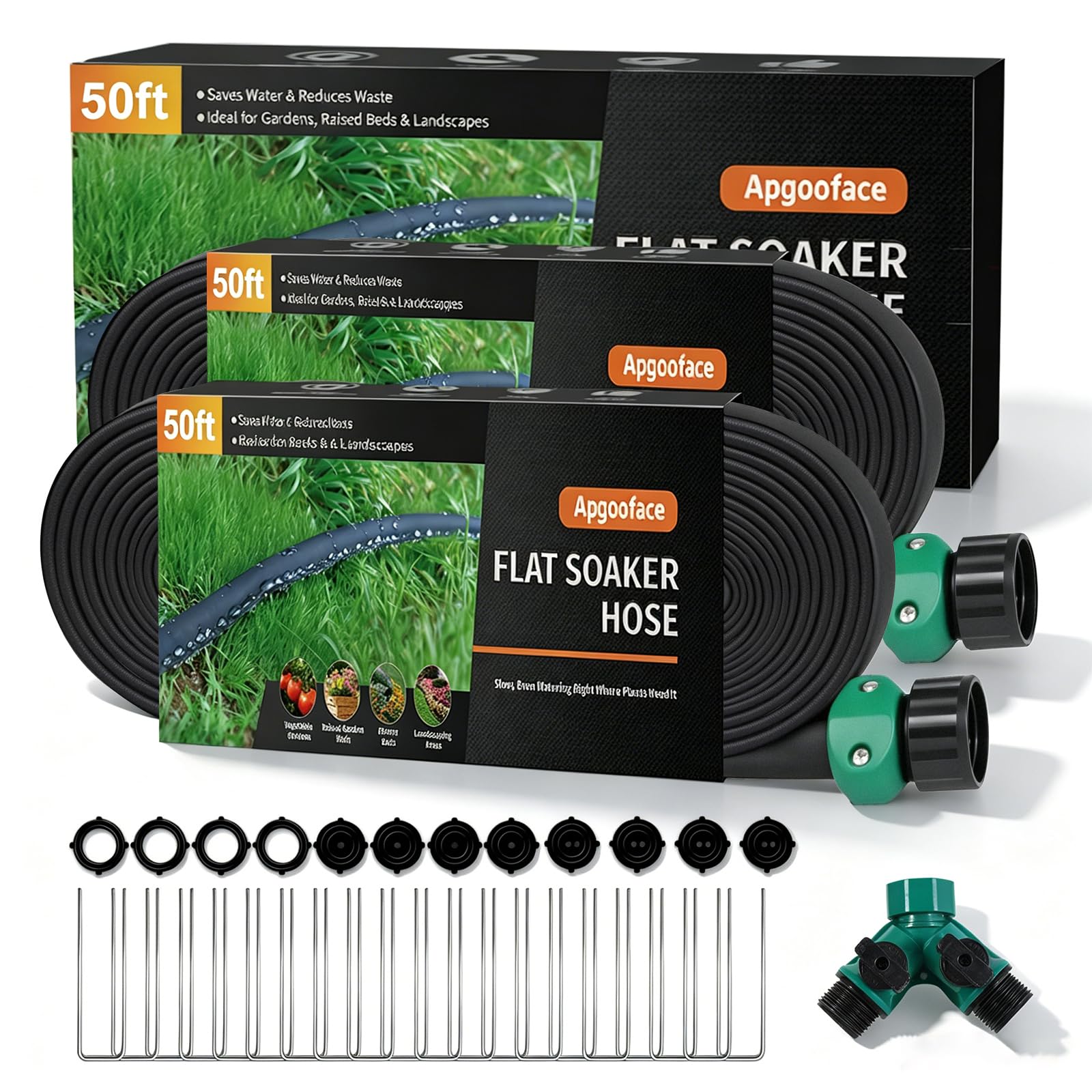
Also worth a look: the LINEX 1/2 inch x 50 foot flat soaker hose with a long review history, a 3 pack of 50 foot flat hoses and a 2 pack with splitter for smaller homes.
Quick Buyer Checklist
- Is the hose linkable so you can circle the whole house?
- Does it seep evenly along its full length?
- Are fittings brass or metal?
- Does it include stakes, or do you need to buy them?
- Can it be covered with mulch?
- Does the listed pressure range match your water supply?
- Is there a warranty?
Red Flags to Watch For
- Uneven seepage reviews: wet near the spigot and dry at the end defeats the purpose.
- Plastic fittings that crack: common on the cheapest hoses.
- No pressure guidance: fabric hoses can burst or spray at high pressure.
- Very short lengths sold as kits: check total footage.
- Exaggerated water saving claims: savings depend on how long you run the hose.
Setting Up the Best Soaker Hoses for Foundation Watering
Lay the hose about 12 to 18 inches out from the foundation, not right against the wall, so water soaks into the soil around the slab rather than pooling at the base. Pin it every few feet with stakes and cover it with an inch or two of mulch. Connect sections into one or two zones with a splitter, and add a hose timer so watering runs on a schedule.
Water deeply but not constantly. Many homeowners run the hose for a few hours a few times a week during dry, hot periods, then pause after rain. The goal is steady, moderate moisture, not soggy soil. Make sure gutters and downspouts direct roof water away from the house, and check that the ground slopes away from the foundation.
Tips to Get the Most From Your Soaker Hose
- Use a pressure regulator: keeps flow gentle and even.
- Add a timer: consistent schedules beat occasional heavy watering.
- Flush before winter: drain and store hoses before freezing weather.
- Check seepage at the far end: if it is dry, split the loop into shorter zones.
For more watering gear, see our guides to soaker hoses and no kink garden hoses.
Soaker Hoses: Your Questions Answered
What features matter most in soaker hoses for foundation watering?
Even seepage, linkable ends, durable fittings, sun resistance and enough total length to circle the house. Stakes and a splitter make setup easier.
Does foundation watering really work?
In expansive clay soils, keeping moisture more consistent during drought can reduce soil shrinkage around a slab. It is a maintenance step, not a repair; existing structural problems need a professional assessment.
How far from the foundation should a soaker hose be?
About 12 to 18 inches from the foundation is a common recommendation, so water spreads into the soil rather than collecting against the wall.
Is it worth paying more?
For a whole house setup, yes, for brass fittings and better seepage consistency. A kit with a splitter, like Bluepro's, saves buying accessories separately.
How often should I replace a soaker hose?
Many fabric soaker hoses last a few seasons. Replace sections that leak, spray or no longer seep evenly.
The Bottom Line
Even seepage, enough length and durable fittings matter most. For the best soaker hoses for foundation care, start with the Secbulk hose with stakes, save with Hlinker sections, or choose the Bluepro 200 foot kit to cover a whole house in one purchase.


