
Best 2 Step Ladders in 2026: Small Ladder, Right Details
Disclosure: We may earn a commission when you buy through links on this page, at no extra cost to you. As an Amazon Associate I earn from qualifying purchases. Learn more

Choose the best 2 step ladder for closets, kitchens, and shelves with this guide to duty ratings, top step height, stability, and easy storage.
A 2 step ladder looks simple, but the wrong one wobbles, folds bulky, or puts the top step at an awkward height for the shelves you reach every day. Because you will use it weekly for kitchens, closets, and light bulbs, the details of step depth, duty rating, and stability matter more than brand. This guide shows how to pick the best 2 step ladder for your home and your balance.
Check the comparison table below for top step height, weight rating, and folded size across the main options. Then read on, because a two step ladder is a safety product as much as a convenience: the best choice is the one you can climb calmly, stand on steadily, and store where you will actually grab it.


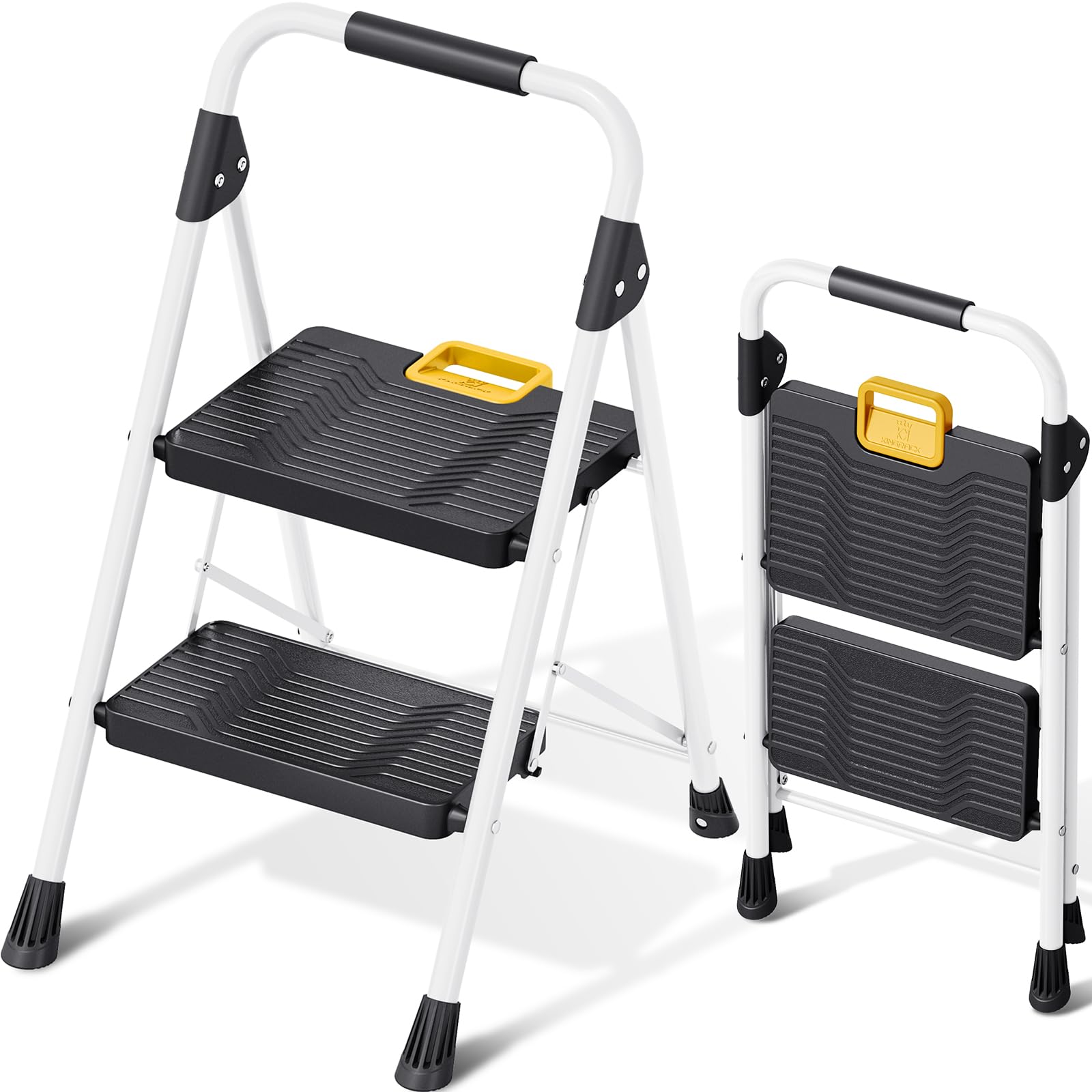
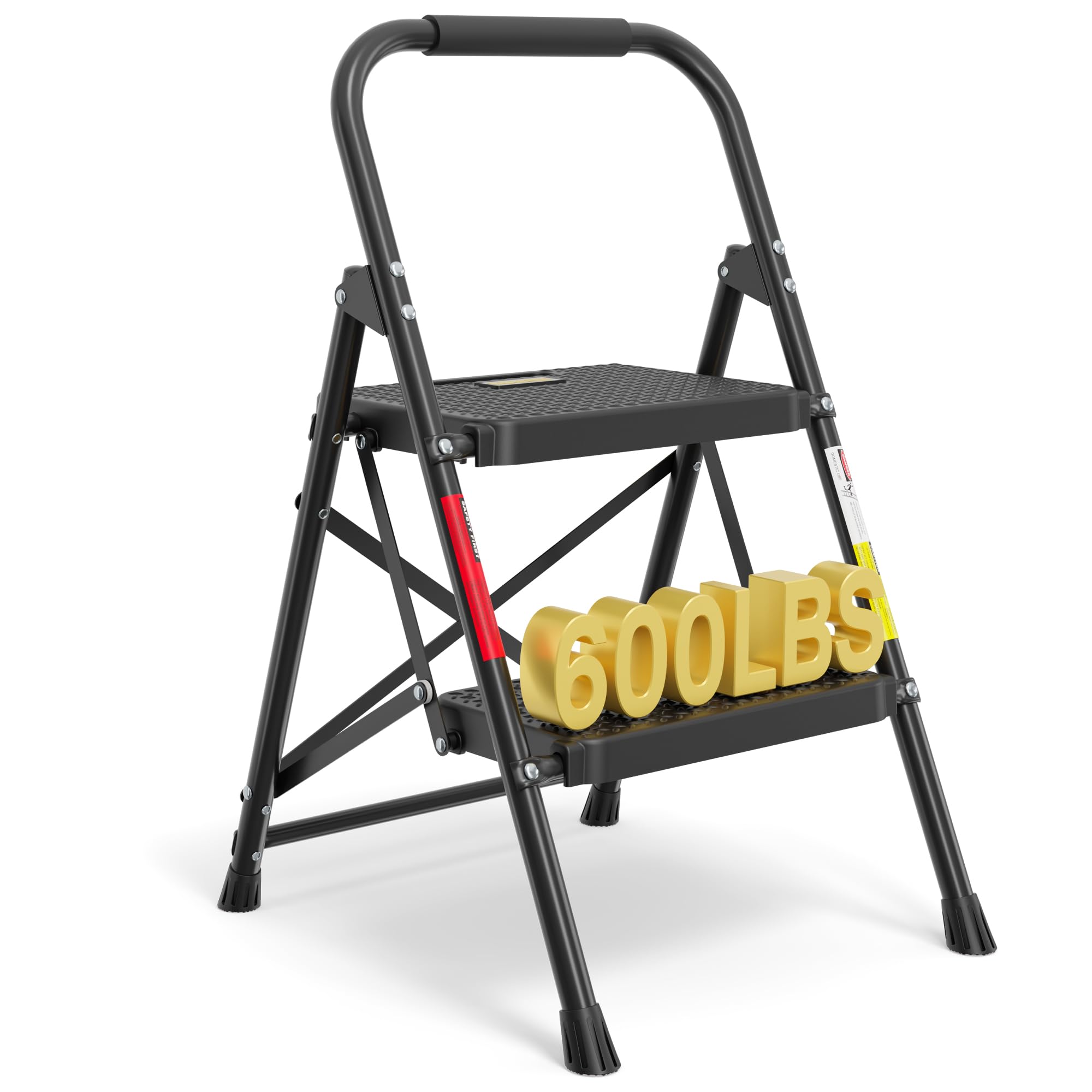

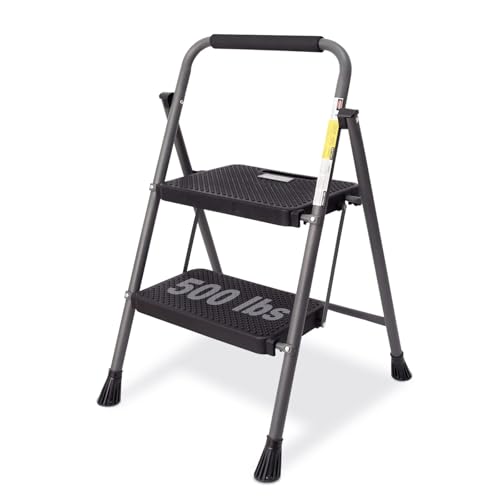
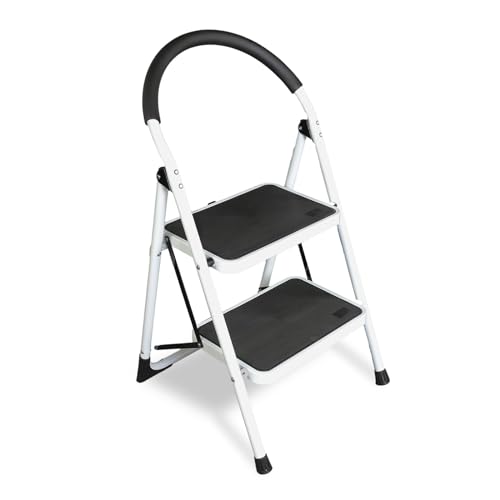
Who Should Buy Which 2 Step Ladder?
Homeowners Reaching Kitchen and Closet Shelves
For daily indoor reach, the top step of a typical 2 step ladder sits about 18 to 20 inches high, giving most adults a working reach near 8 feet. That covers kitchen cabinets, closet shelves, and ceiling fixtures in standard rooms. Choose wide treads and a slim fold so the ladder lives in a pantry gap. Our wider guide to the best ladder for home use covers taller options if some rooms need more reach.
Older Adults and Anyone Who Wants a Handhold
If balance is a concern, pick a model with an extended front rail or padded handle that rises above the top step, so you hold on while climbing and while standing. Deep, wide steps with ribbed or rubber treads give your whole foot support instead of a narrow rung. A slightly heavier steel frame can feel more planted than a featherweight one. Talk with your doctor about balance changes, and stop using any ladder if you feel dizzy on the ground.
Painters, Cleaners, and Shop Users Doing Low Work
For tasks at wall height like cutting in paint lines, washing windows, or reaching shop shelves, a project tray or paint can hook on the top cap saves trips down. Look for spreader bars that lock positively and feet that grip smooth floors, since you will shift your weight side to side while working. A platform style top step, larger than a standard tread, lets you stand longer with less foot fatigue.
Key Features to Compare
Duty Rating and Weight Capacity
Ladders carry ANSI duty ratings. Type III household ladders hold about 200 pounds including you and what you carry, Type II about 225, Type I about 250, and Type IA about 300. Add your weight plus tools, paint, or a box of dishes honestly; many people are closer to a limit than they think. For a shared household ladder, Type I is a sensible default, because it covers larger users and loads without a price jump worth worrying about.
Top Step Height and Reach Math
Estimate your reach as your height plus about 12 inches of comfortable arm reach above your head when standing on the top step; manufacturers quote a similar figure. If your target shelf sits above that line, a 2 step ladder is the wrong tool no matter how sturdy it feels. Never solve a reach problem by standing on the top cap or the paint tray unless the ladder is a platform model rated for standing there. The cap on a standard step ladder is not a step.
Step Depth, Tread, and Standing Comfort
Steps around 3 inches deep are the minimum; wider treads near 5 inches or a full platform feel far more secure, especially in socks or soft house shoes. Ribbed metal or rubber tread inserts matter on smooth kitchen floors and when dust or water is present. Try to picture your whole foot on the step: if only the ball of your foot fits, long tasks like organizing a closet become tiring and less stable than they should be.
Stability: Spreaders, Feet, and Frame Flex
A good 2 step ladder opens to a firm stop, with spreader bars that lock rather than dangle. All four feet should touch the floor at once with no rocking, and the rear legs should angle out enough to resist tipping when you lean for a shelf. Rubber foot pads protect floors and grip them. Frame flex is the warning sign to avoid: a ladder that twists as you climb will feel worse under load and teaches you to hurry, which is when falls happen.
Folded Size, Weight, and Storage
The best ladder is the one stored within reach. Most 2 step models fold to about 4 to 6 inches thick and hang on a hook or slide beside a fridge or water heater. Weight runs roughly 8 to 16 pounds depending on steel or aluminum build; choose the lightest one that still feels rigid when open. If storage space is your main limit and you also need taller reach sometimes, a best telescoping ladder guide covers compact tall options, though they serve a different job than this daily grab and go size.
Know the Reach Limits of a 2 Step Ladder
This size tops out around an 8 foot reach for most adults, which leaves attic hatches, high garage storage, and exterior work out of scope. For attic access, a dedicated best attic ladder installs permanently and is far safer than stacking solutions. For occasional taller indoor jobs, a 3 or 4 step ladder or a small platform ladder fills the gap between this size and a full step ladder. Our general best ladder guide maps those sizes to ceiling heights and tasks, so buy this small ladder for daily jobs and plan separately for the tall ones.
Common Mistakes to Avoid
- Standing on the top cap or paint tray of a standard model, which places you above the designed balance point.
- Choosing a Type III rating to save a little money, then carrying paint and tools past its limit.
- Using the ladder on a rug, drop cloth edge, or uneven floor, so one foot floats and the frame rocks.
- Leaning out to the side for a shelf instead of moving the ladder, which shifts your weight past the rails.
- Storing the ladder far from where it is used, so you climb on chairs and counters instead.
- Climbing in smooth socks on dusty treads, a small slip that causes many home falls.
How to Make Your 2 Step Ladder Last Longer
Wipe treads clean after dusty or wet jobs so grit does not wear the anti slip surface smooth. Check the spreader locks and rivets twice a year; a loose rivet shows up as new wobble and is a reason to retire or repair the ladder, not ignore it. Store it indoors, folded, out of sun and damp, since UV and moisture age plastic caps and rubber feet. Never use a bent ladder: a frame that took a hard fall or a heavy drop should be replaced, because hidden damage fails without warning. After any fall from a ladder, even a short one, watch for head injury signs such as headache, confusion, or vomiting, and seek medical care the same day if they appear.
FAQ
What height can you reach with a 2 step ladder?
Most adults reach about 8 feet standing on the top step, which covers standard kitchen cabinets, closet shelves, smoke detectors, and light fixtures in rooms with 8 foot ceilings. Your exact reach depends on your height and the ladder top step height, usually 18 to 20 inches. If your shelves or fixtures sit higher, step up to a 3 or 4 step model rather than stretching, because overreaching sideways is a leading cause of small ladder falls.
What duty rating should a 2 step ladder have?
Type I, rated around 250 pounds total, suits most households because it covers the user plus a paint can, tools, or a box being shelved. Type IA at about 300 pounds is better for larger users or shared ladders in workshops. Add your body weight and everything in your hands and pockets when you check the rating. Type III household ladders near 200 pounds leave little margin and are best reserved for light users doing light tasks.
Is the top cap of a 2 step ladder safe to stand on?
No, not on a standard step ladder. The top cap and paint tray are not rated as steps, and standing there puts your weight high and forward of the design balance point. The exception is a platform ladder, where the top standing surface is a large, rated platform with the rails extending above it as a handhold. Check the labels on the rails: they state plainly where standing is allowed and the highest safe standing level.
Should a 2 step ladder be steel or aluminum?
Both work indoors. Steel feels more rigid and planted and usually costs less, at the price of a few extra pounds. Aluminum is lighter to carry between rooms and will not rust if you also use it on a covered porch. For users with limited grip or shoulder strength, the lighter aluminum frame is easier to open and move safely, which can matter more than the small stiffness advantage of steel.
How long does a 2 step ladder last?
A well kept indoor ladder lasts many years, often a decade or more. The parts that age are plastic caps, rubber feet, and the spreader hardware, all of which deserve a twice yearly look. Retire the ladder after any bend in the rails, cracked steps, or a fall that damaged it, even if it still opens. A ladder is cheap compared with a fall, so when in doubt about its condition, replace it.
Final Thoughts
Pick the rating that covers you with margin, the step depth your feet trust, and the folded size your storage allows. If balance is a concern, choose the model with the tall handhold and talk with your doctor about any dizziness or balance changes before climbing. Compare the shortlist in the product table above, and the best 2 step ladder for your home will be the one you reach for weekly without a second thought. Prices and availability can change, so check the product page before ordering.


