
Best 42 Inch Lawn Mowers (2026): How to Tell If This Deck Size Fits Your Yard
Disclosure: We may earn a commission when you buy through links on this page, at no extra cost to you. As an Amazon Associate I earn from qualifying purchases. Learn more

How to choose the best 42 inch lawn mower: yard size fit, tractor versus zero turn formats, engine and deck build, turning space and storage needs.
The 42 inch deck is the classic entry size for riding mowers, wide enough to cut mowing time dramatically over a walk behind, yet narrow enough to pass through a standard yard gate and park in a single garage bay. Choosing the best 42 inch lawn mower is less about the badge and more about format, deck construction, and whether your lawn size actually justifies a rider. The comparison table below breaks the class into its main formats.
This guide explains which yards suit a 42 inch machine, how lawn tractors and zero turns differ at this size, and which specs, from transmission type to blade engagement, change daily use. It also covers measuring your gates and storage before you spend anything.


Who Should Buy Which 42 Inch Lawn Mower?
Owners of Half Acre to One Acre Lawns
This is the core audience for the size. A 42 inch rider cuts a mostly open half to one acre lawn in about an hour, and the deck still threads between trees, beds, and play equipment without endless trimming. If your property is mostly flat with gentle slopes, a lawn tractor in this class is the value pick. Wider decks would save minutes you will never notice, while a smaller walk behind would double your time on foot.
Owners of Yards With Gates, Sheds, and Tight Storage
Measure before you fall for any rider: a 42 inch deck usually needs a gate opening of about 44 to 46 inches once the discharge chute is counted, and some chutes fold up to save a few inches. Buyers with a 48 inch gate and a standard shed door are exactly why this size exists. If the mower must also share a garage bay with a car, the compact footprint of a 42 inch tractor beats any wider format that forces you to shuffle vehicles all summer.
Buyers With Obstacle Filled or Sloped Ground
If your lawn wraps around trees, gardens, and a pool, turning agility matters more than deck width. A 42 inch zero turn pivots in its own length and trims close around obstacles, cutting string trimmer time sharply; the format is explored in depth under the best zero turn lawn mower heading. On slopes above roughly 15 degrees, though, choose a tractor, because its steering wheels and weight distribution handle hills more safely than a zero turn.
Key Features to Compare
Format: Lawn Tractor Versus Zero Turn
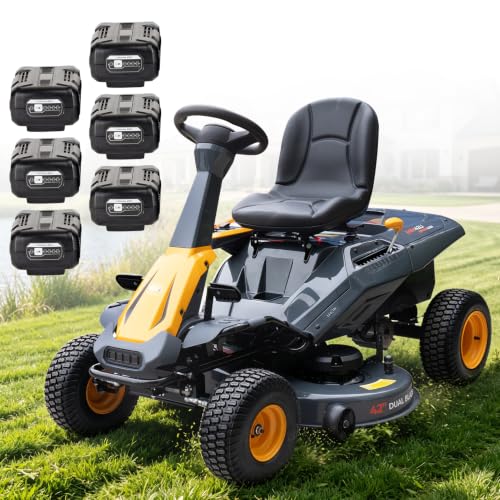
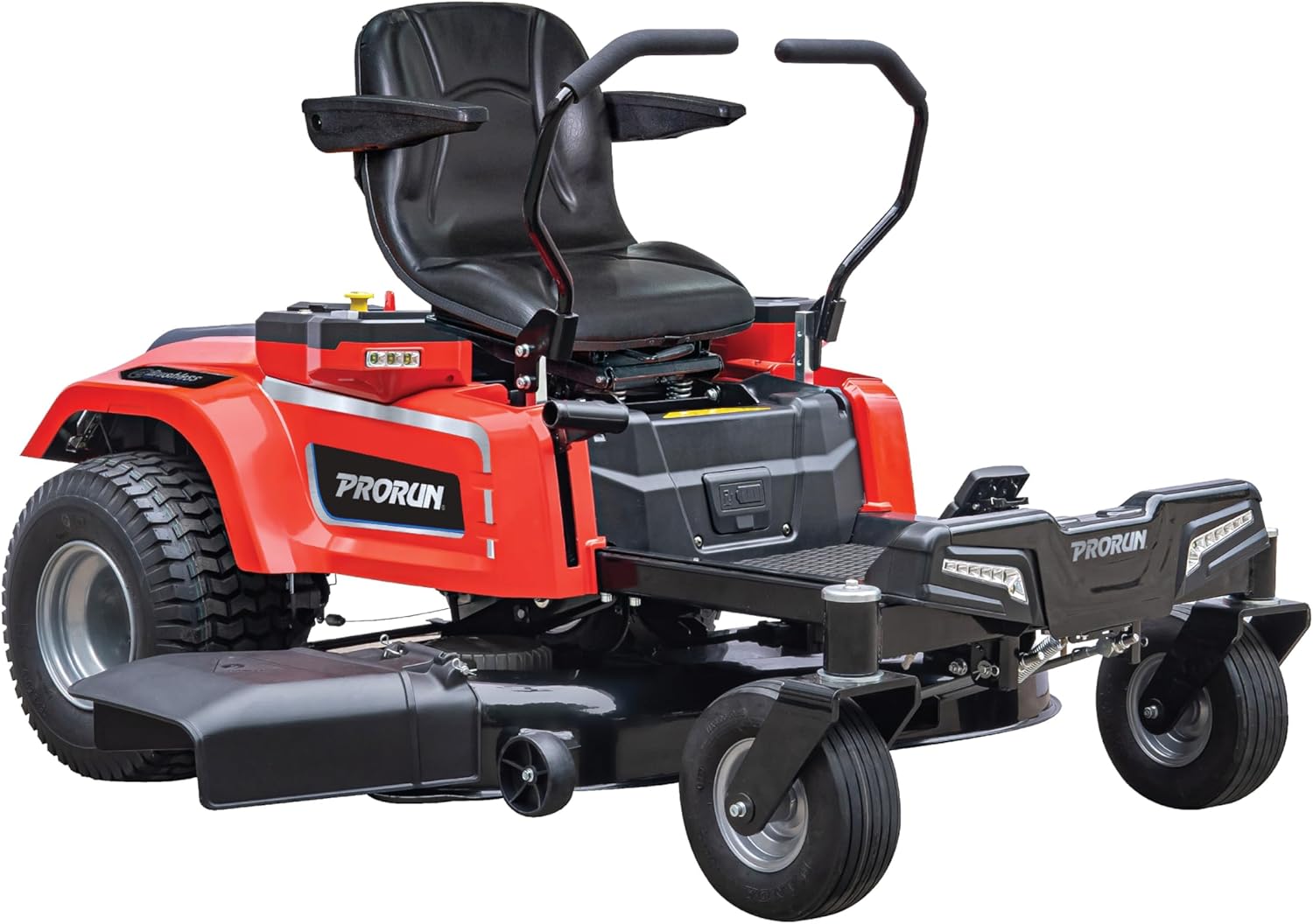
At 42 inches you can buy both formats, and they suit different yards. A lawn tractor steers with a wheel, tows carts and small attachments, and feels familiar to anyone who drives. A zero turn steers with two lap bars, turns far tighter, and mows faster around obstacles, but it tows little and costs more at the same deck size. Tractors handle slopes and rough ground more confidently, while zero turns reward smooth, obstacle rich lawns. Decide the format from your terrain and trees first; brand and engine choices come second.
Deck Construction: Stamped Versus Fabricated
Entry 42 inch decks are usually stamped from a single sheet of steel, which keeps prices low and works fine for clean, stone free lawns. Fabricated decks are welded from thicker plate, resist bending when you clip a root or a stump, and often carry longer warranties. The trade off is weight and price. If your yard hides rocks, roots, or rough edges, a fabricated deck is the upgrade most worth paying for in this size class, because a bent stamped deck scalps unevenly for the rest of its life.
Transmission: Manual, Automatic CVT, or Hydrostatic
Transmission type shapes the whole driving experience. Gear drive manuals are cheapest but force stops to change speed. Automatic belt driven CVT systems are smooth enough for steady mowing on flat lawns. Hydrostatic drive gives seamless speed control with a pedal or lever, better low speed control around beds, and easier slope work, and it is the option most owners wish they had chosen. Note that most 42 inch machines are rear wheel drive; on damp slopes, tire tread and weight matter more than power.
Engine and Power Needs at This Size
A 42 inch deck with two blades does not need huge power for ordinary grass. Single cylinder engines around 17 to 20 horsepower handle weekly cutting in normal growth, while twin cylinder engines run smoother, quieter, and hold speed better in thick or wet grass. If you routinely let the lawn grow long between cuts, or you mulch heavy spring growth, the twin is worth its premium. For weekly maintenance cutting, save the money and put it toward the transmission or deck instead.
Cutting Height Range, Blades, and Discharge Options
Look for a height range that covers about 1 to 4.5 inches with enough steps to fine tune, and a deck lift lever you can reach and move easily from the seat. Most models offer three in one capability: side discharge, mulch, and bag, sometimes with the mulch kit or bagger sold separately, so price the full setup you will actually use. Anti scalp wheels protect the lawn on uneven ground and should be standard at this size. Blade engagement by electric PTO clutch is smoother and easier than a manual lever over a long day.
Measuring Your Yard and Storage for a 42 Inch Rider
Walk your property with a tape before you shop. Measure the narrowest gate, the shed door, and any tight pass between a fence and a flower bed, and write down the smallest number; the mower overall width with the chute down must beat it, or verify the chute folds. Estimate your actual grass area rather than your lot size, since house, drive, and beds do not need mowing. As a rule, a 42 inch deck suits about half an acre to an acre and a half of grass; below that, a quality walk behind from the best push lawn mower class may serve you better and cost far less.
Also think about where the mower sleeps. A rider stored outdoors under a tarp ages fast: belts crack, seats split, and rodents nest in the engine shroud. Indoor storage on a flat floor, with room to walk around for oil checks and deck cleaning, is part of the real cost of ownership. Battery powered riders at this deck size are arriving in the best electric lawn mower category, and they ease storage by removing fuel from the equation, though runtime and price still limit them to modest lawns.
Common Mistakes to Avoid
- Buying a rider for a quarter acre lawn, which trades a simple walk behind for fuel, belts, and storage headaches with no time saved.
- Forgetting to measure the gate and shed door, which strands a new mower in the driveway on delivery day.
- Choosing a zero turn for steep or damp slopes, which can slide and lose steering control where a tractor stays planted.
- Ignoring the bagger and mulch kit prices, which can add hundreds to the real cost of the setup you actually wanted.
- Skipping deck leveling after the first cuts, which leaves one side scalping and the other side leaving stubble all season.
How to Make Your 42 Inch Lawn Mower Last Longer
Riding mowers last when decks and belts get attention. Scrape grass buildup from under the deck every few cuts, because packed clippings hold moisture against the steel and rust it from the inside. Wash the top of the deck and the engine cooling fins, and blow out the transmission fan area on hydrostatic models so heat does not cook the drive. Check tire pressure monthly; uneven pressure is the hidden cause of most uneven cuts blamed on the deck.
Change engine oil and filter on schedule, use fresh fuel with stabilizer late in the season, and run the carburetor dry or store with treated fuel as the manual directs. Sharpen or swap blades at least once a season, and inspect the deck belt for cracks each spring. Before winter, clean the machine fully, charge or remove the battery and store it indoors, and keep the mower under a roof. These habits routinely double the service life of an entry rider.
FAQ
What size lawn is a 42 inch mower best for?
A 42 inch rider suits roughly half an acre to an acre and a half of actual grass, depending on obstacles. Below half an acre, walking is usually just as fast once you count rider maneuvering and trimming. Above an acre and a half, a 46 to 54 inch deck starts to pay back its cost in saved passes. Obstacle heavy lawns favor the 42 inch size even at larger areas, because tight turns waste less time than a wide deck saves.
Is a 42 inch zero turn or a lawn tractor better?
Choose the zero turn if your lawn is flat, smooth, and full of trees, beds, and corners, because its tight pivoting turns cut both mowing and trimming time. Choose the tractor if you have slopes, rough patches, or any wish to tow a cart, spreader, or snow blade. Tractors also cost less at this deck size and feel simpler to new riders. Neither is universally better; the yard decides.
Will a 42 inch mower fit through my gate?
Usually, if your gate opening is at least about 46 inches wide. The deck itself is 42 inches, but the discharge chute adds width, and on many models it flips up for transport. Measure your exact gate and compare it with the overall width figure in the mower specs, chute included, before ordering. Removing a gate panel is possible but gets old fast when you do it twice a week.
How much horsepower does a 42 inch mower need?
For weekly cutting of normal grass, engines around 17 to 20 horsepower are plenty for a two blade 42 inch deck. Power needs climb if you mulch thick spring growth, mow tall grass often, or work slopes where the drive draws extra effort. A twin cylinder in that range runs smoother than a single at the same output. Chasing big horsepower numbers in this size mostly buys noise, not cut quality.
How long does a 42 inch riding mower last?
An entry level rider kept indoors and maintained on schedule commonly lasts ten to fifteen years of home use. The deck, belts, and battery are the wear items you will replace along the way, and engines often outlast the chassis hardware around them. Outdoor storage, skipped oil changes, and a rusted deck shell are what kill these machines early, not mowing hours alone.
Final Thoughts
The best 42 inch lawn mower is the format that fits your terrain, your gates, and your storage, with a deck and transmission built for how you actually mow. Measure first, choose tractor or zero turn by slope and obstacles, and spend the savings on the setup you will use daily. The product table above lines up the main classes for a quick comparison, and our wider guide to the best lawn mower range covers every size if your measurements point elsewhere. Prices and availability can change, so check the product page before ordering.


