
Best Air Compressors for Tires in 2026: A Buying Guide
Disclosure: We may earn a commission when you buy through links on this page, at no extra cost to you. As an Amazon Associate I earn from qualifying purchases. Learn more

Choose the best air compressor for tires with guidance on max PSI, duty cycle, power sources, gauge accuracy, and filling car, truck, and bike tires.
Every tire loses about a pound of pressure a month, and the gas station air pump is always broken, coin hungry, or missing its chuck when you finally stop. Owning the best air compressor for tires turns a monthly chore into a two minute driveway check, and it matters for safety as much as convenience, because underinflated tires run hot, wear badly, and lengthen stopping distances.
This guide sorts the three real options, tank compressors, 12 volt inflators, and cordless models, by pressure needs, duty cycle, and where you will use them. The comparison table below lines them up, and the sections after it explain how much compressor a car, a truck, or a garage full of bikes actually requires.

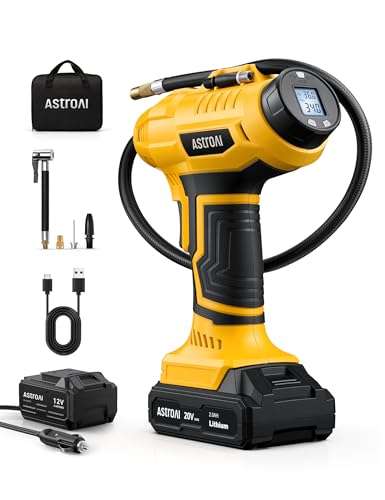
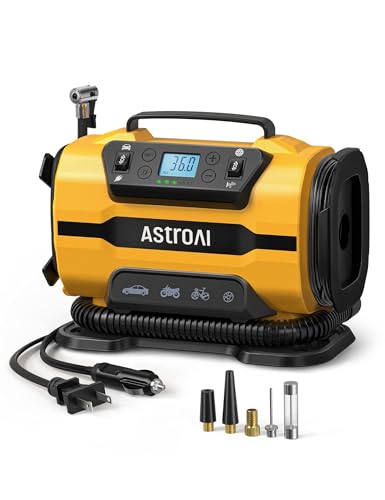
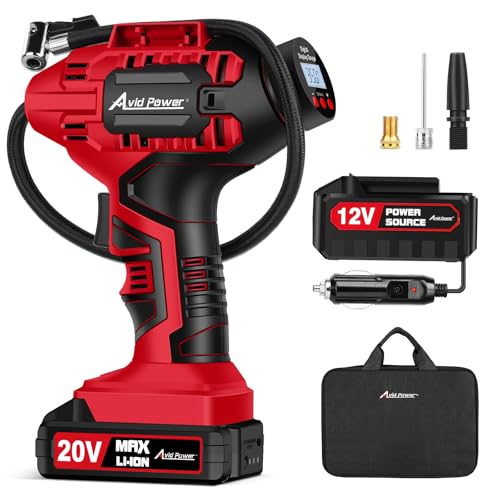
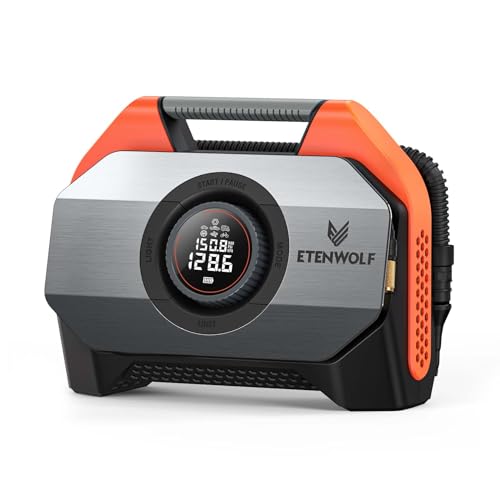
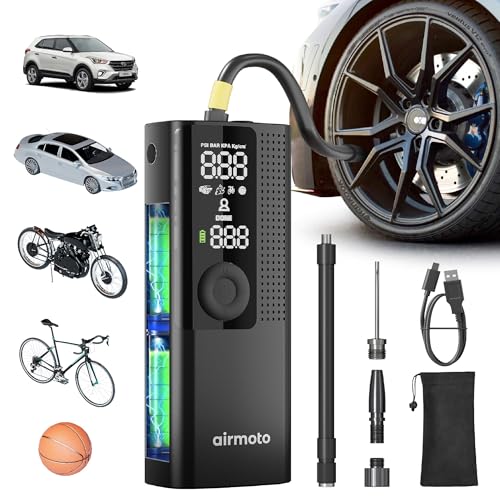
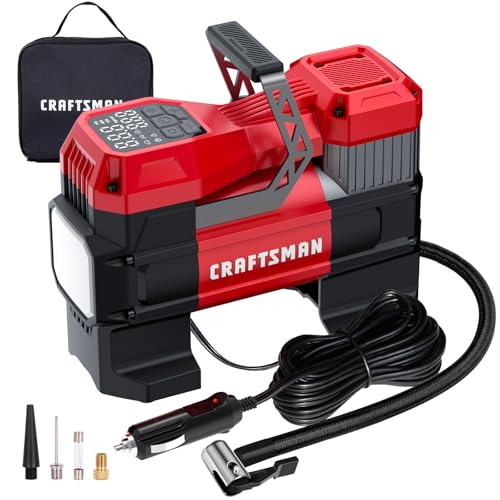
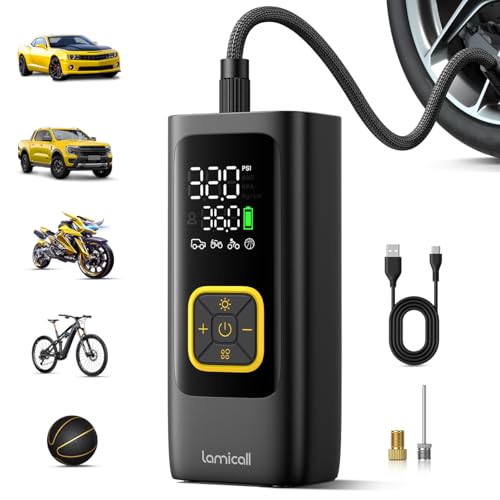


Who Should Buy Which Tire Compressor?
Drivers Who Want Roadside Security
If the goal is rescuing a soft tire in a parking lot or on a shoulder, a 12 volt inflator that lives in the trunk is the right tool. It plugs into the vehicle outlet, reaches about 100 to 150 PSI on paper, and fills a car tire slowly but surely. Look for a duty cycle of at least 15 to 20 minutes and a long cord plus hose combo that reaches the far rear tire without moving the unit around the car.
Homeowners With a Garage and Several Vehicles
A small tank compressor earns its floor space when you maintain two cars, a trailer, mower tires, and sports gear. A 3 to 6 gallon tank at 120 PSI or more tops up four tires in minutes without waiting on the pump, and the same machine runs a blow gun for cleaning. Our guide to the best air compressor for home garage picks covers how this choice overlaps with light tool use, so one purchase can serve both jobs.
Truck, RV, and Trailer Owners
Big tires change the math. Load range E truck tires run 65 to 80 PSI, and RV tires can call for 95 to 110 PSI, at volumes several times a car tire. Small inflators overheat or stall below those pressures. You need a compressor whose working pressure clears your tire spec by a wide margin and whose duty cycle survives filling four large tires in a row, which usually means a quality 120 volt unit or a heavy duty 12 volt model with direct battery clamps.
Key Features to Compare
Maximum Pressure With Real Margin
A compressor strains as it nears its maximum pressure, filling slower and hotter with every pound. For car tires at 30 to 35 PSI, almost anything works. For truck and RV tires, choose a unit rated at least 30 to 40 PSI above your tire target, so it fills in the strong part of its range. Also separate tank pressure from regulated pressure on shop units: the gauge that matters is the regulated outlet, and it must reach your tire spec while air is flowing, not just sitting static in the tank.
Duty Cycle and Fill Time
Duty cycle tells you how long the unit can run before it needs a rest, often stated as minutes on and off or as a percentage. Cheap inflators may allow 10 minutes of work and then demand 20 minutes of cooling, which turns four low tires into an hour. A typical car tire from 25 to 32 PSI takes a decent inflator about 2 to 4 minutes; a tank compressor does it in seconds per tire. If your routine is a monthly four tire top up in winter, duty cycle is the spec that decides whether the job feels easy.
Power Source: 12 Volt, 120 Volt, or Battery
Twelve volt models draw from the vehicle and work anywhere the vehicle is, but many vehicle outlets limit current to 10 or 15 amps, capping real power. Stronger 12 volt units clip straight to the battery to escape that limit. Corded 120 volt compressors bring the most muscle per dollar and suit garage duty. Cordless models on tool battery platforms are the convenience kings for quick top ups, as our look at the best cordless air compressor options details, though runtime limits them on big tires. Match the source to where the tires actually sit.
Gauge Accuracy and Auto Shutoff
The gauge is the whole point of the exercise, and cheap analog dials can read 3 to 5 PSI off, which is the entire margin you are correcting. Digital gauges with an auto shutoff at a preset pressure remove the squinting and the overshoot: set 33 PSI, pull the trigger, and walk to the next tire. Whatever the display, verify it seasonally against a good pencil or dial gauge you trust. Tire pressure is specified cold, so the most accurate routine is measuring in the morning before the car moves.
Chuck Style and Hose Reach
The chuck decides how much air you lose at disconnect. Clip on chucks are fast and fine for top ups; screw on chucks seal better for long fills and high pressures but take a moment per wheel. Dual head chucks reach the dual rear wheels on trucks and the angled stems on trailers. Hose and cord length together must reach the worst wheel from the power source without tension, because a stretched hose pulls the chuck sideways and leaks. A coiled hose that reaches about 10 to 15 feet covers most driveways comfortably.
Tank or Tankless Design
A tank stores energy, so fills are fast and the pump rests between tires; tankless inflators push air directly and trade speed for tiny size. For pure tire duty on one car, tankless is honestly enough, and it stores in a trunk cubby. The tank earns its bulk when you add blow off work, multiple vehicles, or air tools later, which is why the best pancake air compressor format is such a common first garage buy. Think about the second year of ownership, not just the first tire.
Filling Tires the Right Way
Check the placard on the driver door jamb for the vehicle maker pressures, not the maximum molded into the tire sidewall, which is a limit rather than a target. Measure cold, fill to the placard value, and recheck after the gauge settles, because a hot tire fresh off the highway reads about 3 to 5 PSI high and chasing that number leaves you underinflated by morning. Work around the car in order and finish with the spare, the most neglected tire on the vehicle and the one you will need at the worst moment. Our broader guide to the best air compressor range covers the safety basics that apply to every use, tires included.
How Much Should You Spend?
Trunk inflators sell for around $30 and cover emergency top ups on car tires. The dependable middle, about $60 to $120, buys better duty cycles, digital gauges with auto shutoff, and chucks that seal. Small tank compressors for garage duty run about $130 to $250 and add real speed and versatility. Premium heavy duty 12 volt units for trucks and RVs reach about $150 to $300. Pressure accuracy and duty cycle are what your money buys, so spend there first.
Common Mistakes to Avoid
- Inflating to the maximum pressure printed on the tire sidewall instead of the vehicle placard figure.
- Checking pressure right after driving, then bleeding air to match the placard and ending up low when cold.
- Running a small inflator past its duty cycle, which overheats the motor and shortens its life sharply.
- Forgetting the spare for months, so the rescue tire is nearly flat on the one day it matters.
- Trusting a bargain gauge without ever comparing it to a known good one, and driving on wrong pressures.
- Yanking the chuck off at an angle and losing several pounds of air in the hiss at every wheel.
Care and Maintenance for Your Tire Compressor
For tank models, drain condensation after use so the tank does not rust from inside, the most common way these machines die. Coil hoses loosely and keep chucks capped or bagged, since a gritty chuck seal leaks and a dropped chuck bends. On inflators, let the unit cool fully before sealing it in a trunk case, and check the power cord insulation where it flexes at the plug. Compare the gauge against a reference twice a year, and run the machine briefly every month or two in storage so seals and bearings do not sit and stick.
FAQ
How big an air compressor do you need for car tires?
Not big at all. Car tires hold modest volume at 30 to 35 PSI, so a small inflator or a 1 to 3 gallon tank compressor fills them comfortably. What matters more than size is duty cycle for doing all four in a row and a gauge you can trust. Size steps up only when the tires do: truck tires at 65 to 80 PSI and RV tires above 95 PSI need stronger units with real pressure margin.
Can an air compressor overinflate a tire?
Yes, easily, which is why you fill in short bursts and check with a gauge rather than timing it. A compressor does not know when to stop unless it has an auto shutoff you set. Exceeding the sidewall maximum is genuinely dangerous, and even moderate overinflation shrinks the contact patch and wears the center of the tread. Set digital units to the placard pressure and confirm with a second gauge until you trust the pairing.
How long can a 12 volt tire inflator run before it overheats?
Most small inflators rate around 10 to 20 minutes of continuous work followed by a similar or longer rest. Filling one low car tire usually fits inside that window; four tires plus a spare may not. Heat you can feel through the case and a slowing motor note are your warnings. Letting the unit cool protects the motor and the piston seal, and planning the job tire by tire with pauses keeps you inside the rating without thinking about it.
Is a tank or tankless compressor better for tires?
For one car and occasional use, tankless wins on size, price, and simplicity, and it stores where a tank never could. For a household fleet, a small tank is faster per tire, gentler on its pump, and useful for far more than tires. The deciding question is what else you will ask of it. If the answer is nothing, buy the inflator and a good gauge. If the answer includes tools or trailers, the tank pays rent quickly.
Why does a tire lose pressure right after filling it?
Usually it does not lose much at all: two small effects imitate a leak. Air expanding through the chuck warms during filling, then contracts as it cools to ambient, trimming a pound or so. The disconnect hiss also steals a little, more with a worn chuck. If a tire is genuinely down several pounds the next morning, suspect the valve core, a bead leak, or a puncture, and have it inspected rather than topping it up weekly and hoping.
Final Thoughts
Match pressure margin to your biggest tire, respect the duty cycle, and verify the gauge against one you trust. Those three habits are the difference between owning the best air compressor for tires and owning a noisy box of disappointment. Compare the formats in the product table above, from trunk inflators to small tank units, and pick the one that fits where your vehicles actually park.


