Best Dual Fuel Inverter Generators: Matching the Right Model to Your Routine
Disclosure: We may earn a commission when you buy through links on this page, at no extra cost to you. As an Amazon Associate I earn from qualifying purchases. Learn more

Match a dual fuel inverter generator to how you use it: camping, RVs or home backup.
A dual fuel inverter generator runs on gasoline or propane and delivers the clean, quiet power of an inverter, which makes it one of the most flexible portable generators you can own. But a weekend camper, an RV owner, a homeowner in hurricane country and someone with a small garage each need a different size and feature set. The best dual fuel inverter generators are the ones matched to how you will actually use them.
This guide sorts dual fuel inverters by user type, explains the features worth comparing, lists common buying mistakes and answers the questions buyers ask most.


Who Should Buy Which Dual Fuel Inverter Generators?
Frequent users should choose 4,500 watt or larger units with electric start, storm prone homeowners should choose transfer switch ready models, small space owners should choose compact 3,500 to 4,500 watt units and beginners should choose simple models with auto fuel switching.
For Frequent or Serious Users
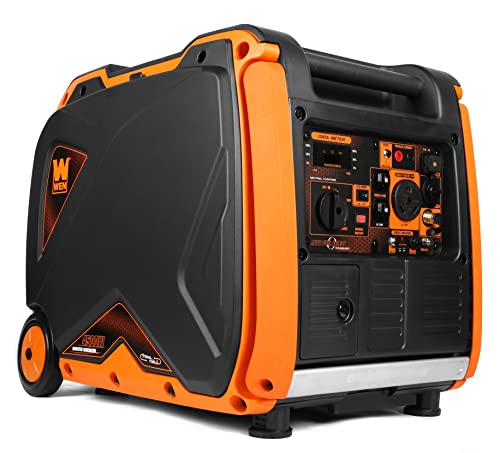
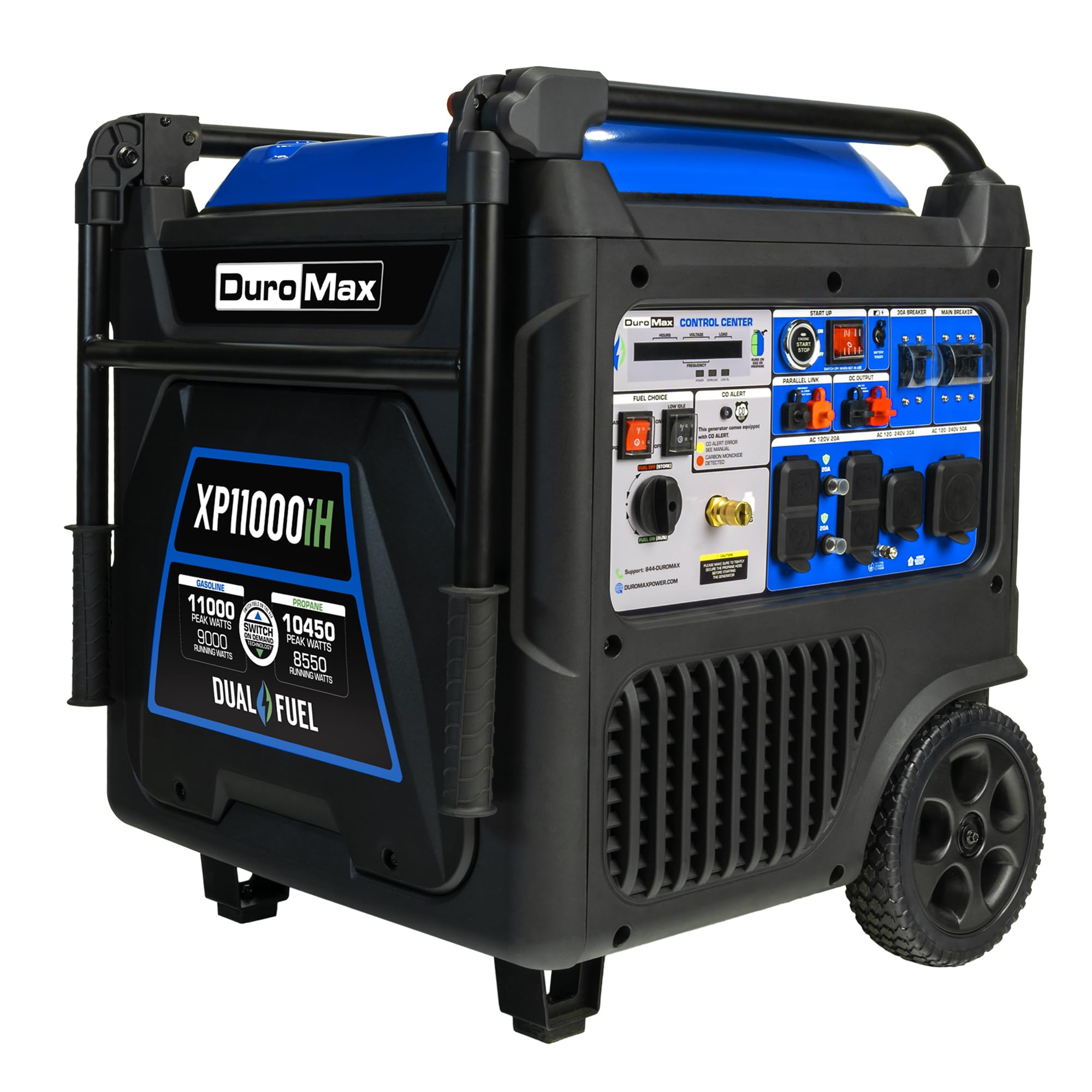
RV full timers, contractors and frequent campers need reliability, electric or remote start and strong warranties. Models in the 4,500 to 11,000 watt range, such as the WEN DF452iX with remote electric start or the DuroMax XP11000iH, handle large loads and long days. Look for three year warranties, steel frames and fuel gauges.
For Bad Weather and Tough Conditions
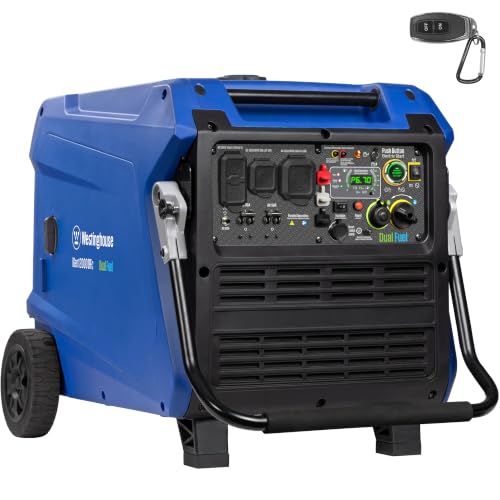
Homeowners facing hurricanes, ice storms or long outages benefit from propane, which stores for years without going stale, and from 240V outlets that connect to a transfer switch. The Westinghouse iGen8200TFc adds natural gas as a third fuel and a 50 amp outlet. CO auto shutoff, like Champion's CO Shield, is a must for emergency use.
For Small Spaces and Easy Storage
Apartment dwellers with balconies or small garages, and owners of smaller RVs, should look at 3,500 to 4,500 watt dual fuel inverters around 90 to 100 lb with wheels and folding handles. The WEN DF450i and Champion 4000-Watt models fit this space while still powering an RV air conditioner or essential home appliances.
For Weekend Beginners
First time buyers want simple controls, clear displays and automatic features. WEN's Auto Fuel Selection switches from propane to gasoline automatically, and digital load and fuel displays show how much power you are using. Choose a model with a fuel shutoff for easy storage.
Key Features to Compare in the Best Dual Fuel Inverter Generators
Compare noise, runtime, wattage on each fuel and outlets. These decide whether a generator suits your campsite, RV or home.
Noise Level (dBA)
Inverters throttle down at light loads and run much quieter than conventional generators. Compare dBA figures at the same distance and load: the WEN DF450i lists 58 dBA at quarter load from 22 feet, and Champion's 4000-Watt lists 64 dBA at 23 feet. Campgrounds often enforce limits around 60 dBA.
Runtime and Fuel Efficiency
Runtime depends on tank size and load. Champion's 4500-Watt dual fuel model lists up to 14 hours on gasoline and up to 21 hours on propane at low load. Propane runtime depends on tank size; a standard 20 lb tank typically runs a 3,500 watt unit for several hours at half load.
Wattage: Running vs Starting Watts
Propane produces slightly less power than gasoline, usually about 10% less running wattage. The WEN DF450i delivers 3,500 running watts on gasoline and 3,150 on propane. Add up the running watts of your devices and make sure the generator's propane rating covers them, plus starting surges for motors like RV air conditioners.
Generator Type (Portable, Inverter, Standby, Solar Power Station)
Dual fuel inverters combine clean power for electronics with fuel flexibility. Conventional dual fuel portables give more watts per dollar but are louder. Standby generators install permanently, and power stations are silent but store limited energy. For camping, RVs and portable home backup, dual fuel inverters strike the best balance.
Outlets and Connectivity
RV owners need a TT-30R 30 amp outlet. Home backup needs a 120/240V L14-30R or 14-50R outlet for a transfer switch. USB ports and 12V DC outlets help with small devices. Parallel ports let two units combine power.
Dual Fuel Inverter Sizes Compared
Dual fuel inverters fall into three size classes, each suited to different jobs.
| Size Class | Running Watts (Gas) | Typical Weight | Best For | Typical Price |
|---|---|---|---|---|
| Compact | About 2,000 to 2,500 | 45 to 60 lb | Camping, tailgating, charging electronics | Around $500 to $700 |
| Mid size | About 3,000 to 3,500 | 90 to 100 lb | RVs with one AC unit, essential home backup | Around $650 to $1,000 |
| Large | About 6,000 to 9,000+ | 130 to 250 lb | Home backup with 240V loads, large RVs | Around $1,300 to $2,500 |
Most buyers land in the mid size class, which runs an RV air conditioner or a refrigerator, sump pump and lights while staying portable on wheels.
Propane Setup Tips
- Use the included regulator hose: connect it to a standard 20 lb or larger propane tank with the valve closed, then open slowly.
- Check for leaks: brush soapy water on connections; bubbles mean a leak to fix before starting.
- Keep tanks upright and outdoors: never store or use propane tanks indoors or in a garage.
- Expect slower starts in cold weather: propane pressure drops in freezing temperatures, so larger tanks perform better in winter.
Common Mistakes to Avoid When Buying Dual Fuel Inverter Generators
- Sizing on gasoline watts only: propane output is lower, so size for the propane rating if you plan to use it.
- Ignoring outlets: RVs need TT-30R, and home backup needs 240V outlets.
- Skipping CO protection: choose models with CO auto shutoff and always run outdoors away from windows.
- Underestimating weight: 4,500 watt units often weigh 95 lb or more.
- Forgetting the regulator hose: check that a propane hose is included or budget for one.
How to Make Your Dual Fuel Inverter Generator Last Longer
- Change oil after the break in period and then on the manual's schedule.
- Use the fuel shutoff or run the carburetor dry before storing on gasoline, or switch to propane for storage runs.
- Add fuel stabilizer to stored gasoline.
- Run the generator monthly under load to keep parts lubricated and the battery charged.
- Store under a cover in a dry place, away from living spaces.
Dual Fuel Inverter Generators: Your Questions Answered
How long can a dual fuel inverter generator run continuously?
Typically 8 to 21 hours, depending on fuel, tank size and load. Propane from a larger tank can extend runtime well beyond gasoline. Shut down periodically during long outages to check oil, following the manual.
Do I need a transfer switch?
You need a transfer switch or interlock to power home circuits safely. It prevents backfeeding the grid. For camping and RVs, no transfer switch is needed; plug devices or the RV directly into the generator.
Can a generator run a refrigerator?
Yes, a 3,000 watt or larger dual fuel inverter can run a household refrigerator. Fridges need about 700 running watts and a short starting surge, leaving room for lights and electronics.
What size generator do I need to power a house?
Essentials usually need 3,000 to 7,500 running watts. Whole home coverage with central air needs larger units or a standby generator. A licensed electrician can calculate your load.
Inverter or conventional: which is better?
Inverters are better for quiet, efficient, electronics safe power. Conventional dual fuel generators cost less per watt and suit job sites or whole home backup where noise matters less.
Is propane or gasoline better in a dual fuel generator?
Propane is better for storage and cleaner running, gasoline for maximum power. Propane does not go stale and burns cleaner, which helps engine life, but produces slightly less wattage. Gasoline gives full rated power but needs stabilizer for storage.
Final Thoughts
Size the generator to your propane wattage, pick outlets that match your RV or home and insist on CO shutoff. Frequent users should choose larger electric start units, storm prone homeowners transfer switch ready models and beginners simple models with automatic fuel switching. Keep those points in mind and the best dual fuel inverter generators will give you flexible, quiet power wherever you need it. Compare current models in the product table above, and see our guide to the best rated inverter generators for single fuel options.