
Best Craftsman Air Compressors (2026): Which Type Fits Your Projects?
Disclosure: We may earn a commission when you buy through links on this page, at no extra cost to you. As an Amazon Associate I earn from qualifying purchases. Learn more

Choosing the best craftsman air compressor? Compare the brand lineup by tank size, airflow, noise, and cordless options to fit your projects at home.
Craftsman sells a wide spread of compressors under one familiar red badge, from a small pancake unit for trim work to a cordless model that runs on the same batteries as your drill. That spread is the confusing part, because the boxes look alike while the pumps and tanks serve very different jobs. Shoppers hunting for the best craftsman air compressor need a map of the lineup, not a pile of near identical listings.
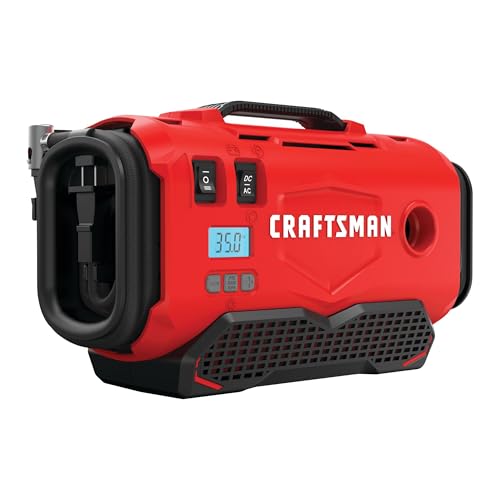
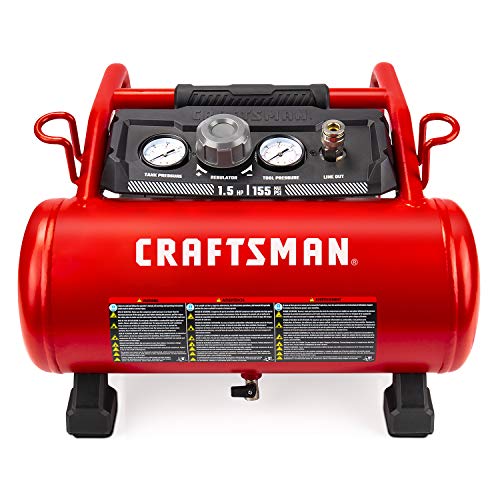
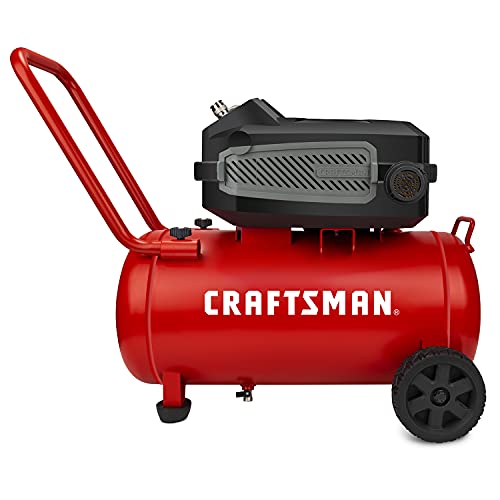
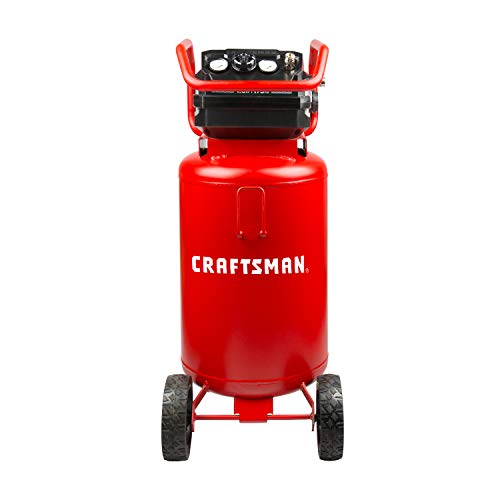
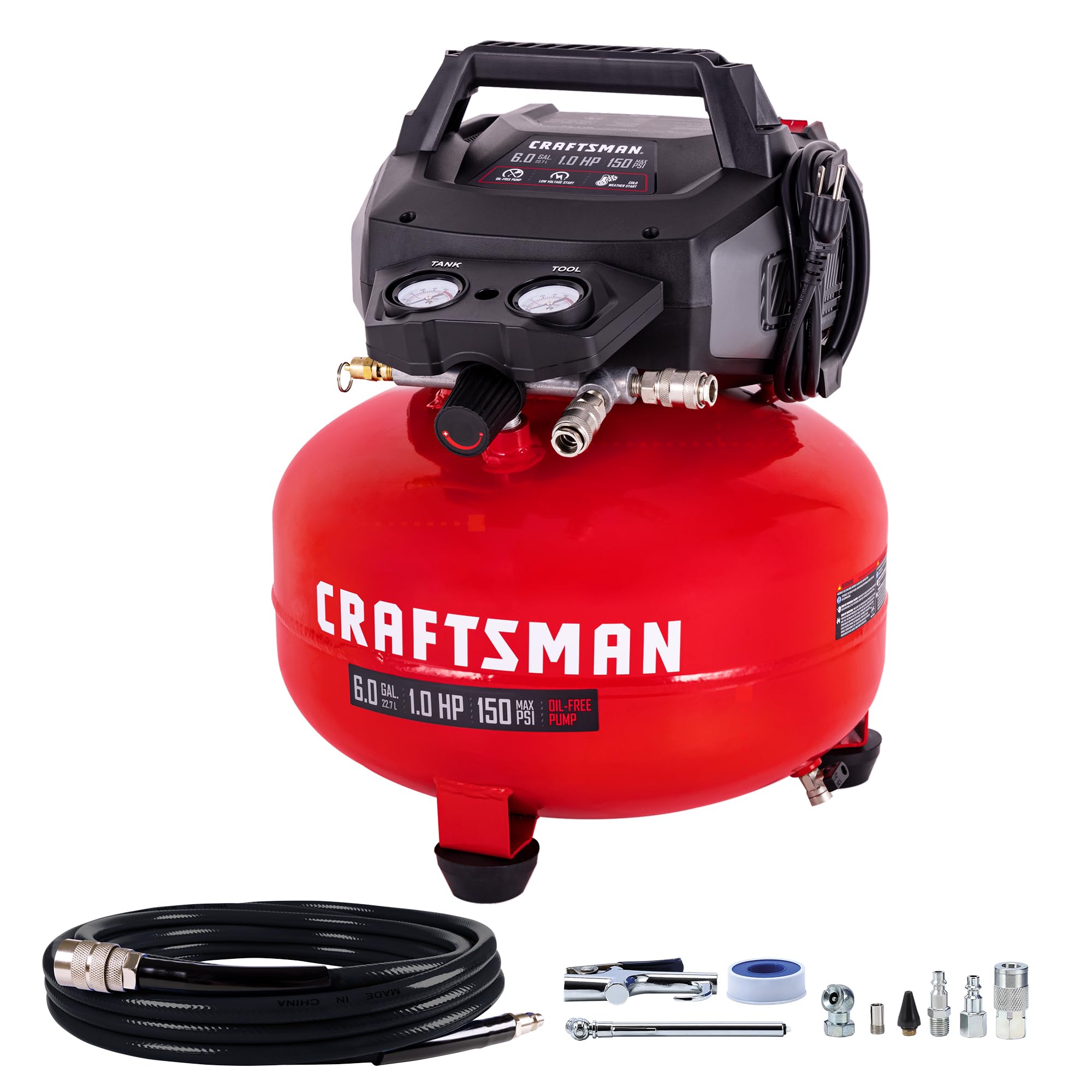
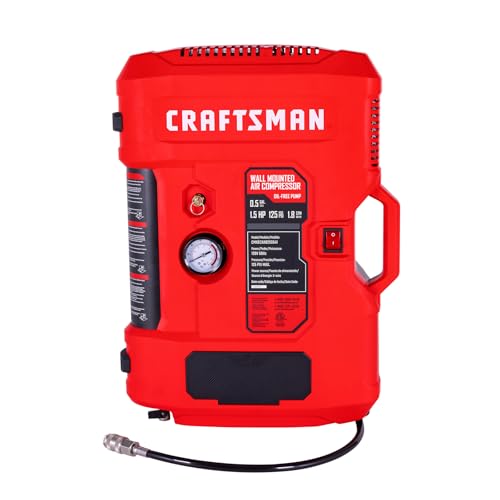
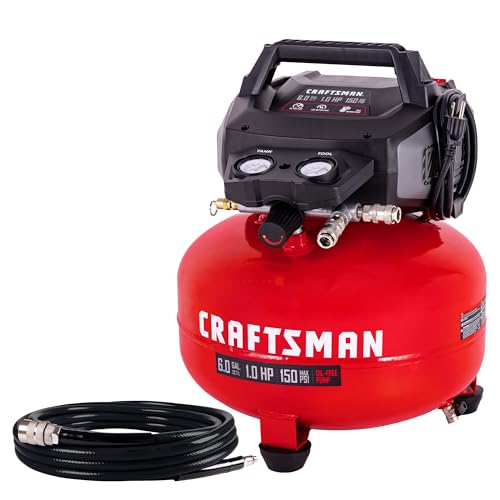
This guide sorts the Craftsman range by format and capability, explains which specs separate one class from the next, and shows which type suits common home and garage work. The comparison table below lays out the main classes side by side so you can spot the right tier quickly.



Who Should Buy Which Craftsman Compressor?
Craftsman buyers usually fall into a few clear camps, and each camp maps to a different corner of the lineup. Find your camp first, then compare only the machines built for it.
Homeowners who want one compressor for the whole house
A 6 gallon pancake or a mid sized 10 to 20 gallon unit covers tire inflation, sports gear, brad nailing, and cleanup duty for most households. If your machine will sit in the garage and serve everyone, the overview in our guide to the best air compressor for home garage setups shows how a shared unit gets used in practice. Craftsman kits that bundle a hose and basic fittings save a second purchase and suit this grab and go pattern well.
Trim carpenters and flooring installers on the move
If the compressor rides in a truck bed and climbs stairs to the job, weight and a protective frame matter more than tank size. Compact Craftsman portables with roll cage style frames shrug off knocks, and a 2 to 6 gallon tank is plenty because nailers and staplers sip air. Prioritize a handle that balances well in one hand and a cord wrap that keeps setup fast between rooms.
Homeowners already invested in Craftsman V20 batteries
The cordless compressor in the V20 line trades raw airflow for freedom from outlets, which suits fence repairs, remote tire inflation, and trim touch ups far from the garage. If you already own V20 batteries and chargers, the machine slots into your kit at a modest cost. Just be honest about runtime: a battery unit is a convenience tool for short tasks, not a shop workhorse for all day nailing.
Key Features to Compare in the Craftsman Lineup
Tank formats, from pancake to portable twin stack
Tank shape hints at the intended work. The flat round profile covered in our best pancake air compressor guide stays stable on floors and roofs and stores easily on a shelf. Twin stack tanks stack two small cylinders to add reserve without a tall footprint, and upright portables trade some stability for a smaller floor space in a crowded garage. Match the format to where the machine will live and how it travels, not just to the gallon number.
Airflow ratings across the range
Craftsman lists airflow as SCFM at 90 PSI, and the range runs from under 3 SCFM on small portables to around 4 or 5 SCFM on larger shop units. Nailers and inflators are happy anywhere in that span, while impact wrenches and ratchets want the upper half. Read the rating at 90 PSI only, since the 40 PSI figure printed beside it always looks stronger and tells you little about tool performance under load.
Oil free pumps and cold weather starting
Nearly every current Craftsman compressor uses an oil free pump, which removes oil changes from your routine and lets the machine start reliably on cold mornings when oil lubricated pumps strain. The trade off is a shorter expected pump life under heavy daily use and a higher pitched sound while running. For the way most homeowners use these machines, a few hours a week with long rests, the oil free design is the sensible default.
Max pressure and what it changes
Some Craftsman models top out at 150 PSI while others reach 200 PSI, and the higher figure stores more usable air in the same tank. In practice that means fewer motor restarts during a nailing run and a bit more punch for an impact wrench at the end of the tank. If two models look equal on tank size and airflow, the higher max pressure is the quiet tiebreaker, especially in a compact unit where gallons are limited.
Kits, hoses, and included accessories
Craftsman frequently bundles compressors with a hose, couplers, and sometimes a nailer, and those bundles can be genuinely good value for a first time setup. Check what is actually in the box before comparing prices, because a bare unit that looks cheaper may cost more once you add a hose and fittings. Recoil hoses are light but fight you at full stretch, while a straight rubber hose lies flat and reaches further with less fuss.
Reading Craftsman Model Numbers and Spec Sheets
Craftsman spec sheets reward a careful read. Look for the amp draw, usually listed near the motor details, and keep it in mind if your garage shares a 15 amp circuit with a freezer or lights, since startup surge can trip the breaker. Note the stated decibel level if you work in an attached garage, and check the duty cycle wording, which tells you how long the pump can run in each stretch. Across brands, our overview of the best air compressor category explains how these same numbers are presented elsewhere, which helps when you cross shop. For cordless shopping, the best cordless air compressor guide covers what battery powered airflow can realistically do.
Common Mistakes to Avoid
- Assuming every red unit performs the same. A small inflator class Craftsman and a 20 gallon shop model share a badge but not a workload.
- Buying the cordless model as your only compressor. Battery air is for short tasks, and all day nailing will drain packs faster than you can charge them.
- Comparing prices without checking the box contents. A kit with a hose and nailer can beat a bare unit that looks cheaper on the shelf tag.
- Storing the unit with a full tank of wet air. Moisture left inside rusts the tank even on a machine that runs only a few times a year.
- Oversizing for trim work. A heavy 30 gallon unit that never leaves the garage is wasted money if your biggest tool is a brad nailer.
Care and Maintenance for Craftsman Compressors
Drain the tank after every use by opening the valve at the bottom and tilting the unit so the last of the water runs out. Wipe down the intake filter housing monthly and replace the filter element when it darkens, because restricted intake air makes the pump run hot. Check the power cord and plug for nicks if the machine travels, and inspect the hose for cracks near the fittings where flexing is constant. Store the compressor indoors with the drain valve cracked open so the tank breathes, and run it for a minute every month or two in the off season to keep seals from drying out.
FAQ
Is Craftsman a good brand for a first air compressor?
For home and garage use, yes, because the lineup covers the common sizes, parts and filters are easy to find, and the controls stay simple for new owners. The point buyers often miss is service access: a brand with wide retail distribution makes warranty claims and replacement parts simpler years later. Pros who run a compressor all day usually step up to heavier duty lines, but that says more about duty cycle than about quality at this level.
How long should a Craftsman oil free compressor last?
With home use of a few hours a week, many owners get years of service, and the biggest factor is how often the tank gets drained. Rust from trapped water kills more home compressors than worn pumps do. Running the unit within its duty cycle instead of feeding a tool that keeps the motor on nonstop also protects the pump, since heat is what ages the cylinder coating fastest.
Can a Craftsman pancake compressor run a framing nailer?
Yes, a 6 gallon pancake unit with airflow around 3 SCFM at 90 PSI drives a framing nailer fine for projects like fences and small decks. The limit shows up in pace: rapid fire nailing on a long wall can outrun recovery, so you may pause briefly while the tank refills. For a full house framing crew the tank is too small, but for weekend framing jobs it keeps up comfortably.
What does the V20 cordless Craftsman compressor do best?
It does short, scattered jobs best: topping up tires at the curb, inflating a pool float at a rental, or running a pin nailer on a ladder where cords snag. Its airflow is modest, so plan on bursts rather than continuous tool use. A useful trick is pairing it with the largest V20 battery you own, since runtime scales directly with pack size and small packs sag quickly under motor load.
Why does a Craftsman compressor trip the garage breaker?
Startup surge is the usual cause, because the motor draws a brief spike well above its running amps, and a 15 amp circuit shared with lights or a freezer has little headroom. Plug the compressor into a dedicated outlet where possible, avoid long thin extension cords that drop voltage, and let the tank drain down before restarting a stalled unit. If trips keep happening on an empty circuit, the start capacitor may be failing and needs service.
Final Thoughts
Craftsman makes the most sense when you match the format to the work: pancake for portability, a mid sized tank for the shared home garage, cordless for short jobs away from power. Read airflow at 90 PSI, check what the box includes, and respect the duty cycle, and the lineup sorts itself quickly. Pick the class that fits your projects and you will have the best craftsman air compressor for your needs without overspending. The product table above shows the classes side by side to confirm your choice.


