
Best Pool Cleaners for Leaves: Every Type Explained Side by Side
Disclosure: We may earn a commission when you buy through links on this page, at no extra cost to you. As an Amazon Associate I earn from qualifying purchases. Learn more

Robotic, pressure side, suction side and skimmer cleaners compared for leaf heavy pools.
A pool under oak or maple trees can collect more leaves in one windy afternoon than a typical cleaner handles in a week. Small intakes clog, fine filters fill up in minutes and soggy leaves sink and stain the floor. The best pool cleaners for leaves have wide debris openings, large baskets or bags and enough suction to lift wet, heavy leaves without jamming.
Robotic, pressure side, suction side, solar skimmer and handheld cleaners all claim to handle leaves, but they work in very different ways. This guide compares each type side by side, explains which specs matter for leaf heavy pools and shows how to combine tools for the least effort.


Types of Pool Cleaners Compared
| Type | Best For | Pros | Cons | Typical Price |
|---|---|---|---|---|
| Robotic | Full floor, wall and waterline cleaning | Independent of pool pump, smart routes, fine filtering | Baskets fill fast in heavy leaf fall | Around $450 to $700 |
| Pressure side | Heavy leaf and large debris loads | Large inlet, own debris bag, protects pool filter | Often needs a booster pump | Around $500 to $650 |
| Suction side | Light debris, budget setups | Low cost, simple | Leaves clog the skimmer and pump basket | Around $150 to $350 |
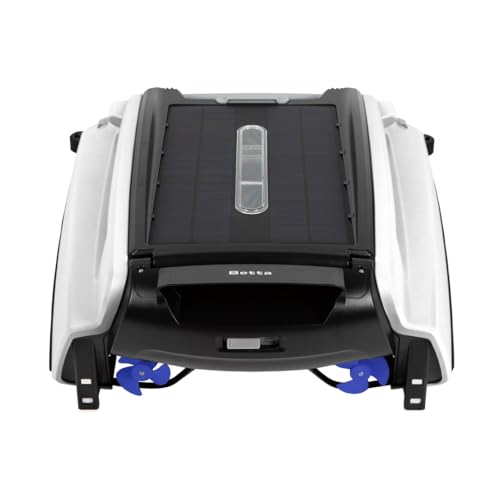
| Solar surface skimmer | Catching leaves before they sink | Runs all day on sunlight | Surface only, no floor cleaning | Around $370 to $390 |
| Handheld leaf vacuum | Pool openings and spot cleanups | Cordless, fast on piles of leaves | Manual work with a pole | Around $100 to $230 |
Robotic Pool Cleaners
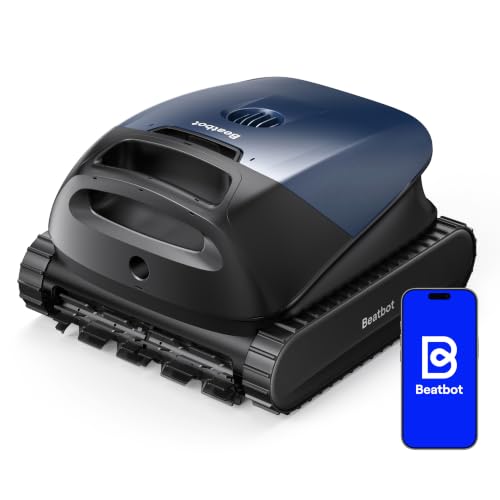
Robotic cleaners run on their own motor and battery or power supply, scrubbing the floor, walls and waterline while collecting debris in an onboard basket. Cordless models like the Beatbot Sora 10 list 6,800 GPH suction, up to 300 minutes of runtime and a 5L basket that holds up to 650 leaves. The Aiper Scuba S3 lists dual stage filtration with a 180 micron mesh for leaves and a 3 micron insert for fine dirt.
Robots are the best all round choice for pools with moderate leaf fall, since they also handle sand, dust and algae. In heavy autumn leaf fall, plan to empty the basket during the cycle or pair the robot with a skimmer.
Pressure Side Cleaners
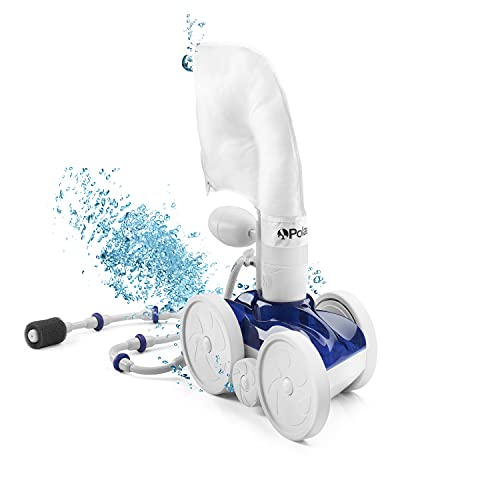
Pressure side cleaners use water pushed from the pool's return line, usually boosted by a dedicated booster pump, to drive the cleaner and create suction through venturi jets. Debris goes into the cleaner's own bag instead of your pool filter. The Polaris Vac-Sweep 280 lists a large 2.25 inch inlet that picks up leaves, acorns and pebbles, cleaning an in ground pool in 3 hours or less.
This type is the classic choice for leaf heavy in ground pools. The downside is the booster pump, which adds cost and energy use if your pool does not already have one.
Suction Side Cleaners
Suction side cleaners connect to the skimmer or a dedicated suction port and use your pool pump to pull debris into the filter system. They are affordable and simple, but leaves quickly fill the skimmer and pump baskets, cutting suction and stopping the cleaner. If you use one in a leafy yard, add an inline leaf canister, like the Hayward W530, between the cleaner hose and the skimmer to catch leaves before they reach the pump.
Robotic Pool Cleaners vs Pressure Side Cleaners: Which Should You Choose?
- Leaf capacity: pressure side bags and wide inlets handle larger loads; robotic baskets hold less but filter finer.
- Fine debris: robots win with micro filters down to a few microns.
- Installation: robots drop in and go; pressure side cleaners need plumbing and often a booster pump.
- Running cost: cordless robots use small batteries; booster pumps draw more power.
- Coverage: both can clean floors and walls; many robots also scrub the waterline.
Choose pressure side if you have an in ground pool under heavy trees and a booster pump already. Choose robotic if leaves are moderate and you want floor, wall and waterline cleaning plus fine filtration without plumbing work.
How to Choose the Right Pool Cleaner
Wall and Waterline Climbing
Leaves stick at the waterline and settle on steps and ledges. Cleaners that climb walls and scrub the waterline, like the Beatbot Sora 10 and Aiper Scuba S3, reduce hand brushing. The Sora 10 also lists shallow area cleaning as low as 12 inches, useful for tanning ledges where leaves pile up.
Cleaner Type (Robotic, Suction, Pressure)
Match the type to your equipment. If your pool has a booster pump or a dedicated pressure line, a pressure side cleaner makes sense. If not, a robot avoids new plumbing. Suction side cleaners are the budget option but need a leaf canister in leafy yards. Check whether the cleaner suits in ground, above ground or both.
Cord Length, Cordless, and Swivel
Cordless robots avoid tangles entirely and suit most residential pools; check the listed coverage area against your pool size. Corded robots need a cable long enough to reach the far end plus depth, and a swivel helps prevent kinks. Pressure side cleaners use a feed hose; the Polaris 280 includes 31 feet.
Features That Matter for Leaves
Leaves demand specific specs: a wide intake, ideally 2 inches or more; a large basket or bag, measured in liters or leaf count; strong suction listed in GPH; and a coarse filter option that does not clog with leaf fragments. Top access baskets that open without tools save time when you empty them several times a day in autumn.
Best Pool Cleaners for Specific Needs
Best Robotic Pool Cleaners for Leaves
The best robotic pool cleaners for leaves combine high suction, a large basket and a coarse filter setting. The Beatbot Sora 10 stands out with 6,800 GPH suction and a 5L basket rated for up to 650 leaves. The Aiper Scuba S3 adds a 180 micron leaf mesh and auto parking at the waterline for easy retrieval.
Best Pool Cleaners for Leaves Hand Cleaner: Which Type Works Best
For the best pool cleaners for leaves hand cleaner option, a cordless leaf vacuum on a pole works fastest. The KOKIDO XV910 lists 62 GPM flow, 75 minutes of runtime and standard and fine filter bags, ideal for pool openings. A simple net skimmer, like the Sunnyglade, is the cheapest daily tool for floating leaves.
For surface leaves before they sink, a solar skimmer like the Betta SE runs continuously and lists a 5 to 6 hour recharge in direct sun. Compare more options in our guides to automatic pool cleaners, pressure side pool cleaners and manual pool cleaners.
Combining Pool Cleaners for Leaves: A Routine That Saves Time
In heavy leaf fall, no single cleaner does it all. A combined routine keeps the pool clear with the least effort:
- Catch leaves on the surface: run a solar skimmer or net the surface daily so leaves do not sink.
- Clear piles quickly: use a handheld leaf vacuum after storms instead of letting a robot fill up in minutes.
- Run the floor cleaner: let the robot or pressure side cleaner handle what remains on the floor and walls.
- Protect the pump: keep skimmer baskets and any leaf canister empty to maintain flow.
- Consider a cover: a leaf net or safety cover in autumn cuts cleaning time sharply.
Setup and Care Tips
- Empty the filter basket after each cycle: wet leaves break down and clog mesh if left inside.
- Store robots out of direct sun: UV and heat wear plastics and batteries.
- Keep water chemistry balanced: leaves add organic load and can lower pH, so check water balance more often in autumn.
- Rinse filters and bags: hose them out from the clean side to push debris out.
- Check hoses and inlets: look for sticks or acorns lodged in intakes before each run.
- Charge cordless units fully: follow the maker's charging guidance between uses.
Pool Cleaners: Your Questions Answered
What features matter most in pool cleaners for leaves?
A wide intake, a large basket or bag, strong suction and a coarse filter setting matter most. Easy basket access helps when you empty it often. For pools under heavy trees, a surface skimmer or leaf canister adds capacity that a single cleaner lacks.
Are robotic pool cleaners worth it?
Yes, for most pool owners. Robots clean floors, walls and often the waterline without using your pool pump, and they filter fine dirt that pressure and suction cleaners miss. In heavy leaf fall, pair them with a skimmer so the basket does not fill too quickly.
How long should a pool cleaner run?
Most pools need about 2 to 3 hours per cycle; the Polaris 280 lists 3 hours or less for an in ground pool. Run more often during leaf season, and check the basket midway on windy days.
Can I leave a robotic cleaner in the pool?
Not long term. Remove robots after each cycle to protect seals, batteries and plastics from chlorine and sun. Models with waterline parking, like the Aiper Scuba S3 and Beatbot Sora 10, make retrieval easy.
Which cleaner is best for leaves?
For large leaf loads in in ground pools, a pressure side cleaner like the Polaris Vac-Sweep 280 is the traditional favorite. For mixed debris and easy setup, a robot like the Beatbot Sora 10 works well. Add a solar skimmer or handheld vacuum for heavy autumn days.
Wrapping Up
Intake size, basket capacity and suction decide how well a cleaner handles leaves. Pressure side cleaners lead on heavy loads, robots lead on all round cleaning, and skimmers and handheld vacuums fill the gaps. Combine them for the least effort, and compare the best pool cleaners for leaves in the product table above.


