Best 5000 Watt Generators: Everything to Know Before Your First Purchase
Disclosure: We may earn a commission when you buy through links on this page, at no extra cost to you. As an Amazon Associate I earn from qualifying purchases. Learn more

A first time buyer guide to 5000 watt generators: watts, fuel, noise, safety and safe setup.
A 5000 watt generator is the sweet spot for many households: big enough to keep a refrigerator, freezer, sump pump, lights and phones running in an outage, yet light enough to roll out of the garage and cheap enough to fit most budgets. Shopping for the best 5000 watt generators is easier once you understand the terms on a spec sheet.
This first time buyer's guide explains the basics, the key specs in plain English, the rookie mistakes to avoid and how to set up a new generator safely. It uses real listings from Honda, Westinghouse, Green-Power America and others as examples.

5000 Watt Generators 101: The Basics
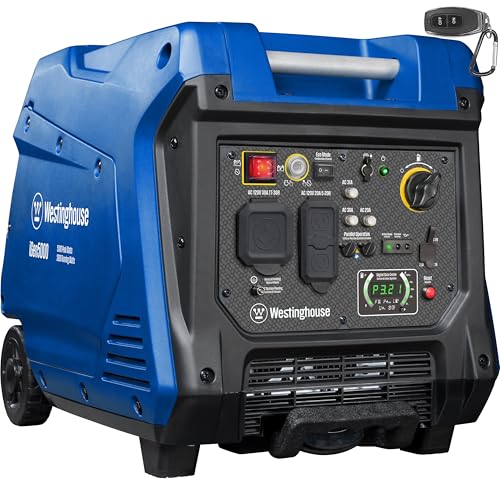
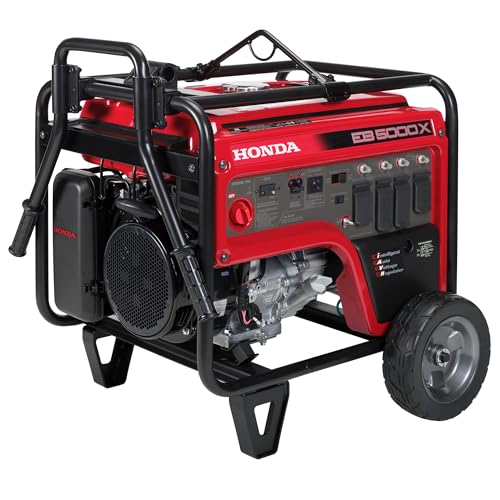
The "5000 watt" figure on most listings is peak or starting watts, the short burst available when a motor starts. Running watts, the power available continuously, are lower. The Westinghouse 5000 peak watt inverter lists 5,000 peak and 3,900 running watts, and the Green-Power America 5000 watt gas model lists 5,000 starting and 3,850 running watts. The Honda EB5000 is an exception: it is a true 5,000 watt unit with 7,000 watts for 10 seconds to start motors.
In practice, about 4,000 running watts covers essentials: a refrigerator, a freezer, a sump pump, a few lights, a TV and chargers. It will not run central air or an electric range. For those, step up to larger units such as 10000 watt generators.
Key Specs Explained in Plain English
A generator spec sheet lists many figures, but five decide whether a 5000 watt model fits you: generator type, fuel, safety features, noise and outlets. Runtime and weight follow from those choices, and together these specs separate the best 5000 watt generators from bargain units that look similar on paper.
Start by listing what you want to power and how long outages usually last in your area. A short summer storm and a multi day winter outage call for different fuel and runtime priorities.
Generator Type (Portable, Inverter, Standby, Solar Power Station)
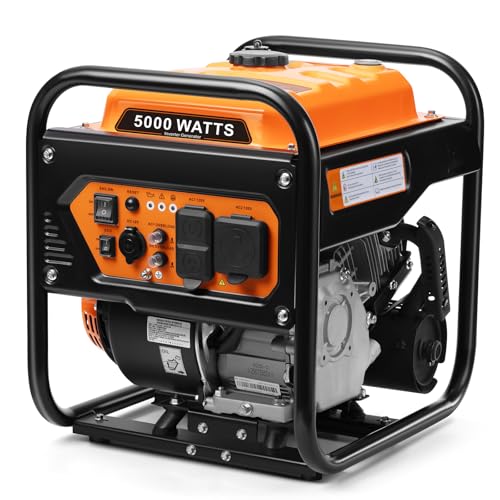
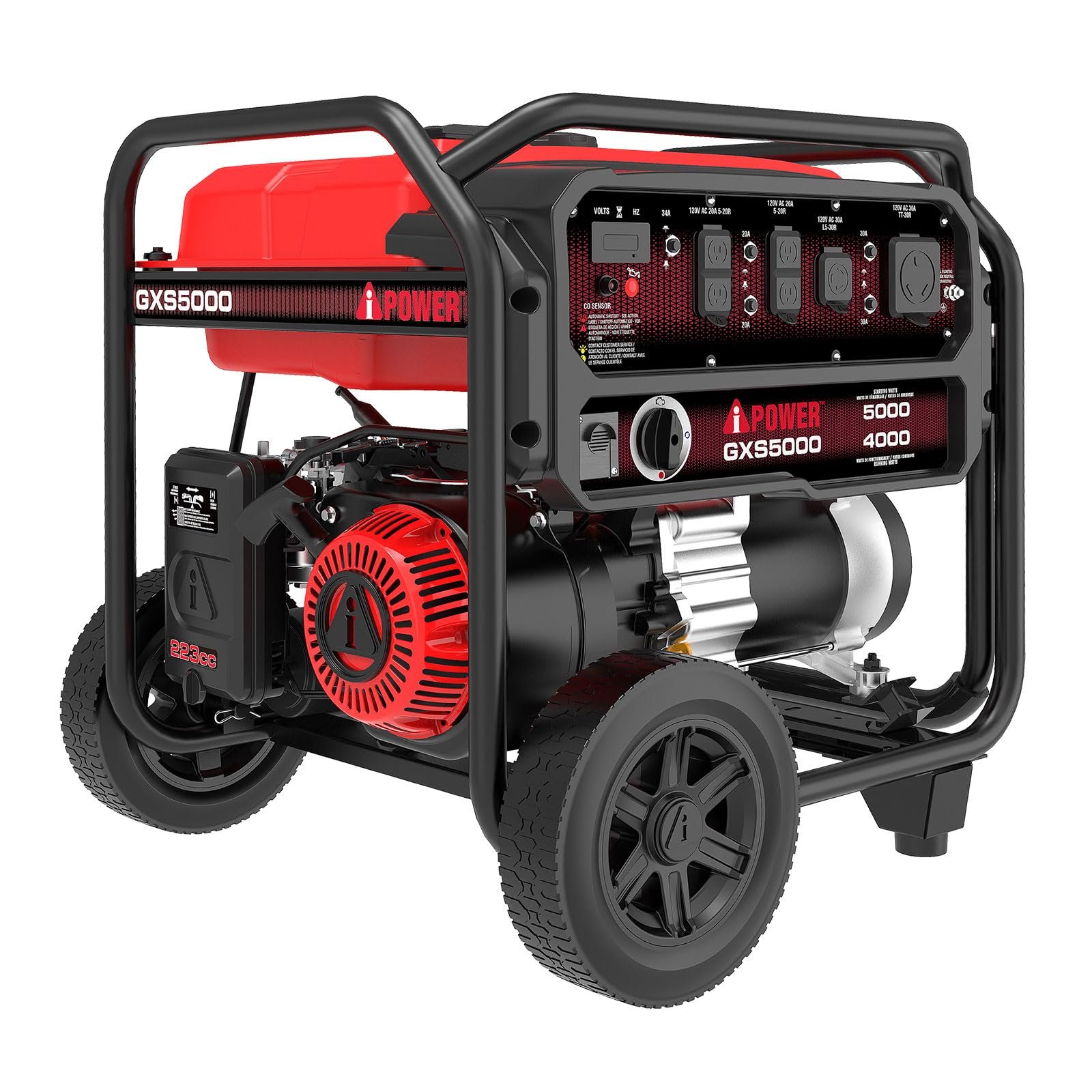
Conventional portable generators, like the Green-Power America 5000 watt and A-iPower GXS5000, run at a constant speed and cost the least per watt. Inverter generators, like the Westinghouse 5000 peak watt models and the Oxseryn 5000 watt, vary engine speed to match the load, which cuts fuel use and noise and produces clean power. Standby generators are permanent installs and usually start much larger. Battery power stations at this output exist but cost far more.
Battery Capacity and Solar Input (for Power Stations)
If you are comparing a battery power station with a gas generator, look at battery capacity in watt hours and maximum solar input. A power station that outputs several thousand watts may hold only a few hours of energy at that rate, and refilling it from solar can take a full day or more. For long outages, a fuel generator stores far more energy per dollar, while a power station suits indoor use where fumes are not allowed.
Fuel Type (Gasoline, Propane, Dual Fuel, Natural Gas, Solar)
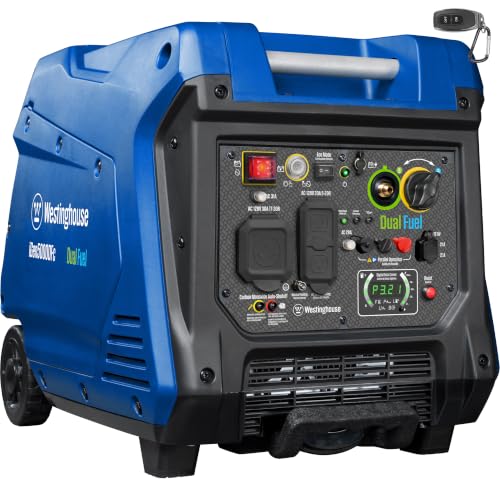
Gasoline is easy to buy but goes stale in a few months without stabilizer. Propane stores for years and burns cleaner, with somewhat less output: the Westinghouse dual fuel inverter lists 5,000 peak and 3,900 running watts on gas versus 4,500 peak and 3,500 running watts on propane. Dual fuel models give you both options during a long outage. Natural gas conversion is mostly found on larger units.
Portability and Safety Features
Generators in this class weigh roughly 60 to 200 lbs. The Oxseryn lists 60 lbs and 19 x 15 x 18 inches, while open frame conventional units are heavier and need wheels; the Green-Power America model includes 8 inch never flat wheels. For safety, look for a carbon monoxide sensor that shuts the engine down, such as Honda's CO-MINDER, plus low oil shutdown and GFCI outlets.
Noise Level (dBA)
Noise is listed in decibels, usually measured at 23 feet. The Westinghouse inverters list as low as 52 dBA, about the level of a quiet conversation, while the Honda EB5000 lists 63 to 65 dBA and the Green-Power America conventional model lists 74 dBA. Every 10 dBA increase sounds roughly twice as loud. If you have close neighbors or plan to camp, an inverter is worth the extra cost.
5000 Watt Generators Compared
Prices change often, so treat them as approximate.
| Generator | Type | Watts (Peak / Running) | Noise | Approx Price |
|---|---|---|---|---|
| Honda EB5000 | Conventional, iAVR | 7,000 surge / 5,000 | 63 to 65 dBA | About $2,800 |
| Westinghouse 5000 Peak Watt Inverter | Inverter, gas | 5,000 / 3,900 | From 52 dBA | About $850 |
| Westinghouse 5000 Peak Watt Dual Fuel Inverter | Inverter, gas or propane | 5,000 / 3,900 (gas) | From 52 dBA | About $1,000 |
| Oxseryn 5000 Watt Inverter | Inverter, gas | 5,000 / 4,000 | 70 dB at 23 ft | About $400 |
| Green-Power America 5000 Watt | Conventional, gas | 5,000 / 3,850 | 74 dBA | About $450 |
| A-iPower GXS5000 | Conventional, gas | 5,000 (listed) | Not listed | About $460 |
Rookie Mistakes to Avoid
The most dangerous mistake is running a generator in a garage, basement or near open windows. Carbon monoxide kills, so always run it outdoors, well away from the house. A second mistake is sizing by peak watts instead of running watts and then overloading the unit.
New owners also store gasoline in the tank for months without stabilizer, which gums up the carburetor. Others plug the generator into a wall outlet to backfeed the house, which is illegal and deadly for utility workers. Finally, buyers forget heavy duty extension cords; thin cords overheat. See our guide to extension cords for generators.
Getting Started: Setup and First Use
Unbox the generator, attach the wheels and handle, and add the oil grade listed in the manual; many units ship without oil. Add fresh fuel, and for electric start models, connect or charge the battery. Place the generator outdoors on level ground, at least 20 feet from the house with the exhaust facing away.
Start it with nothing plugged in and let it warm up for a few minutes. Then add loads one at a time, starting with the largest motor. Change the oil after the break in period listed in the manual, and run the generator for 15 to 20 minutes every month.
5000 Watt Generators: Your Questions Answered
How long can a 5000 watt generator run continuously?
It depends on tank size and load. Westinghouse lists up to 18 hours on 3.4 gallons for its inverter at light load, Honda lists 7.1 to 10.5 hours on 6.2 gallons for the EB5000, and Green-Power America lists 11 hours at 50 percent load. With safe refueling and regular oil changes, most generators can run for days.
Can a generator run a refrigerator?
Yes. A typical refrigerator draws about 700 to 1,200 running watts and needs a brief starting surge. A 5000 watt generator runs a refrigerator plus a freezer, lights and small appliances at the same time. Inverter models with low THD, such as the Westinghouse units listed under 3 percent, are safer for fridges with electronic controls.
Do I need a transfer switch?
You need a transfer switch or interlock if you want to power home circuits directly. Look for a 120/240V locking outlet; the Honda EB5000 supports 120V and 240V, and the Green-Power America model has a 120/240V twist lock outlet. Many inverters in this class have only 120V outlets, including a TT-30R RV outlet. Without a switch, use extension cords to individual appliances.
What size generator do I need to power a house?
For essentials, 3,500 to 5,000 running watts usually covers a refrigerator, freezer, sump pump, furnace fan, lights and electronics. Running central air, a well pump or an electric range needs 7,500 to 12,000 running watts. For a whole house, consider a standby generator instead.
Inverter or conventional: which is better?
Inverters are quieter, use less fuel and produce clean power for electronics, which makes them better for homes near neighbors, RVs and camping. Conventional generators cost less per watt and handle motor loads well. If you mostly run a fridge, lights and laptops, an inverter is the better choice. For a job site with power tools, conventional works fine. Compare options in our guide to dual fuel inverter generators.
The Bottom Line
The best 5000 watt generators give you enough running watts for essentials, the right outlets for how you will connect and safety features like CO shutoff. A Westinghouse 5000 peak watt inverter suits quiet home backup and RV use, a dual fuel version adds propane for long outages, the Honda EB5000 is a premium true 5,000 watt choice, and Green-Power America or A-iPower conventional models keep costs low. Size by running watts, run it outdoors and keep fuel fresh with a stabilizer, covered in our guide to fuel stabilizer for generators.