
Best 10000 Watt Generators: What Actually Matters Before You Buy
Disclosure: We may earn a commission when you buy through links on this page, at no extra cost to you. As an Amazon Associate I earn from qualifying purchases. Learn more

Our checklist for 10000 watt generators and three picks that pass it, from a dual fuel inverter to a value pick.
A generator in the 10,000 watt class can run a refrigerator, freezer, well pump, sump pump, lights and even a central air conditioner or electric range during an outage, as long as you manage the load. The best 10000 watt generators pair real running watts with the right outlets, fuel options and safety features, and they are not always the ones with the biggest number on the box.
Below is the checklist we use to judge these machines, three picks that meet it, a quick buyer checklist, red flags and answers to common questions. Specs come from manufacturer listings, so confirm details on the product page before you buy.


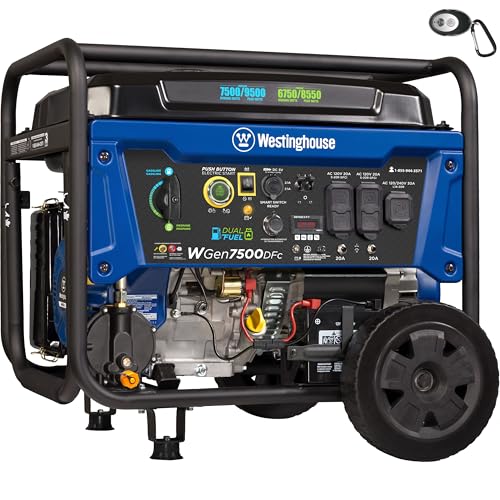

How We Evaluate 10000 Watt Generators
A 10,000 watt rating can mean very different machines. Some listings quote peak (starting) watts, others quote running watts, and fuel type changes both. Our checklist starts with real usable power, then looks at how the generator connects to a home, how clean its power is, what fuel it burns and how safe and practical it is to move and store.
We weigh each point against price. A conventional open frame generator gives the most watts per dollar, while an inverter costs more but runs quieter and powers electronics more safely.
Generator Type (Portable, Inverter, Standby, Solar Power Station)
Conventional portable generators run at a fixed engine speed and offer the lowest cost per watt. Inverter generators adjust engine speed to the load, which saves fuel and lowers noise. Standby units are permanently installed and start on their own. Solar power stations at this size are rare and expensive. For most buyers in this class, the choice is between a conventional portable and an inverter.
Transfer Switch and Home Connection
To power home circuits safely, you need a transfer switch or interlock installed by a licensed electrician. Look for a 120/240V 30A locking outlet (L14-30R) or a 50A outlet, which lets the generator feed both legs of your panel. Never backfeed through a dryer outlet. Listings that say "transfer switch ready" usually mean the generator has one of these locking outlets.
Portability and Safety Features
A 10,000 watt generator usually weighs well over 150 lbs, so a wheel kit and folding handles are essential. Key safety features include a carbon monoxide sensor that shuts the engine off, automatic low oil shutdown and GFCI outlets. Champion calls its system CO Shield. Electric start with a battery saves pulling a recoil cord on a large engine.
Wattage: Running vs Starting Watts
Running watts are what the generator supplies continuously. Starting or peak watts are the short burst motors need to start. Size by running watts: add up the running watts of everything you will use at once, then make sure the largest motor's starting surge fits within the peak figure. A unit sold as 10,000 watts might offer only 7,500 to 9,000 running watts.
Fuel Type (Gasoline, Propane, Dual Fuel, Natural Gas, Solar)
Gasoline gives the most power but goes stale within months. Propane stores for years and burns cleaner, at the cost of roughly 10 percent less output. Dual fuel models offer both, and tri fuel models add natural gas. During a long outage, the ability to switch fuels can keep the lights on when gas stations are closed.
Battery Capacity and Solar Input (for Power Stations)
If you consider a battery power station instead of a generator, compare battery capacity in watt hours and maximum solar input in watts. At 10,000 watts of output, battery systems become very expensive and heavy, and recharging them from solar takes days of good sun. For most whole home backup at this level, a fuel generator remains more practical.
Clean Power (THD) for Electronics
Total harmonic distortion (THD) measures how smooth the power waveform is. Inverter generators typically stay under 3 percent THD, which is safe for computers, TVs and modern appliances with control boards. Many conventional generators run higher. If you plan to power sensitive electronics, an inverter or a model that lists low THD is the safer choice.
3 Picks That Pass Our Checklist
Based on listed specs, these three are the best 10000 watt generators for most homes, and they cover the class from a full featured inverter to a strong value pick. Prices change often, so treat them as approximate.
Best Overall: Champion 11,000-Watt Dual Fuel Inverter Generator
The Champion suits homeowners who want inverter quality with power for major appliances. Champion lists 11,000 starting watts and 9,000 running watts on gasoline, and 8,100 running watts on propane, with up to 15 hours of runtime on a full tank and 64 dBA from 23 feet.
It includes a 120/240V 30A locking outlet, a 120/240V 37.5A outlet, two GFCI duplex outlets and a 12V outlet, plus CO Shield and electric start with Cold Start Technology. It costs around $2,300 and carries a 3 year limited warranty.

Best Value: Pulsar G12KBN Dual Fuel Generator
The Pulsar G12KBN is the pick for buyers who want the most power for the money. Pulsar lists 9,500 running watts and 12,000 peak watts on gasoline, so it covers a true 10,000 watt load class at around $930.
It runs on gasoline or LPG, has electric start and is listed as transfer switch and RV ready and CARB compliant. As a conventional generator, it is louder than an inverter and less suited to sensitive electronics without surge protection.

Best Compact Pick: Westinghouse 10000 Peak Watt Inverter Generator
The Westinghouse is the smallest step into this class among our picks, with 10,000 peak watts in an open frame inverter design. It suits buyers who want inverter power without paying for 11,000 watts or more.
Westinghouse lists remote electric start with auto choke, a transfer switch ready setup, gas power and a CO sensor. It costs around $1,150. Check the product page for running watts and weight before you buy.

Quick Buyer Checklist
- Running watts cover everything you will use at once, with about 20 percent headroom.
- Peak watts cover the largest motor's starting surge.
- A 120/240V locking outlet matches your transfer switch or interlock.
- CO shutoff, low oil shutdown and GFCI outlets are included.
- Fuel choice fits your storage: propane or dual fuel for long term readiness.
- Low THD if you will run electronics.
- Wheel kit, handles and electric start for a heavy engine.
- Warranty length and nearby service support.
Red Flags to Watch For
Be wary of listings that show only peak watts and hide running watts, or prices far below known brands for the same output. Unknown brands with very few reviews may lack parts and service. Avoid generators without CO shutoff, and check that the model is EPA compliant, plus CARB compliant if you live in California. Missing manuals, no warranty details or vague fuel consumption figures are also warning signs.
Choosing 10000 Watt Generators for Your Situation
For home backup, focus on running watts, a 240V outlet and dual fuel. For RV use, look for a TT-30R or 50A outlet and lower noise. For job sites, GFCI protection and a rugged frame matter most.
Running Heavy 240V Loads: What to Check
Well pumps, central air and electric ranges need 240V. Confirm the generator has a 120/240V outlet and that its running watts cover the motor plus other loads. A soft start kit on the air conditioner can cut its starting surge.
Setup and Care Tips
Run the generator outdoors, at least 20 feet from doors and windows, with the exhaust pointed away from the house. Use heavy gauge cords; see our guide to extension cords for generators. Change the oil after break in, run the unit monthly and add stabilizer to stored gasoline, as covered in our guide to fuel stabilizer for generators.
Frequently Asked Questions
Can a generator run a refrigerator?
Yes. A typical refrigerator uses about 700 to 1,200 running watts and needs a short starting surge of two to three times that. A 10,000 watt generator runs a refrigerator easily alongside a freezer, lights, a sump pump and other essentials. Inverter models are safer for refrigerators with electronic controls.
Do I need a transfer switch?
You need a transfer switch or interlock to connect a generator to your home's wiring. It prevents backfeeding power onto utility lines, which can injure line workers and damage the generator. Without one, you must run extension cords to individual appliances. Have a licensed electrician install it.
How long can a 10000 watt generator run continuously?
Runtime depends on tank size and load. Champion lists up to 15 hours on a full tank for its 11,000 watt inverter, usually at a light load. At heavy loads, expect far less. Most generators can run for days if you refuel safely and change the oil on schedule, often every 50 to 100 hours.
Inverter or conventional: which is better?
Inverters are better for quiet running, fuel savings and clean power for electronics. Conventional generators are better for raw power per dollar. If you power computers and modern appliances or live close to neighbors, choose an inverter. If budget comes first and loads are mostly motors and lights, a conventional model works well.
What size generator do I need to power a house?
Essentials such as a refrigerator, freezer, lights, sump pump and furnace fan need about 5,000 to 7,500 running watts. Adding central air, a well pump or an electric range pushes you to 9,000 to 12,000 running watts. For a whole house with no load management, a standby generator may fit better. Lighter needs can be met by 5000 watt generators.
Our Verdict
Among the best 10000 watt generators, the Champion 11,000 watt dual fuel inverter is the most complete package, with clean power, 240V outlets and CO Shield. The Pulsar G12KBN delivers the most running watts for the money, and the Westinghouse 10,000 peak watt inverter is a smaller step into inverter power. Size by running watts, plan your transfer switch and choose dual fuel for long outages. For more inverter options, see our guide to dual fuel inverter generators.


